Quorum 2001, A Wine Made by Many Hands
Quorum 2001 is a rare Barbera d’Asti created by Hastae, uniting Braida, Michele Chiarlo, Coppo, Prunotto, Vietti and Berta. More than two decades later, the bottle preserves a vanished collaboration and a decisive moment in Piedmont wine history.
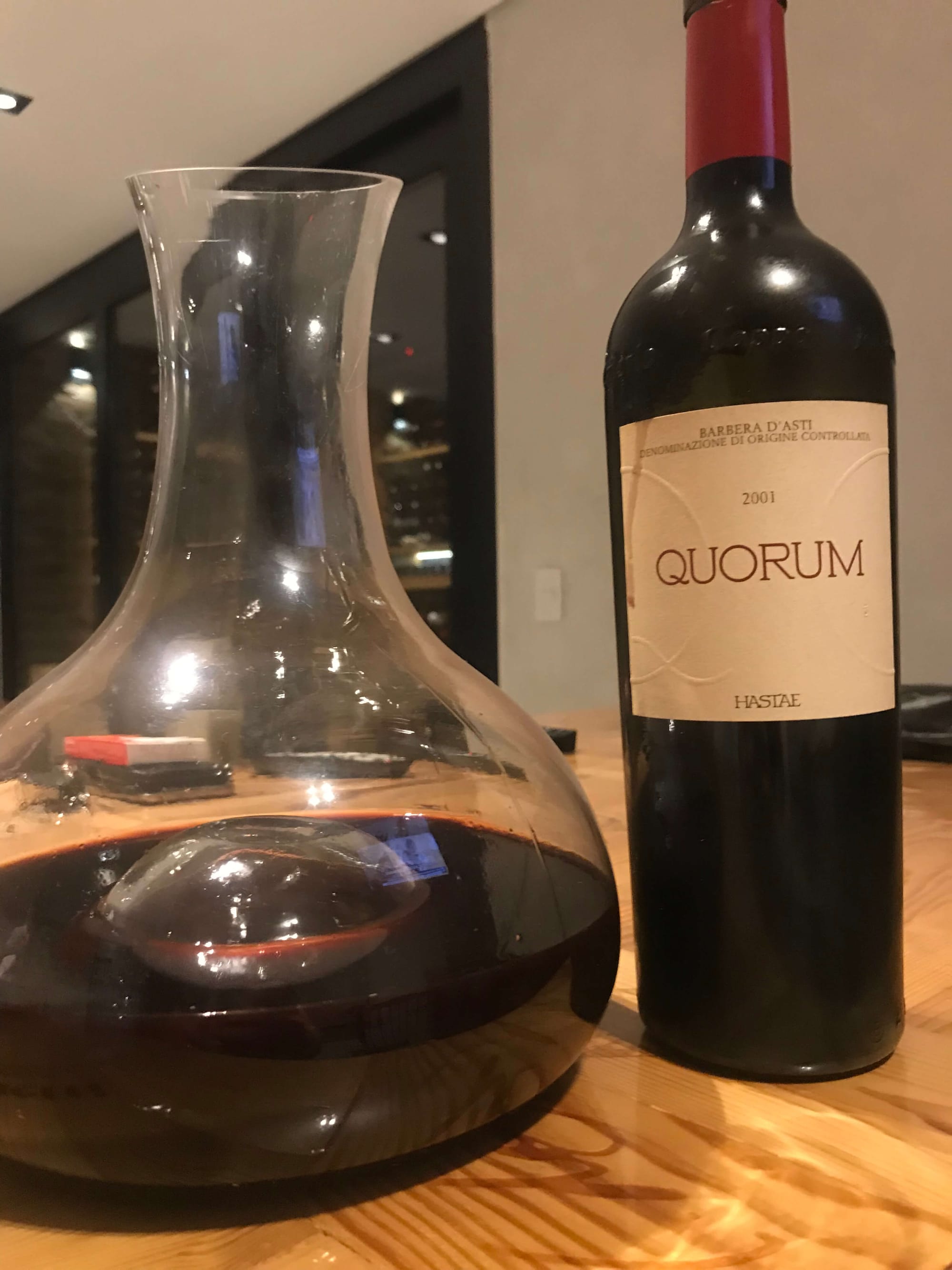
Hastae’s Quorum was created by five Piedmontese wineries and one distilling family with a shared ambition for Barbera. The collaboration has disappeared, but some of its bottles remain.
The bottle did not look particularly rare.
There was no ancient château on the label, no celebrated vineyard name and none of the visual ceremony that usually surrounds wines expected to command attention. Quorum 2001 stood beside the decanter with an almost institutional simplicity: a pale label, a single word and, beneath it, the name Hastae.
It was not an expensive bottle when released. Even today, it does not belong to the financial world of old Bordeaux, mature Burgundy or the most coveted Barolo. Its significance comes from somewhere else. Quorum preserves a collaboration that no longer exists, created at a particular moment when a group of important Piedmontese producers decided that Barbera deserved to be treated with the collective seriousness usually reserved for more prestigious grapes.
That history was not immediately visible in the glass. But it was the reason the bottle mattered.
Hastae took its name from the ancient Latin name for Asti. The association brought together five historic wine producers, Braida, Michele Chiarlo, Coppo, Prunotto and Vietti, alongside the Berta distilling family. They were independent businesses with their own vineyards, identities and interpretations of Piedmont, but Quorum was intended to sit outside those individual signatures.
The project reportedly began over dinner in the late 1990s. Its aim was not merely to create another premium Barbera, but to defend and promote the culture of the Asti area through a wine that none of the participating families could claim alone. The name Quorum captured that idea. In its political sense, a quorum is the number of participants required for a collective decision to carry authority. Here, the authority of the wine would come from the group.
Each producer contributed a selection of its best Barbera grapes, reportedly drawn from one hectare of a leading estate vineyard. The first vintage was 1997, and the intention was to produce Quorum only in years considered worthy of the project.
The group also made an unusual decision about authorship. Rather than placing the final wine under the control of one participating estate, Hastae brought in Riccardo Cotarella as an external winemaker. His role was to receive the different components and turn them into a single expression.
Quorum was therefore not a conventional blend of grapes purchased from multiple sources. It was a deliberate assembly of material contributed by producers that would ordinarily have bottled their wines separately and under their own names. Each family surrendered a small part of its individual identity so that the final wine could represent a shared argument about Barbera.
That argument belonged to a particular period in Piedmont.
For much of its history, Barbera was valued as a generous and dependable local variety. Its naturally high acidity, abundant fruit and capacity to produce reliable yields made it central to everyday wine culture, but it rarely enjoyed the status granted to Nebbiolo. By the end of the 20th century, several producers were trying to demonstrate that Barbera could also produce concentrated, ageworthy wines when grown at lower yields and given ambitious cellar treatment.
Quorum belonged fully to that movement. It was made entirely from Barbera, with restricted yields and a selection of concentrated fruit. The wine matured for ten months in new French oak and was bottled without filtration. These decisions placed it within the powerful, polished style that defined many ambitious Italian reds of the period.
The oak was not meant to disappear. It provided structure, sweetness of texture and the flavours of vanilla, coffee, cocoa and spice that international critics often celebrated at the time. Quorum was a statement about Barbera’s potential, but it was also a record of how that potential was understood around the turn of the millennium.
More than two decades later, the 2001 arrived in the glass with that history still intact.
The colour remained deep, showing relatively little of the fragility one might expect from a mature bottle of uncertain fame. The fruit was immediate and generous. Ripe dark cherry and plum gave the wine a broad, rounded centre, while Barbera’s acidity continued to move beneath the surface.
Time had softened the architecture. The wine no longer carried the muscular ambition that must have defined it in youth. Its edges had relaxed, and the fruit seemed to have absorbed much of the oak that once surrounded it.
Chocolate was the clearest impression on the palate. Not simply the dry bitterness of cocoa, but something rounder and fuller, woven into the ripe fruit. There were suggestions of coffee and sweet spice, but the wine remained centred on its dark, generous core. It was mature without becoming tired, polished without losing its identity as Barbera.
The pleasure of the bottle did not depend on whether the 2001 had fulfilled every prediction made at release. Nor did it require Quorum to be measured against the greatest wines of Piedmont. The wine was compelling because it still carried the confidence of the project that created it.
Six families had agreed that their strongest contribution would not bear any of their individual names. They placed their grapes into a shared wine and asked an outside winemaker to find unity among them. For a region built around family estates, inherited vineyards and highly individual identities, this was a significant act.
The collaboration eventually disappeared, and Quorum is no longer made. Its participating wineries continued along their own paths, strengthening the separate names that had briefly been placed behind the Hastae label. What remains are the bottles produced during the project’s life.
This makes Quorum scarce in a different way. It was not designed as a luxury object, nor did it become important because its price rose beyond reach. Its rarity came later, quietly, when production stopped and an active project became a piece of Piedmontese wine history.
That distinction matters for From the Cellar.
A memorable bottle does not need to be one of the world’s most expensive wines. It does not need a famous château, a legendary vineyard or an auction record. Sometimes its value lies in preserving an idea that can no longer be repeated in precisely the same form.
Quorum 2001 was still full of fruit, round in texture and marked by chocolate after more than two decades. Those qualities made it pleasurable. What made it worth remembering was the knowledge that the wine represented a table around which six families once agreed to speak with one voice.
The bottle was not rare when it was made.
It became rare when the conversation ended.
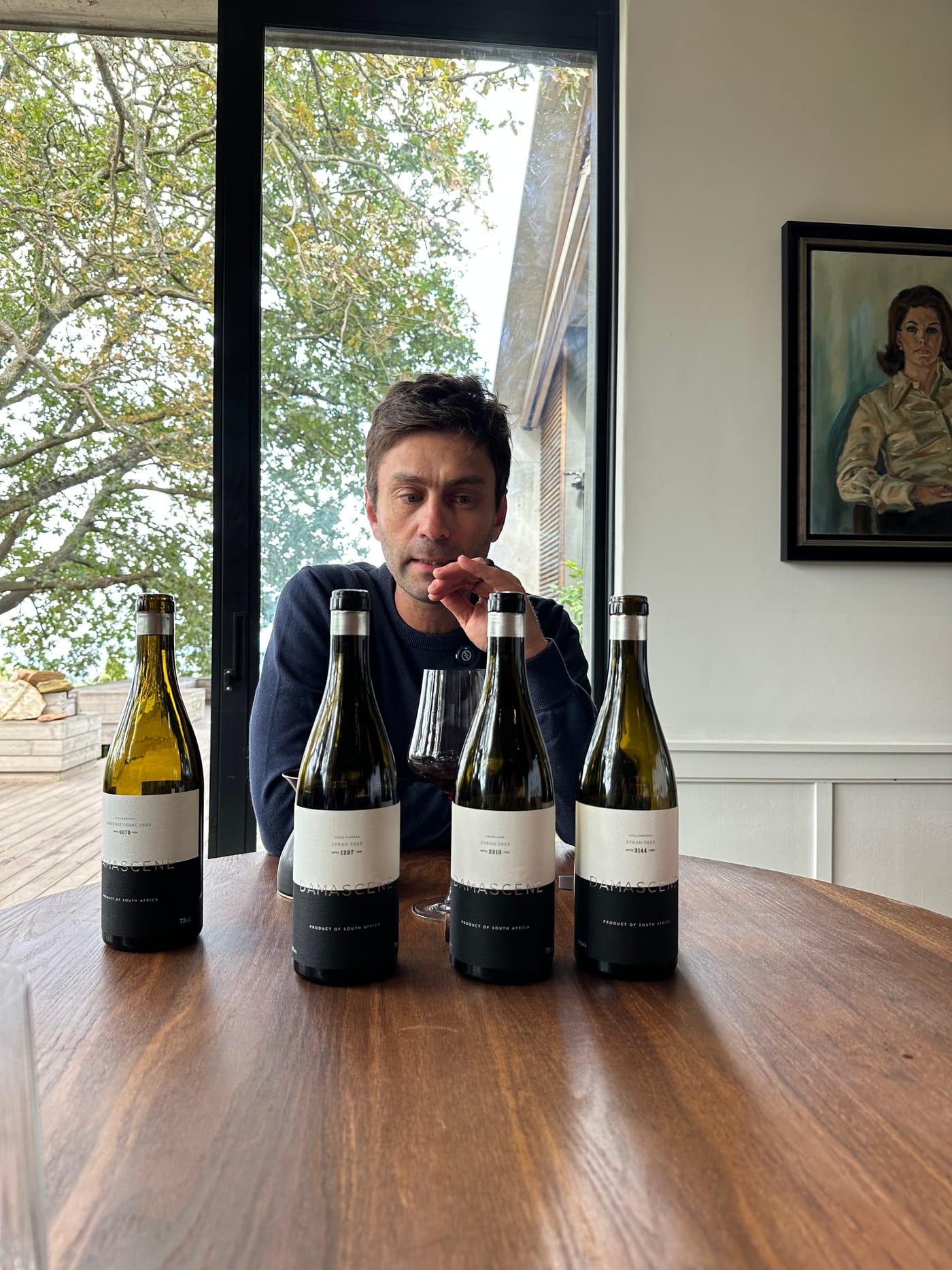
At Damascene, One Cellar Holds Many South Africas
At Damascene in Elgin, Jean Smit uses gentle cellar methods to preserve the differences among Franschhoek Sémillon, Stellenbosch Cabernet Franc, regional Syrah and Moya Meaker Riesling across South Africa’s Western Cape.
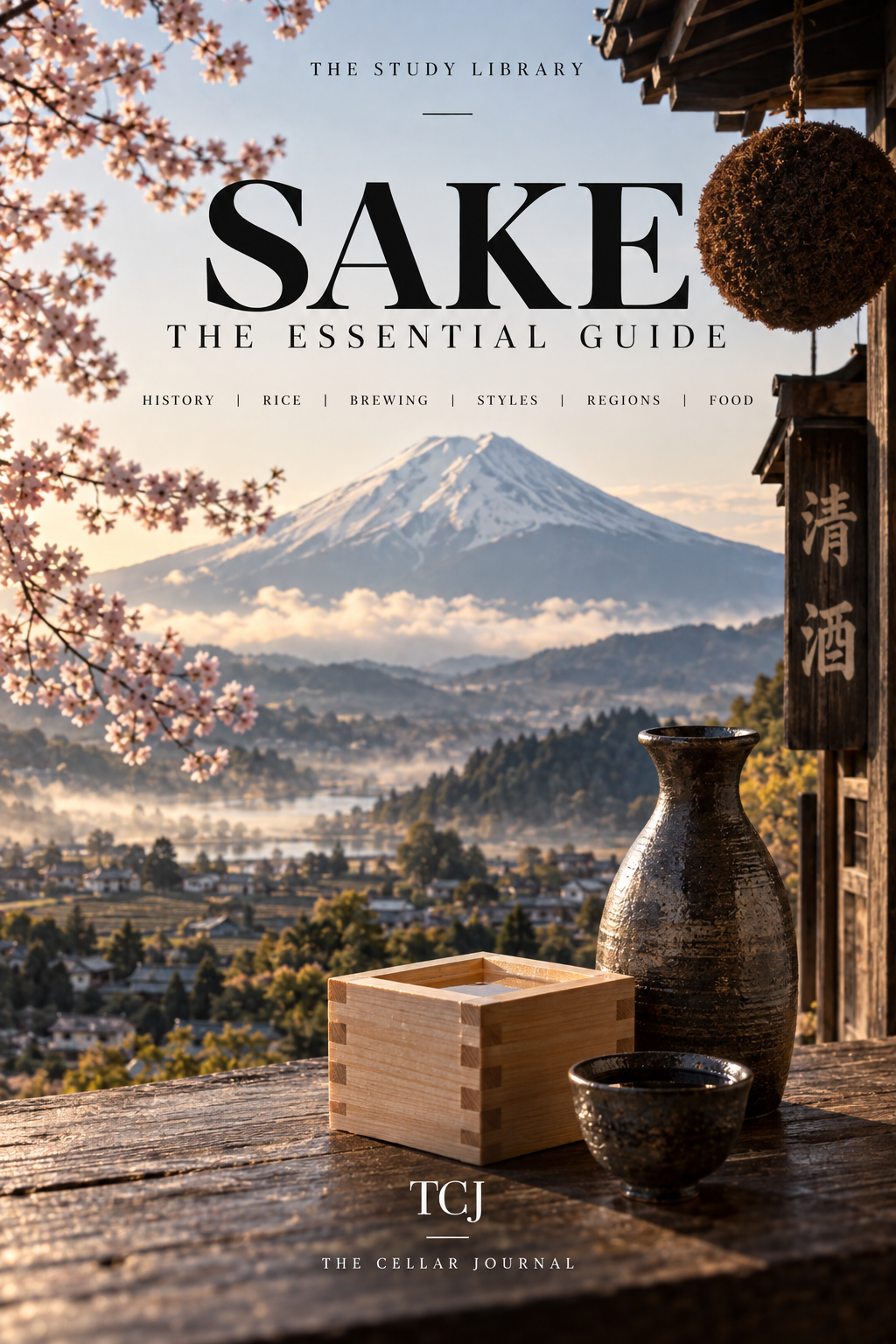
SAKE The Essential Guide
A complete introduction to sake, connecting rice, kōji, yeast, fermentation, classifications and service to explain how Japanese brewers transform a neutral grain into one of the world’s most technically complex beverages.

Thorvald Is Scaling in California Vineyards Before Full Autonomy
More than 100 Thorvald UV-C robots are expected to treat 2,600 acres of California vineyards in 2026. Research supports powdery mildew control, but cost, field reliability and a 1977 safety rule still limit full autonomy.