Champagne Beyond the Flute
The flute helped turn Champagne into a symbol of celebration. It also became one of the greatest obstacles to tasting it properly.
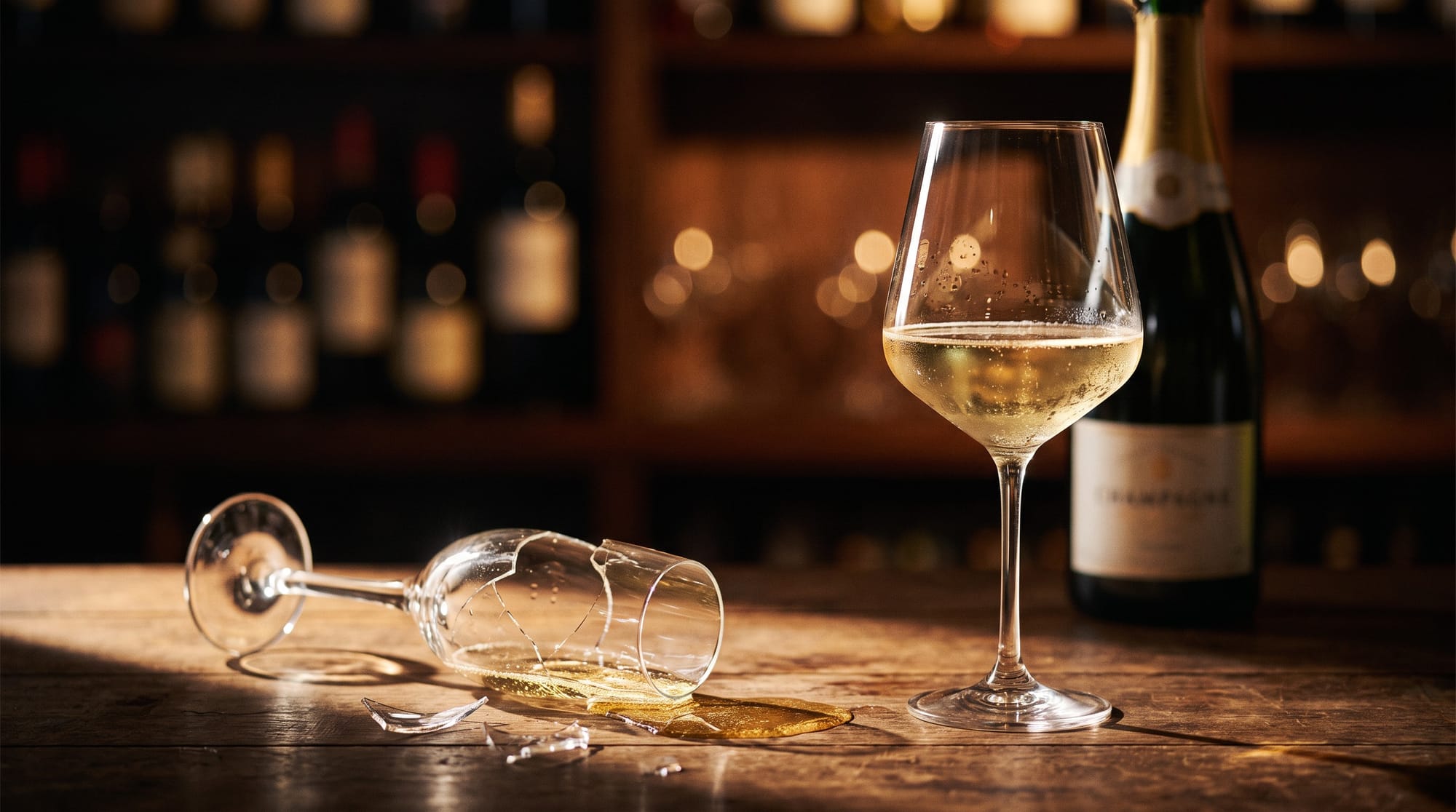
The flute helped turn Champagne into a symbol of celebration. It also became one of the greatest obstacles to tasting it properly.
For generations, the flute has been almost inseparable from Champagne. Its tall stem, narrow bowl and rising line of bubbles immediately communicate celebration, but a glass designed to display effervescence is not necessarily equipped to reveal the wine beneath it. Across serious tastings, wine bars and restaurants, wider tulip-shaped glasses and conventional white-wine stems are replacing the flute. This is not simply a change in design. It reflects the recognition that Champagne must be tasted as wine, with attention to aroma, texture, origin and evolution.
The flute became successful because it makes Champagne instantly recognisable. Its narrow opening reduces the exposed surface, while its height turns the stream of bubbles into a visual performance. The same geometry creates its central weakness: there is little room to swirl the wine, almost no space for aromas to develop and insufficient width for the nose to enter the bowl. Research led by Champagne specialist Gérard Liger-Belair has also shown that gaseous CO2 is considerably more concentrated above a flute than above a wide coupe. The result can emphasise the physical sensation of carbonation while making the wine feel sharper and less expressive.
The coupe fails in the opposite direction. Its broad, shallow surface releases bubbles and aromas too quickly. It remains a beautiful object and an excellent cocktail glass, but it is no more useful for serious Champagne service. The better solution lies between these extremes: a tall glass with a wider bowl and a tapered opening. The Comité Champagne itself recommends this tulip form because it gives the bubbles room to develop while concentrating the wine’s aromas near the rim.
When Champagne became wine again
For much of its modern commercial history, Champagne was presented first as an occasion. It marked weddings, victories, launches and the arrival of a new year. The ritual became so powerful that the contents of the bottle were often reduced to temperature, pressure and bubbles. The flute did not create that culture, but it became its perfect symbol.
The way Champagne is discussed and consumed has changed. Village, parcel, soil, grape variety, vintage, dosage, reserve wines, oak and time on lees now form part of the conversation. Grower Champagne accelerated the movement, but it extends well beyond small producers. Houses increasingly explain the origin and composition of their cuvées, mature bottles are served with food, and Blanc de Blancs, Blanc de Noirs and vintage Champagnes are compared with the same attention given to still wines.
Once Champagne is approached this way, the flute becomes indefensible. Chardonnay, Pinot Noir and Meunier do not stop being wine after the second fermentation. A serious Champagne needs room to express fruit, autolytic development, reduction, oxidation, oak and age. A medium-sized white-wine glass creates enough surface for the wine to open, permits gentle swirling and allows its aromatic layers to accumulate above the liquid. The bubbles may appear less theatrical, but the wine becomes much easier to understand.
There is a trade-off. A broader glass can release carbon dioxide more rapidly, particularly if the pour is excessive or the wine becomes warm. Yet preserving the maximum possible quantity of gas should not be the objective of Champagne service. Bowl geometry, opening, temperature, pouring technique and even the condition of the glass all influence effervescence. The useful glass is the one that finds the best relationship between bubbles and expression, rather than sacrificing the wine to protect the spectacle.
Riedel, Zalto and Gabriel-Glas
The major glassmakers have responded in different ways. Riedel continues to produce traditional flutes, but its modern Champagne Wine Glass has a wider bowl that narrows towards the rim. The design retains the vertical movement of the bubbles while creating more aromatic space, and the company presents it explicitly as a way to move beyond effervescence and reveal the character of the wine.
Zalto offers a more flexible interpretation. Its dedicated Denk’Art Champagne glass remains relatively slender at 250 millilitres, while the company also recommends its 420-millilitre White Wine glass for grower Champagne and its 555-millilitre Universal for more complex sparkling wines. Mature cuvées, extended lees ageing and oxidative styles can move into the still broader Balance glass. The logic is important: a youthful, linear non-vintage wine and a mature, oak-aged prestige cuvée do not necessarily benefit from the same bowl.
Gabriel-Glas takes the opposite approach and argues that one well-designed universal glass is sufficient. Its 510-millilitre bowl combines a broad base with a tapered opening, increasing the surface available to the wine while directing the bouquet towards the nose. The same glass is recommended for red, white, rosé and sparkling wines, placing Champagne inside the wider culture of wine rather than in a separate category defined by bubbles.
These three approaches should not be treated as absolute rules. Glass manufacturers naturally build arguments around their own designs, and no logo can replace tasting. Their common direction, however, is revealing: more room in the bowl, a narrower rim and greater attention to the wine’s aromatic expression. The traditional flute solves none of those priorities.
The TCJ position is therefore simple. Champagne should be served in a fine tulip or a medium-sized white-wine glass, including at a toast. The more mature, vinous or complex the cuvée, the stronger the case for a wider bowl. A smaller pour is equally important because it leaves space inside the glass and helps maintain temperature.
The easiest demonstration is to pour the same Champagne into a flute and a white-wine glass. Give both a few minutes and return to them as the temperature changes. The flute will make the bubbles and acidity more immediate. The wider glass will usually reveal more aroma, breadth, texture and development. It does not remove the celebration. It allows the wine to participate in it.
Abandoning the flute is not a rejection of Champagne’s ritual. It is a refusal to let that ritual diminish the wine.
Selected Sources
- Comité Champagne, official guidance on Champagne tasting and glassware.
- Gérard Liger-Belair et al., research on Champagne glass shape, dissolved carbon dioxide and gaseous CO2.
- Riedel, official Champagne glass guide and product specifications.
- Zalto, official Denk’Art glass descriptions and specifications.
- Gabriel-Glas, official universal glass design and Champagne guidance.
- L’Union, “Flûte, tulipe ou verre à vin: quel est le meilleur verre pour sublimer votre champagne?”
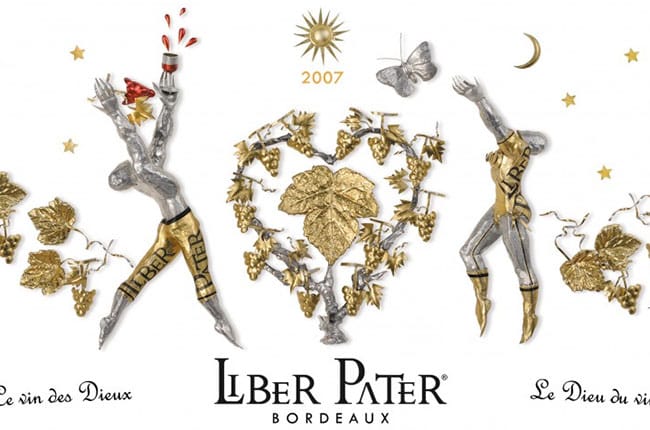
Liber Pater and the Price of Recreating Bordeaux’s Past
A 27-litre Liber Pater may fetch US$1.15 million, but the more important story is its attempt to recover the grapes, vines and taste of Bordeaux before phylloxera.
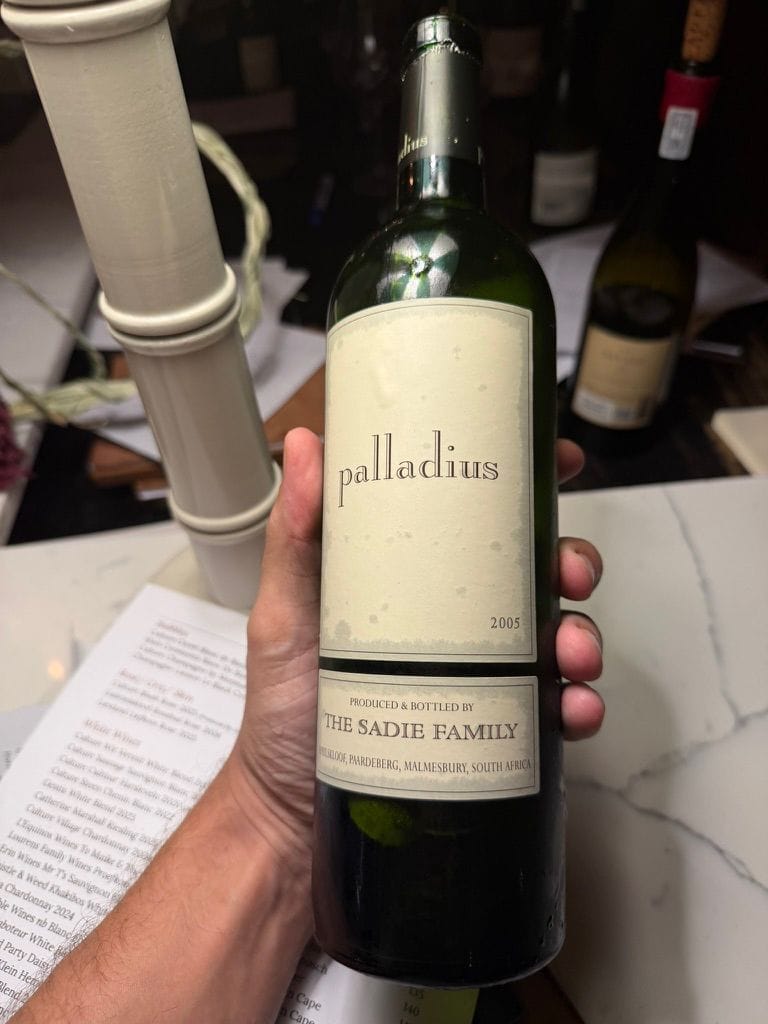
Palladius 2005: Before Swartland Became a Movement
At Culture Wine Bar in Cape Town, a remarkably fresh Palladius 2005 took us back to the years when Sadie Family was beginning to change the course of South African wine.

The World’s Best Sommelier Is Decided in 40 Minutes. Preparing Takes Years.
Nikolai Haram Svorte won the world sommelier title in Lisbon. The final lasted 40 minutes, but reaching it required years of study, tasting and service.