RHÔNE The Essential Guide
A complete introduction to the Rhône Valley, connecting its northern and southern landscapes, grapes, geology, history and appellations to explain how one river links two fundamentally different wine cultures.

The Study Library · The Cellar Journal
The Rhône Valley appears, at first, to be one continuous wine region following one of Europe's great rivers south toward the Mediterranean. In reality, it contains two remarkably different wine worlds.
The Northern Rhône is narrow, steep and strongly associated with individual appellations. Syrah dominates its red wines, while Viognier, Marsanne and Roussanne define the whites. Vineyards frequently cling to dramatic granite slopes above the river, and some of the most important wines come from remarkably small areas.
The Southern Rhône is broader, warmer and more Mediterranean. Here, Grenache becomes the central red variety and is commonly joined by Syrah, Mourvèdre, Cinsault and numerous other grapes. Blending plays a far greater role, the vineyard landscape expands across plains, plateaus and hills, and the appellation structure moves from the broad Côtes du Rhône through Villages and named villages to individual Crus.
The Rhône is therefore not best understood as one stylistic continuum. Its central idea is the contrast between north and south: Syrah and Grenache, steep slopes and open landscapes, varietal focus and assemblage, semi-continental influence and Mediterranean warmth.
The river connects them. Almost everything else changes along the way.
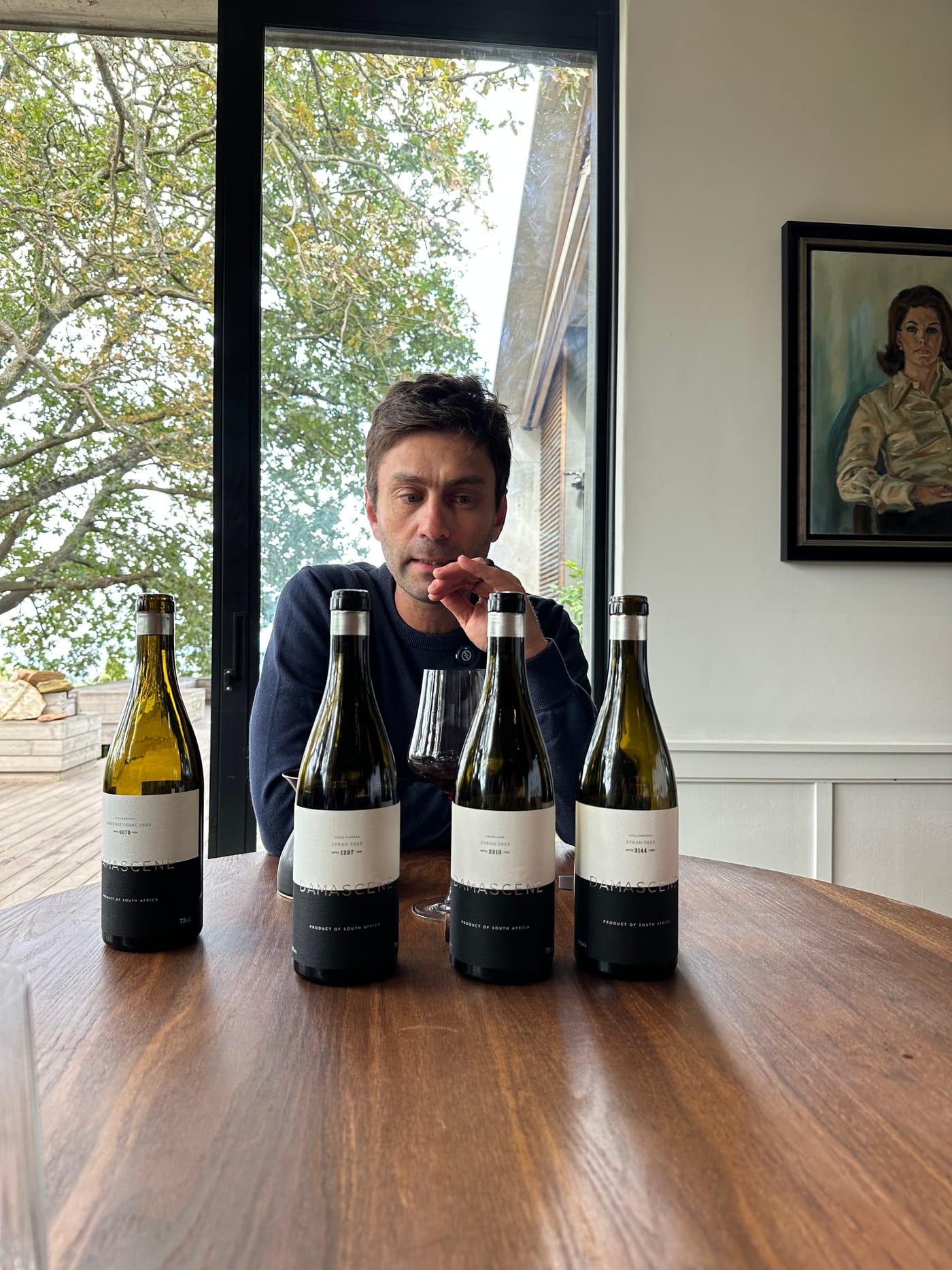
At Damascene, One Cellar Holds Many South Africas
At Damascene in Elgin, Jean Smit uses gentle cellar methods to preserve the differences among Franschhoek Sémillon, Stellenbosch Cabernet Franc, regional Syrah and Moya Meaker Riesling across South Africa’s Western Cape.

SAKE The Essential Guide
A complete introduction to sake, connecting rice, kōji, yeast, fermentation, classifications and service to explain how Japanese brewers transform a neutral grain into one of the world’s most technically complex beverages.

Thorvald Is Scaling in California Vineyards Before Full Autonomy
More than 100 Thorvald UV-C robots are expected to treat 2,600 acres of California vineyards in 2026. Research supports powdery mildew control, but cost, field reliability and a 1977 safety rule still limit full autonomy.