BRUNELLO DI MONTALCINO The Essential Guide
A complete introduction to Brunello di Montalcino, connecting Sangiovese, altitude, geology, history and the territory’s contrasting zones to explain why one grape and one denomination can produce remarkably different wines.
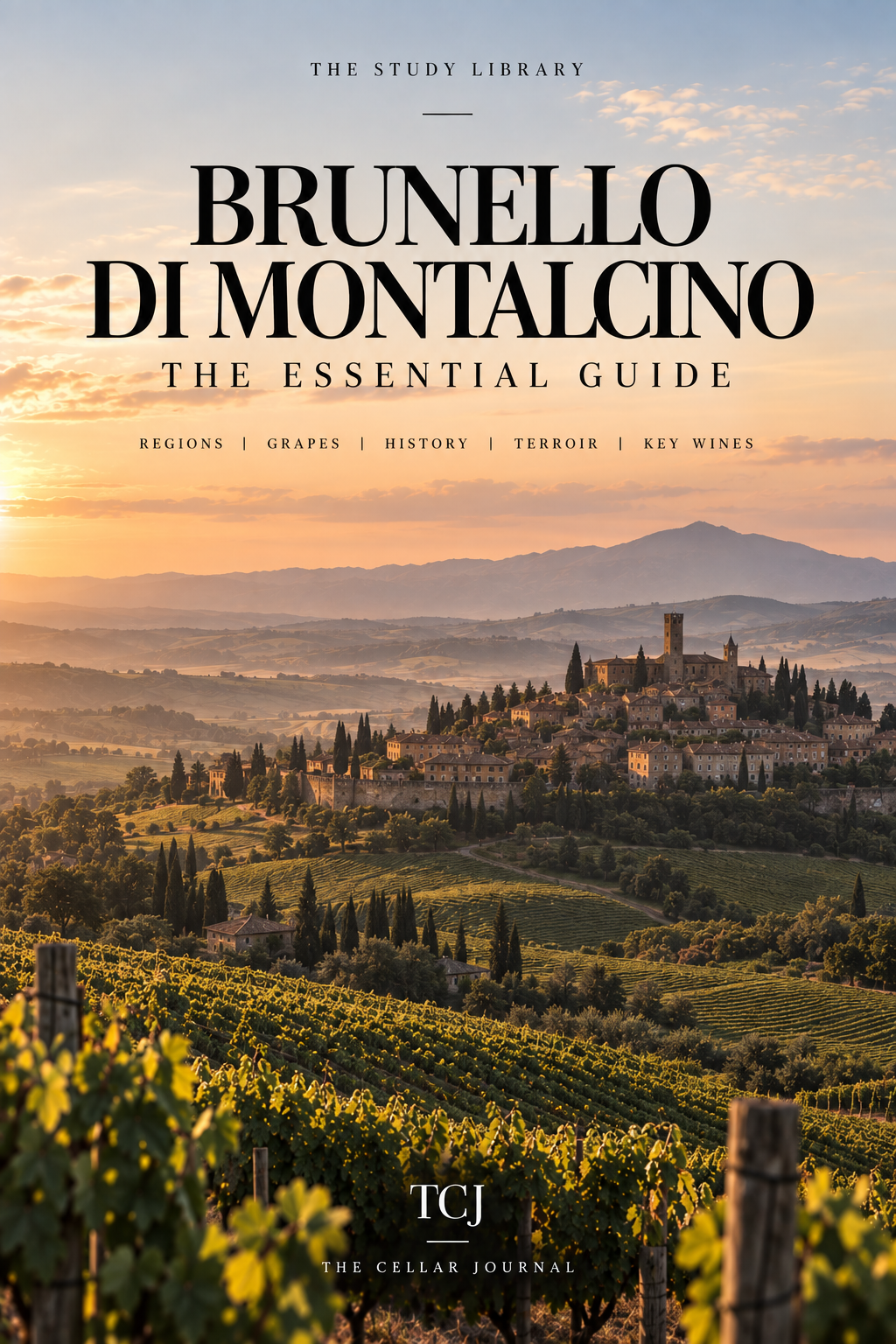
The Study Library · The Cellar Journal
Brunello di Montalcino seems simple on paper. It comes from one municipality, is made from one grape and follows one of Italy’s longest ageing regimes. Yet few Italian denominations demonstrate more clearly how misleading simplicity can be.
The grape is Sangiovese, traditionally called Brunello in Montalcino. The production area follows the historical boundaries of the municipality, but within those boundaries vineyards range from roughly 120 to more than 600 metres above sea level. Exposures change constantly across the hills, geological formations vary substantially, and the influence of altitude, wind and nearby Monte Amiata creates very different growing conditions.
The result is not one Brunello style. Wines from the cooler northern and higher sectors can develop very differently from those grown at lower elevations toward the warmer south. Montosoli, Tavernelle, Castelnuovo dell’Abate and Sant’Angelo are all part of the same denomination, but they should not be expected to behave identically.
This diversity is the key to understanding Montalcino. Brunello is best approached as Sangiovese interpreted through a large and varied territory.
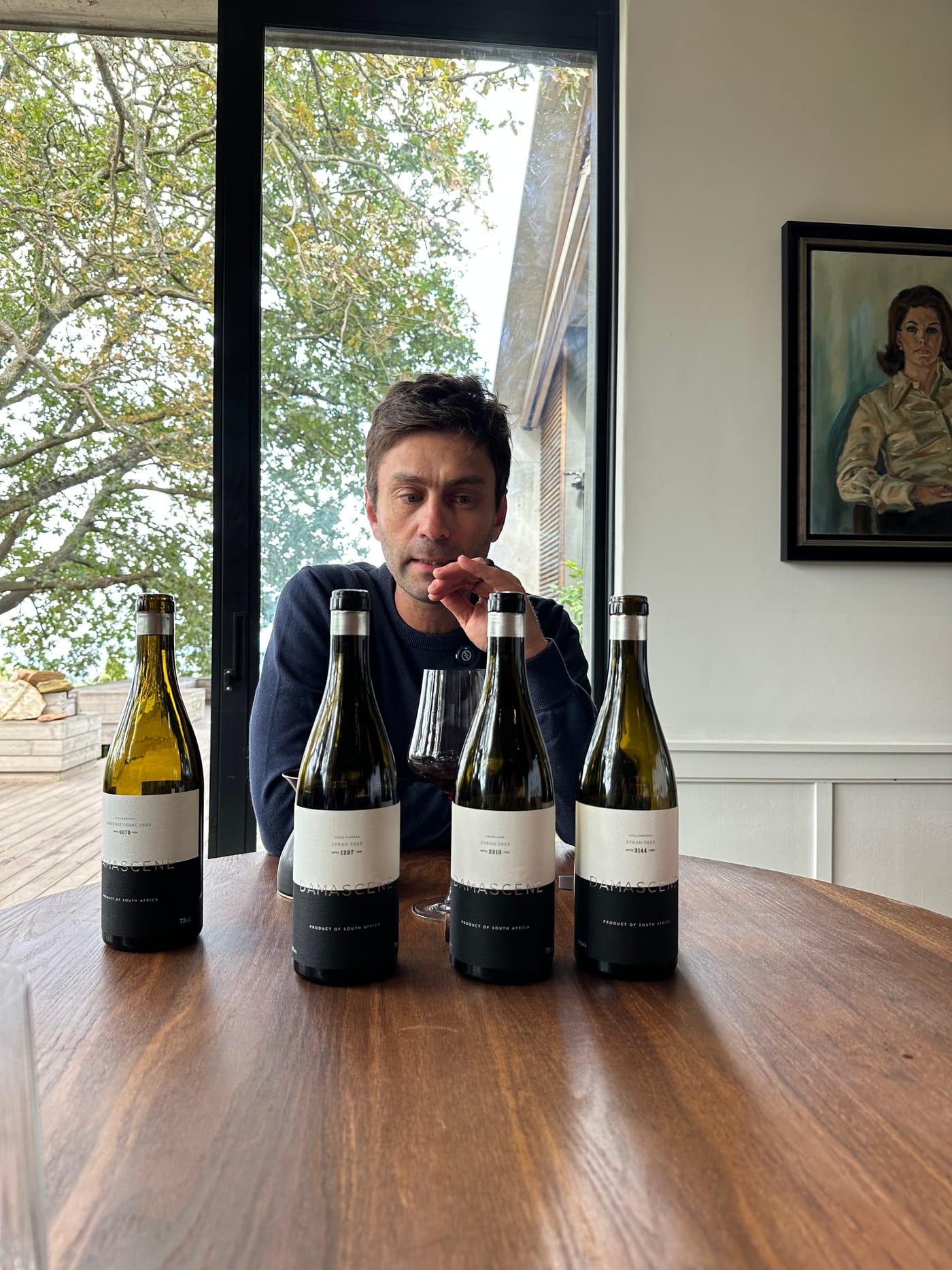
At Damascene, One Cellar Holds Many South Africas
At Damascene in Elgin, Jean Smit uses gentle cellar methods to preserve the differences among Franschhoek Sémillon, Stellenbosch Cabernet Franc, regional Syrah and Moya Meaker Riesling across South Africa’s Western Cape.

SAKE The Essential Guide
A complete introduction to sake, connecting rice, kōji, yeast, fermentation, classifications and service to explain how Japanese brewers transform a neutral grain into one of the world’s most technically complex beverages.

Thorvald Is Scaling in California Vineyards Before Full Autonomy
More than 100 Thorvald UV-C robots are expected to treat 2,600 acres of California vineyards in 2026. Research supports powdery mildew control, but cost, field reliability and a 1977 safety rule still limit full autonomy.