BAROLO & BARBARESCO The Essential Guide
A complete introduction to Barolo and Barbaresco, connecting Nebbiolo, geology, communes, MGAs, history and climate to explain how two neighbouring denominations translate the Langhe hills into remarkably different wines.
The Study Library · The Cellar Journal
Barolo and Barbaresco are often introduced together, usually through a convenient contrast: Barolo as the more powerful and structured wine, Barbaresco as the more delicate and accessible expression of Nebbiolo. There is some historical logic behind that comparison, but it is far too simple to explain what happens in the Langhe.
Both denominations are produced entirely from Nebbiolo. Their vineyards lie only a short distance apart, separated principally by the city of Alba and the Tanaro River. They share a broad geological history, similar viticultural traditions and many of the same climatic influences, yet differences in altitude, exposure, geological formations, individual hillsides and local mesoclimates create a remarkable range of expressions. A Barolo from La Morra can behave very differently from one grown in Serralunga d'Alba, just as a Barbaresco from Neive may show a very different structure from one grown in parts of Treiso.
The distinction becomes even more precise at vineyard level. Within individual communes, the Menzioni Geografiche Aggiuntive, or MGAs, identify officially delimited places whose reputations have developed through history, geology and collective experience. Barolo and Barbaresco are therefore best understood not simply as two wines, but as two neighbouring landscapes interpreted through the same grape.
The key is Nebbiolo + place.
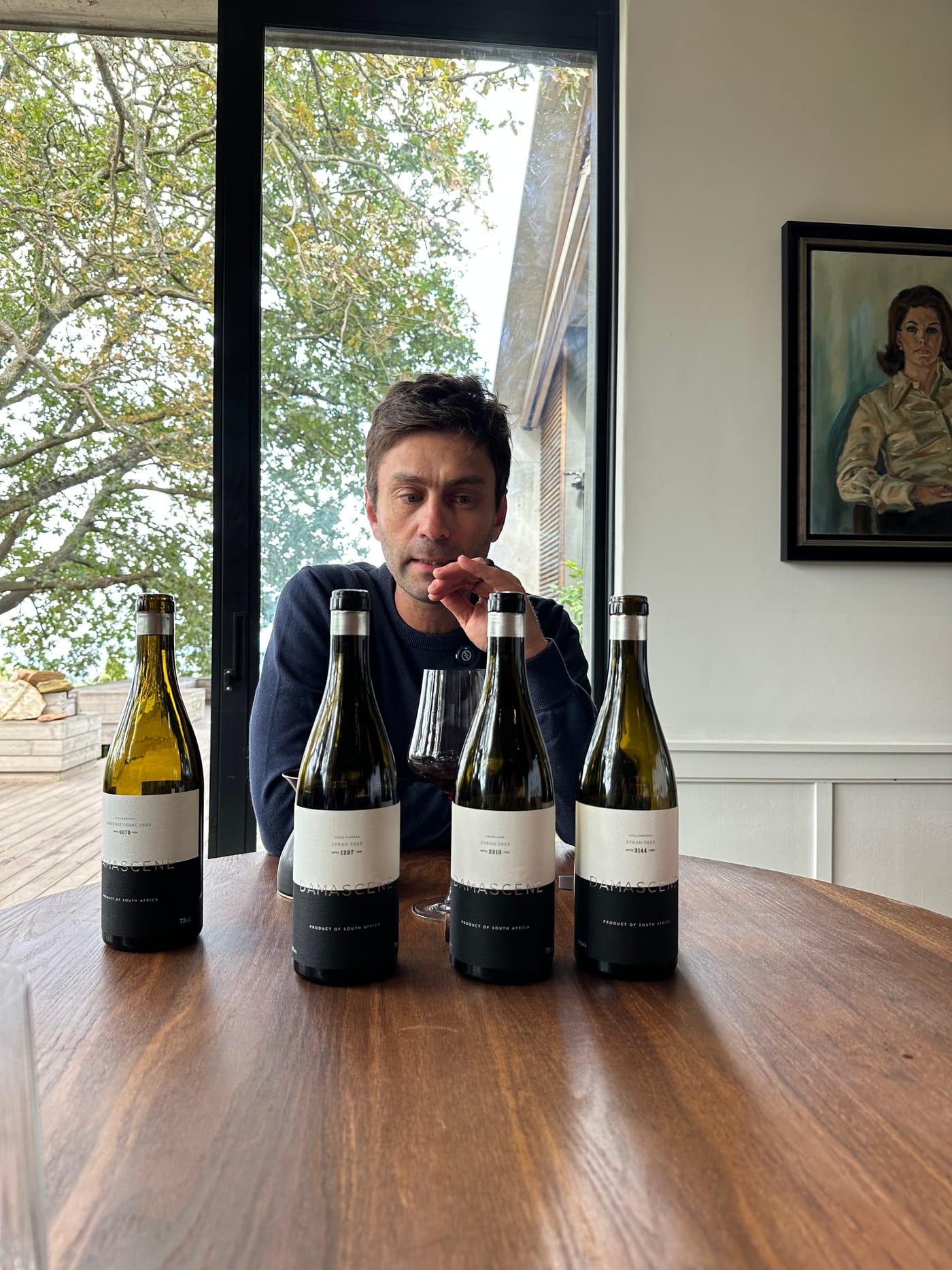
At Damascene, One Cellar Holds Many South Africas
At Damascene in Elgin, Jean Smit uses gentle cellar methods to preserve the differences among Franschhoek Sémillon, Stellenbosch Cabernet Franc, regional Syrah and Moya Meaker Riesling across South Africa’s Western Cape.

SAKE The Essential Guide
A complete introduction to sake, connecting rice, kōji, yeast, fermentation, classifications and service to explain how Japanese brewers transform a neutral grain into one of the world’s most technically complex beverages.

Thorvald Is Scaling in California Vineyards Before Full Autonomy
More than 100 Thorvald UV-C robots are expected to treat 2,600 acres of California vineyards in 2026. Research supports powdery mildew control, but cost, field reliability and a 1977 safety rule still limit full autonomy.