How Altitude Changed Mendoza
Altitude changed Mendoza when producers stopped treating elevation as a ranking and began reading soils, exposures and parcels. TCJ traces the shift from Cabernet-led icons to Malbec, Cabernet Franc and Zuccardi’s site-driven modern style.

Argentina’s fine-wine identity moved from Cabernet-led prestige to a more precise map of Malbec, Cabernet Franc and Andean sites. The decisive change was not simply going higher, but learning to read the differences within height.
Altitude was always there
Altitude now appears on Argentine wine labels almost as naturally as the grape variety. A bottle may announce 1,100 metres, 1,350 metres or 1,450 metres before it explains the soil, the exposure or the people who farmed the site. The number is useful. It is also incomplete.
Mendoza did not discover altitude at the end of the twentieth century. Its vineyards had always been planted on an elevated desert plain shaped by the Andes and made cultivable by irrigation. What changed was the role assigned to elevation. It stopped being background geography and became a method for searching, classifying and explaining style.
That change coincided with another. Argentina moved from a domestic industry in which its most ambitious wines frequently spoke the language of Cabernet Sauvignon and Bordeaux blends to an export identity organized around Malbec. It then moved again, from Malbec as a national signature to Malbec as a vehicle for distinguishing places. Cabernet Franc arrived at precisely this later moment, when the country had begun asking not only which grape represented Argentina, but which site a wine represented.
This is a point of view, not a verdict. Disagree with us — write to the editors.
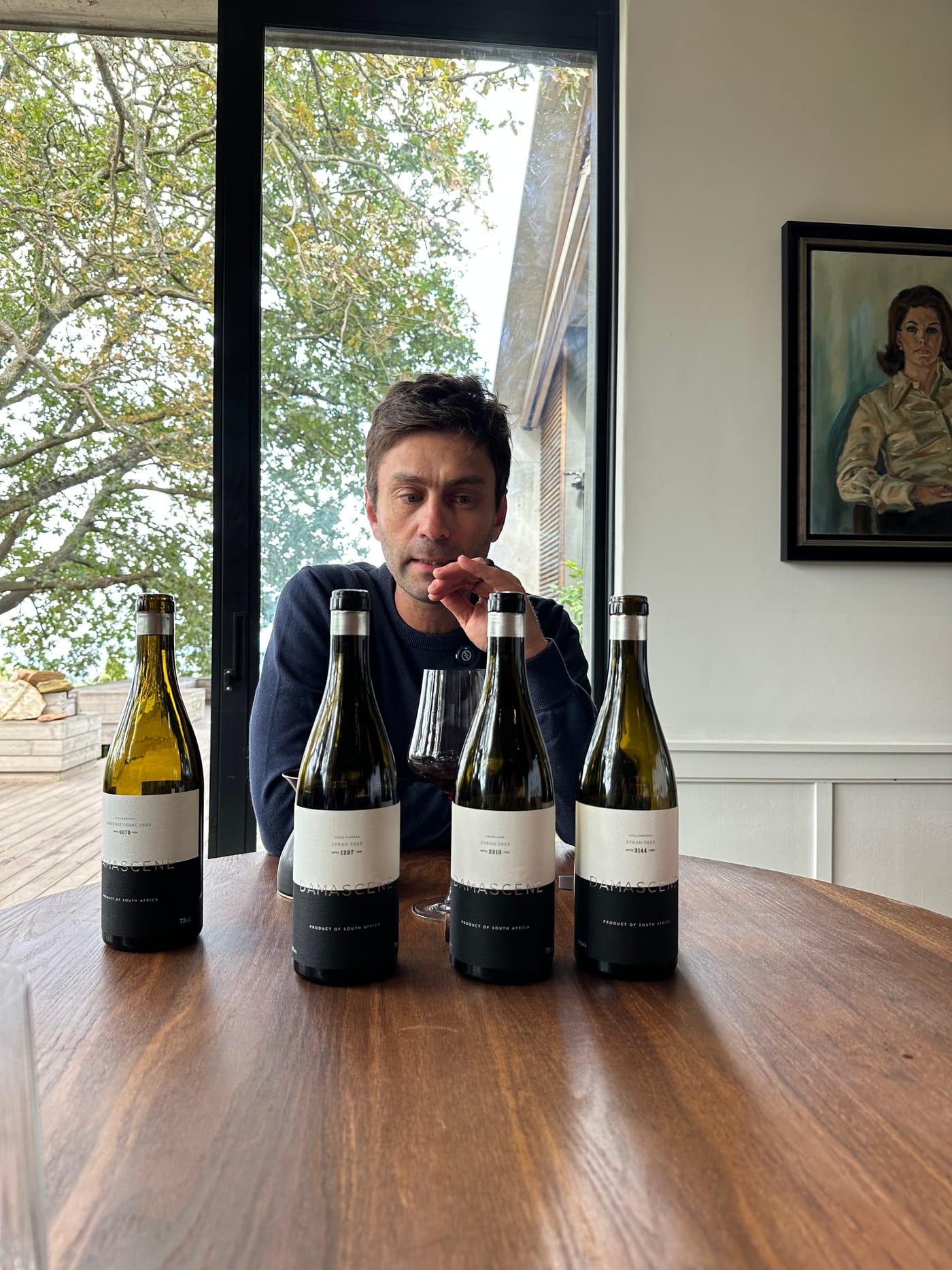
At Damascene, One Cellar Holds Many South Africas
At Damascene in Elgin, Jean Smit uses gentle cellar methods to preserve the differences among Franschhoek Sémillon, Stellenbosch Cabernet Franc, regional Syrah and Moya Meaker Riesling across South Africa’s Western Cape.

SAKE The Essential Guide
A complete introduction to sake, connecting rice, kōji, yeast, fermentation, classifications and service to explain how Japanese brewers transform a neutral grain into one of the world’s most technically complex beverages.

Thorvald Is Scaling in California Vineyards Before Full Autonomy
More than 100 Thorvald UV-C robots are expected to treat 2,600 acres of California vineyards in 2026. Research supports powdery mildew control, but cost, field reliability and a 1977 safety rule still limit full autonomy.