The Grape Pips That Turned Wine History into Genetic Evidence
Ancient grape DNA traces four millennia of migration, selection and clonal continuity, challenging the idea that wine heritage was ever static.

A genome-wide study of archaeological grape seeds traces domestication, long-distance exchange and clonal propagation across four millennia. The findings challenge a static idea of wine heritage, but they do not reconstruct the wines themselves.
What happened
A study published in Nature Communications has produced genome-wide ancient DNA data from 49 newly sequenced archaeological grape pips. Forty-seven came from sites in present-day France and two from Ibiza. Together with previously published material, the researchers analysed 54 ancient grape genomes from 20 archaeological sites, spanning the Bronze Age to the late Middle Ages, approximately 2300 BCE to 1500 CE.
The pips survived in waterlogged environments, a preservation condition that protected enough organic material for whole-genome shotgun sequencing. Most of the newly assembled samples date to the Roman period, which gives that era stronger representation than the periods before and after it. The study is therefore broad in time, but not evenly distributed across that timeline.
The headline result is a medieval pip from Valenciennes, dated to 1400 to 1500 CE, that is genetically identical to modern Pinot Noir. A second medieval sample, from Ibiza and dated to 1027 to 1160 CE, matched Folha de Figueira, a white cultivar still grown in Portugal. These are direct genetic connections between archaeological plant remains and varieties that survive today.
What the DNA confirms
The oldest pips in the study, from Bronze Age Nimes, belong to wild western European grape lineages already present around 2300 to 2000 BCE. The earliest sample carrying exclusively domesticated ancestry came from the Iron Age site of Saint-Maximin, dated to approximately 625 to 500 BCE. Other Iron Age samples show both introduced cultivated lineages and local wild ancestry, indicating that early viticulture in southern France was not built from a single genetic source.
By the Roman period, the genetic landscape had become considerably more diverse. The pips contain affinities associated with present-day Iberia, the Balkans, the Levant and the Caucasus, alongside western European material. The evidence does not identify the person or transaction behind each movement, but it supports a viticulture shaped by Mediterranean exchange rather than by isolated regional development.
The most consequential finding may be the evidence for vegetative propagation. Genetically identical vines appear at different sites and in different centuries. One clonal line connects Roman-era Limoges with medieval Valenciennes, approximately 530 kilometres apart and separated by about one thousand years. Because a seed produced through sexual reproduction would not preserve an identical genome in this way, the match indicates the repeated multiplication and movement of vines through cuttings or related vegetative methods.
The researchers conclude that clonal propagation was established by at least the middle Iron Age and became a durable foundation of viticulture. This is more significant than simply proving that one famous variety is old. It shows how human selection could preserve a vine identity over centuries while exchange networks carried it across substantial distances.
The Pinot Noir finding, properly framed
The Valenciennes sample establishes that the genetic identity recognised today as Pinot Noir was fully formed no later than the end of the fifteenth century. It adds to earlier ancient DNA work that connected an approximately 1100 CE sample from Orleans with modern Savagnin Blanc and identified Roman pips closely related to Pinot Noir.
It does not prove that a medieval wine tasted like a modern Burgundy, nor that the grape was grown in the same way or for the same purpose. The pip was recovered in Valenciennes, far from Burgundy, and the archaeological context alone cannot determine whether its fruit was vinified, eaten fresh or transported as another form of produce. Genetic identity is evidence of biological continuity, not sensory continuity.
The distinction matters because the familiar name can turn a rigorous scientific result into a prestige story. The value of the finding is not that antiquity makes Pinot Noir more important. It is that a living cultivar can now be placed inside a documented chain of propagation extending almost six centuries.
What remains unknown
A grape genome cannot reconstruct a finished wine. It does not provide the vineyard site, yield, harvest date, fermentation method, ageing vessel or the environmental conditions that shaped the fruit. Even an identical cultivar can produce radically different outcomes when climate, soil, disease pressure, rootstock, selection material and farming practices change.
The sample also has preservation bias. Every newly collected pip came from a waterlogged context, and half of the specimens used in the wider study belong to the Roman era. The authors state that more pre-Roman and post-Roman material is needed before the changing diversity of French viticulture can be resolved at a finer scale.
The study points toward future research on traits including berry colour, composition, flowering and ripening, but these possibilities are not yet results. Ancient DNA may eventually help investigate lost agronomic diversity or historical adaptation to climate. It does not currently identify a ready solution for heat, drought or disease in contemporary vineyards.
TCJ View
Wine culture often describes heritage as permanence: an old variety rooted in one place and transmitted without interruption. The DNA record presents something more interesting. European viticulture was built through continuity and movement at the same time. Growers preserved chosen plants clonally, but those plants travelled, crossed regions and entered new local contexts.
This complicates the idea that authenticity depends on genetic isolation. The early vineyards of France combined local wild material with cultivated lineages connected to several parts of the Mediterranean and western Asia. What later became regional identity emerged from selection, exchange and adaptation. Heritage was made, not merely inherited.
For TCJ, the most important contribution of the study is methodological. A pip can now test stories that were previously assembled from texts, shapes and modern analogies. It cannot tell us everything, and it should not be asked to. But it can separate continuity from assumption and movement from myth. The future value of this archive will depend on resisting the temptation to use one famous name as the conclusion. Pinot Noir is the recognisable detail. The larger discovery is the long human system that allowed a vine to survive history.
Sources
Nature Communications: Ancient DNA reveals 4000 years of grapevine diversity, viticulture and clonal propagation in France, published March 24, 2026
https://www.nature.com/articles/s41467-026-70166-z
La Revue du vin de France: Ce que revele l ADN des pepins anciens, published August 26, 2026
https://www.larvf.com/ce-que-revele-l-adn-des-pepins-anciens,4939088.asp

WINE TASTING The Essential Guide
The Study Library · The Cellar Journal Wine tasting can look far more complicated than it really is. A professional puts their nose into a glass and starts talking about blackcurrants, violets, graphite, leather or wet stones, while someone listening may reasonably wonder whether all of those things are actually there,

ENGLISH WINE The Essential Guide
A complete introduction to English wine, connecting climate, geology, grapes, sparkling wine and modern history to explain how a marginal wine country became one of the world’s most dynamic cool-climate regions.
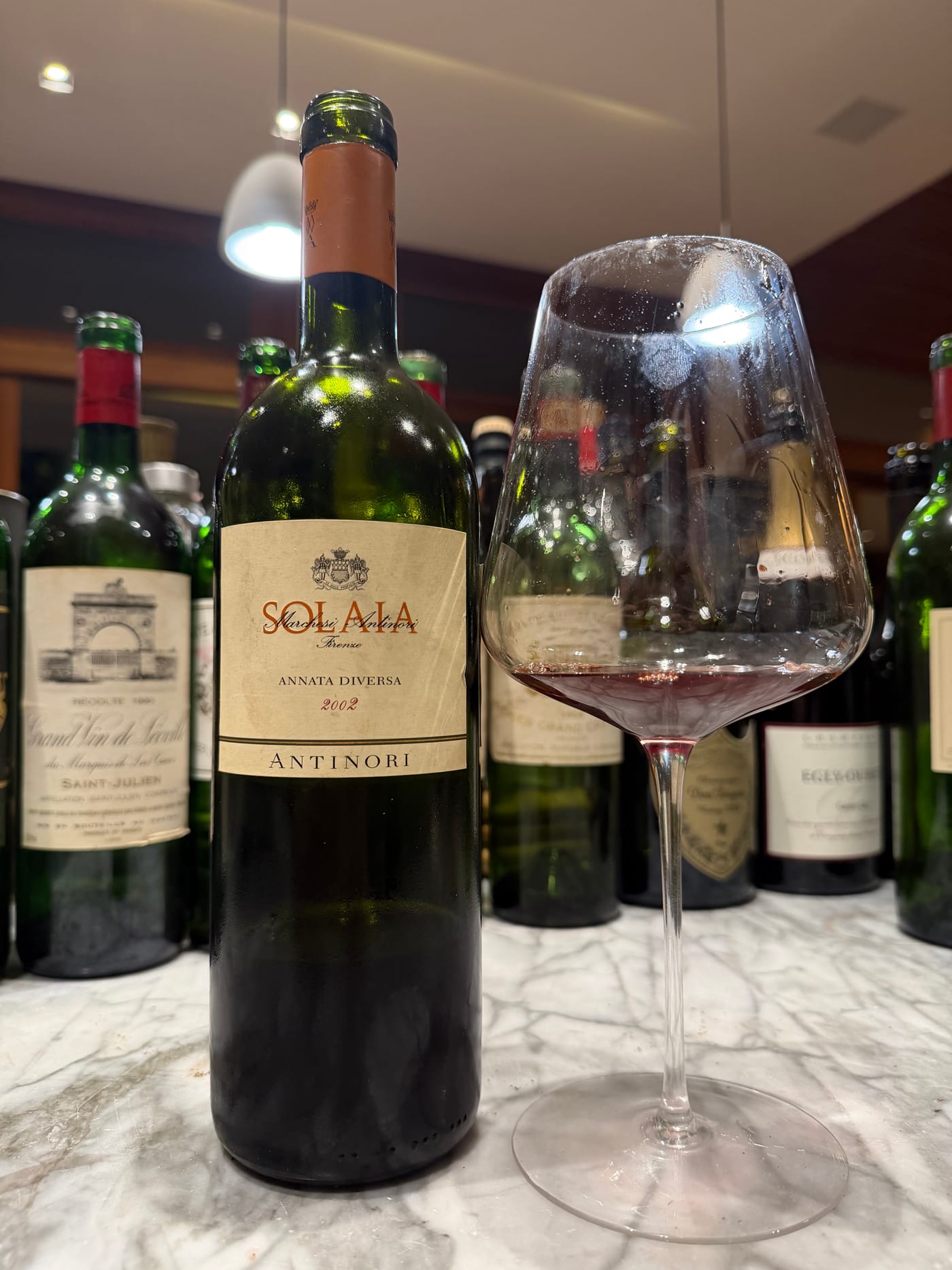
Solaia Annata Diversa 2002: A Different Vintage, a Singular Wine
Solaia 2002 is the only vintage to carry the words Annata Diversa, after a difficult Tuscan season removed Sangiovese from the blend. More than two decades later, the wine was alive, elegant and finely textured, with the composure of mature Bordeaux and an identity entirely its own.