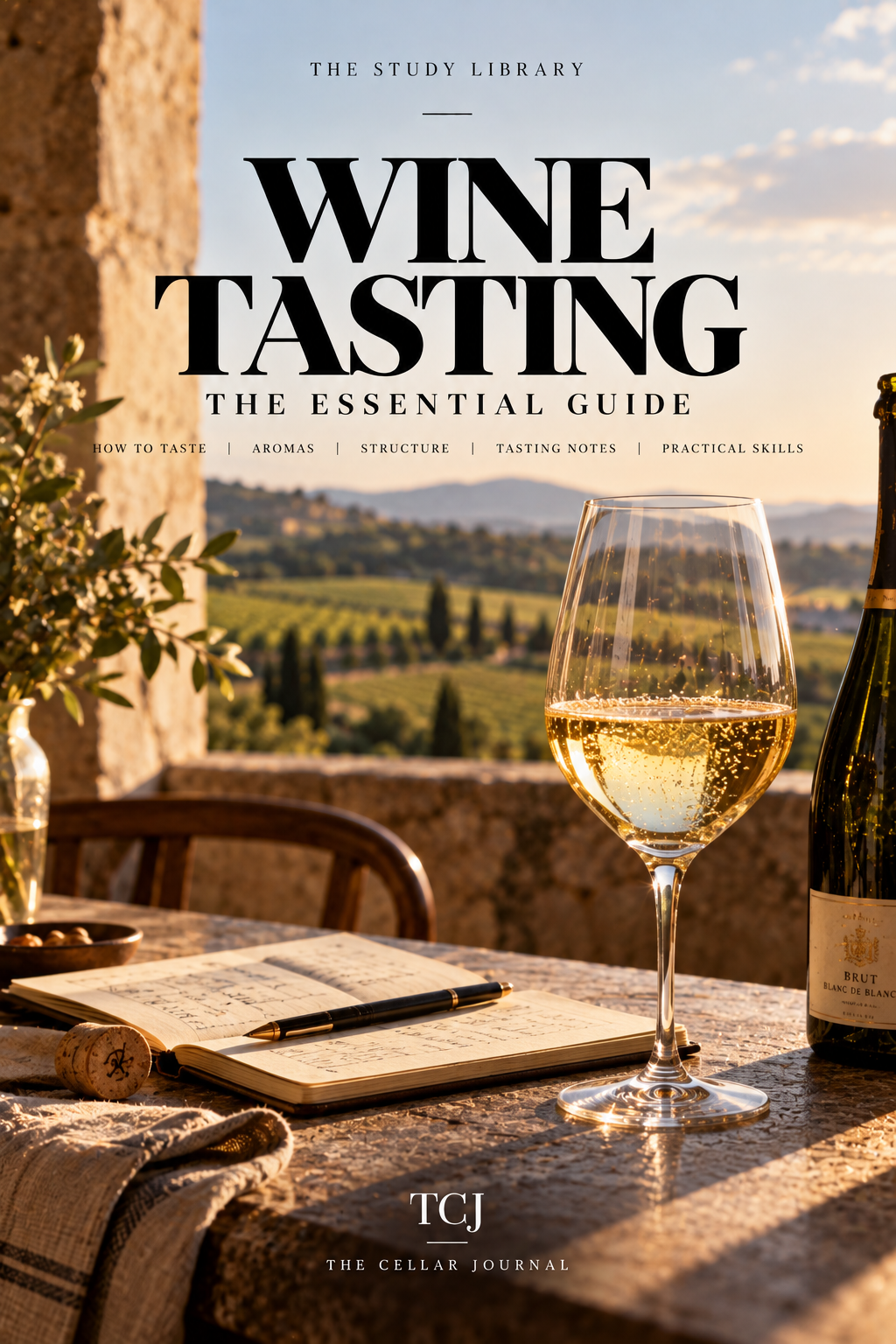
WINE TASTING The Essential Guide
The Study Library · The Cellar Journal
Wine tasting can look far more complicated than it really is. A professional puts their nose into a glass and starts talking about blackcurrants, violets, graphite, leather or wet stones, while someone listening may reasonably wonder whether all of those things are actually there, whether they are supposed to smell them too, and whether not finding them means they are doing something wrong.
It does not. Tasting wine is not a competition to identify the greatest number of aromas. It is a way of paying attention. The goal is to slow the experience down enough to understand what is in the glass: how intense it is, how fresh, how rich, how tannic, how aromatic, how long it lasts and, finally, whether you enjoy it. A useful tasting method is therefore not the most complicated one, but the one you can repeat consistently. The source follows the same principle, using professional ideas in direct language and emphasizing practical skills rather than memorization. WINE A TASTING COURSE
The central idea is simple:
Do not begin by trying to identify the wine. Begin by trying to understand it.

Failla’s $17.5 Million Debt Crisis Is Bigger Than One Winery
Failla Wines faces possible foreclosure after its lender claimed more than $17.5 million in unpaid debt. The case shows how slower wine sales, higher interest rates and illiquid real estate can threaten even one of California’s most respected producers.
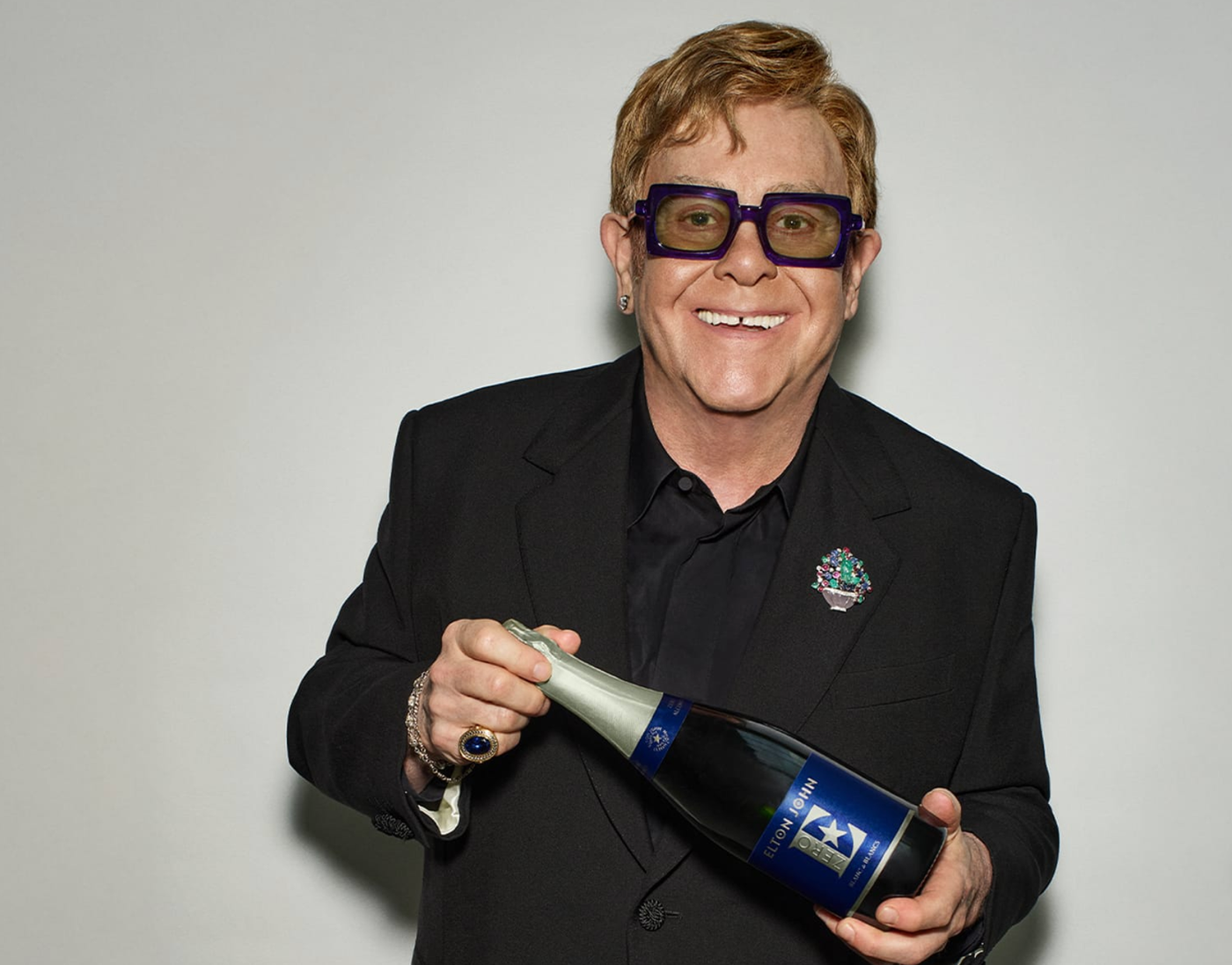
Elton John Zero Is Not Dealcoholized Wine. That Is Precisely the Point.
Elton John Zero is not a finished wine with the alcohol removed. Made with 7% fermented Chardonnay concentrate, green-tea tannin and carbonation, it represents a new generation of wine-inspired drinks built for occasions when consumers want the ritual without the alcohol.
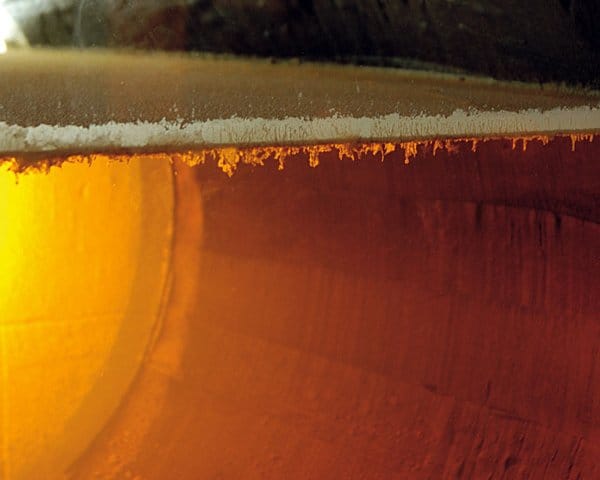
Sherry Week almost over. The Work of Keeping Jerez Alive Is Not.
Sherry Week has become more than a global celebration. As sales continue their long decline, the initiative is helping Jerez turn admiration into consumption, while the rise of vinos de pasto offers a new route into one of wine’s richest and most complex cultures.