South Australia's A$109 Million Wine Package Finances Survival and Exit
South Australia's A$109 million wine package is mostly a loan pool. Its significance lies in financing not only survival, but the voluntary conversion of vineyards the government now accepts may no longer be viable.

Most of the headline package is repayable credit, not a grant. Its deeper significance is that the state is preparing to support both viable wine businesses and growers who choose to leave unviable vineyards.
What happened
The South Australian government has announced a wine industry package valued at approximately A$109 million. The programme combines government-backed loans, export promotion, transition advice, waste and inventory work, a new industry co-ordinator and planning changes in the Riverland. Its stated purpose is not only to stimulate sales. It is to help growers move unviable vineyards toward other land uses while supporting the parts of the sector considered capable of remaining competitive.
The central measure is a A$100 million loan scheme for eligible growers seeking to convert unviable vineyards to more sustainable or higher-value uses. The government says loans of up to A$500,000 will require no principal or interest payments during the first two years. The published announcement does not yet specify the later interest rate, the total term, security requirements, application dates or the tests that will determine whether a vineyard is unviable.
The remaining named measures are much smaller. They include A$5 million to extend the Global Wine Growth Program for two years, A$675,000 for advertising, A$2 million for a solution to copper chrome arsenate treated vineyard posts, A$1 million for independent diversification advice and A$500,000 to develop industry-led responses to surplus wine stocks. Those allocations total A$9.175 million, which explains why the package is presented as A$109 million after rounding.
The headline is mostly credit
Calling the announcement a A$109 million lifeline can obscure its financial structure. More than 91 percent of the stated value is a loan pool. It is capital that may improve immediate cash flow and fund removal or conversion work, but it remains repayable. The direct programme spending named by government is a little over A$9 million, together with an unpriced co-ordination role and planning changes.
That distinction matters because some distressed growers face vineyards whose likely revenue no longer covers production costs. New debt can fund conversion. It becomes an additional burden when it merely carries an uneconomic property through two more seasons.
The two-year payment holiday therefore buys time, not resolution. Its value will depend on what can be completed during that period: vines removed, treated posts stored or processed, water and land decisions made, alternative crops established, buyers secured and businesses reorganised. If those steps are delayed, the scheme risks postponing the adjustment it is designed to support.

WINE TASTING The Essential Guide
The Study Library · The Cellar Journal Wine tasting can look far more complicated than it really is. A professional puts their nose into a glass and starts talking about blackcurrants, violets, graphite, leather or wet stones, while someone listening may reasonably wonder whether all of those things are actually there,

ENGLISH WINE The Essential Guide
A complete introduction to English wine, connecting climate, geology, grapes, sparkling wine and modern history to explain how a marginal wine country became one of the world’s most dynamic cool-climate regions.
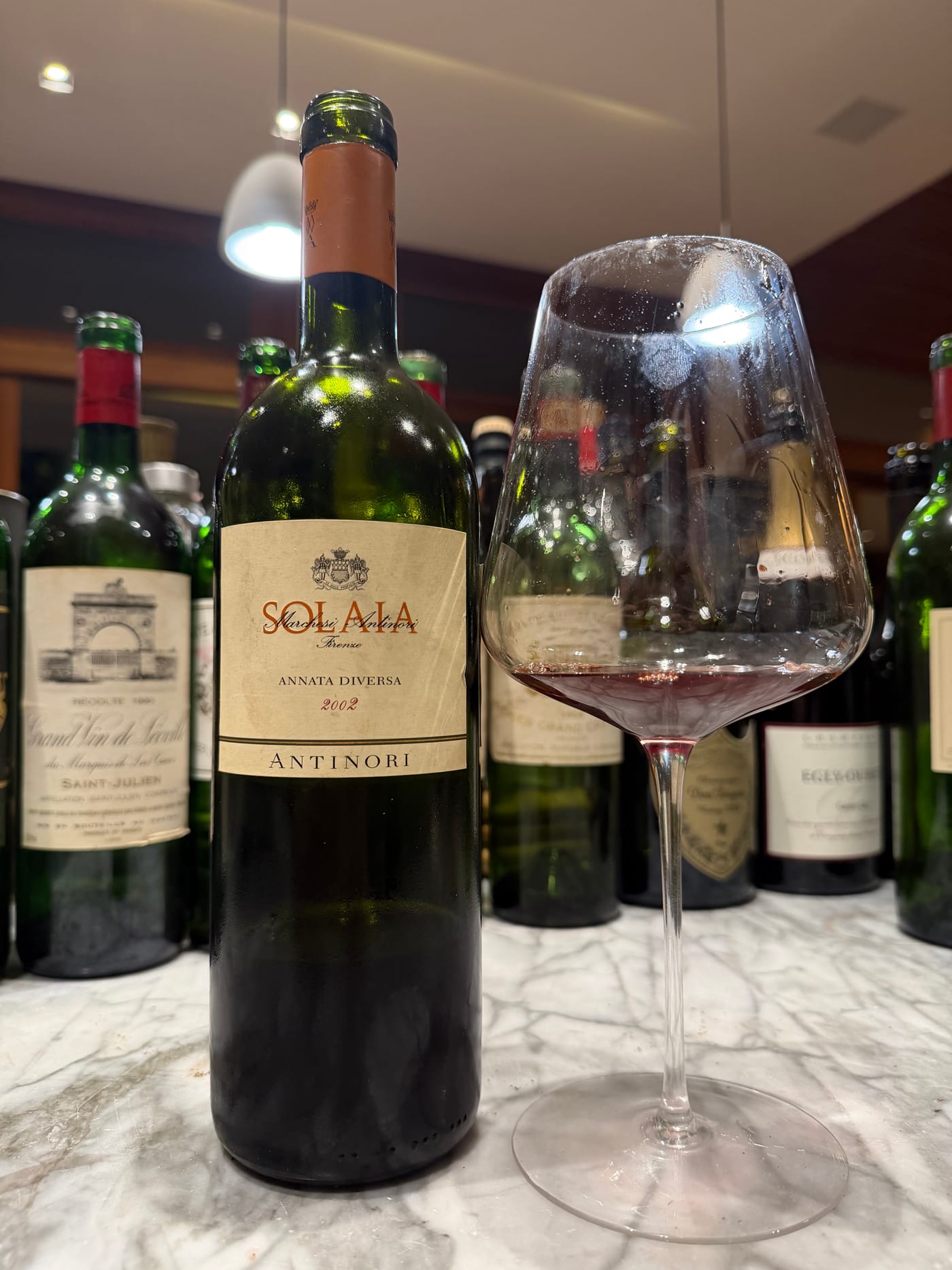
Solaia Annata Diversa 2002: A Different Vintage, a Singular Wine
Solaia 2002 is the only vintage to carry the words Annata Diversa, after a difficult Tuscan season removed Sangiovese from the blend. More than two decades later, the wine was alive, elegant and finely textured, with the composure of mature Bordeaux and an identity entirely its own.