Sherry-Lehmann Blamed the Press for Its Collapse. A Judge Rejected the Case
A judge rejected Sherry-Lehmann’s claim that a coordinated campaign caused its collapse. The ruling leaves a larger question: how should fine-wine buyers be protected when trust fails?

A federal judge has dismissed the historic New York wine merchant’s lawsuit against a journalist and former executives. The ruling does not resolve every question surrounding undelivered orders and stored bottles, but it weakens the company’s attempt to present its collapse as the result of a coordinated campaign.
What happened
For generations, Sherry-Lehmann was one of the defining names of the American fine-wine trade. Founded in 1934, the New York merchant helped introduce collectors to Bordeaux futures, Champagne and mature European wines at a time when the United States was still developing its modern wine culture. Its catalogues, now preserved in research collections, document not only the history of the company but also the growth of fine-wine buying in America.
By 2023, that position had collapsed. The Park Avenue store closed after its liquor licence expired, customers reported wines paid for but never delivered, and others struggled to recover bottles entrusted to the company’s Wine Caves storage operation. Investigations, unpaid-rent claims and lawsuits followed.
Sherry-Lehmann eventually offered a very different explanation for what had happened. In May 2025, the company filed a federal lawsuit against former chief executive Michael Aaron, other former executives and New York Times journalist James B. Stewart. It alleged that the defendants had worked together to damage the company, generate hostile coverage, provoke investigations and prevent a potential acquisition.
The case was brought under the Racketeer Influenced and Corrupt Organizations Act, better known as RICO. Although the law is commonly associated with organised crime, it can also be used in civil proceedings involving an alleged enterprise conducting a pattern of unlawful activity. To succeed, however, a plaintiff must establish more than the existence of several people whose actions harmed the same company. It must plausibly show that those participants were working toward a shared objective.
On September 29, US District Judge Andrew L. Carter Jr. dismissed the case. According to the court’s reasoning reported by Reuters, Sherry-Lehmann’s own complaint assigned different motivations to the defendants. Aaron was allegedly attempting to escape financial obligations connected to the company’s lease, while Stewart was accused of pursuing publicity and professional recognition through his reporting.
Those allegations might describe separate interests, the judge concluded, but they did not establish the common purpose required for a RICO enterprise. The court also dismissed a related state-law claim against Aaron concerning an alleged breach of his separation agreement. Lawyers representing Sherry-Lehmann had meanwhile requested permission to withdraw from the case, citing unpaid legal fees.

WINE TASTING The Essential Guide
The Study Library · The Cellar Journal Wine tasting can look far more complicated than it really is. A professional puts their nose into a glass and starts talking about blackcurrants, violets, graphite, leather or wet stones, while someone listening may reasonably wonder whether all of those things are actually there,

ENGLISH WINE The Essential Guide
A complete introduction to English wine, connecting climate, geology, grapes, sparkling wine and modern history to explain how a marginal wine country became one of the world’s most dynamic cool-climate regions.
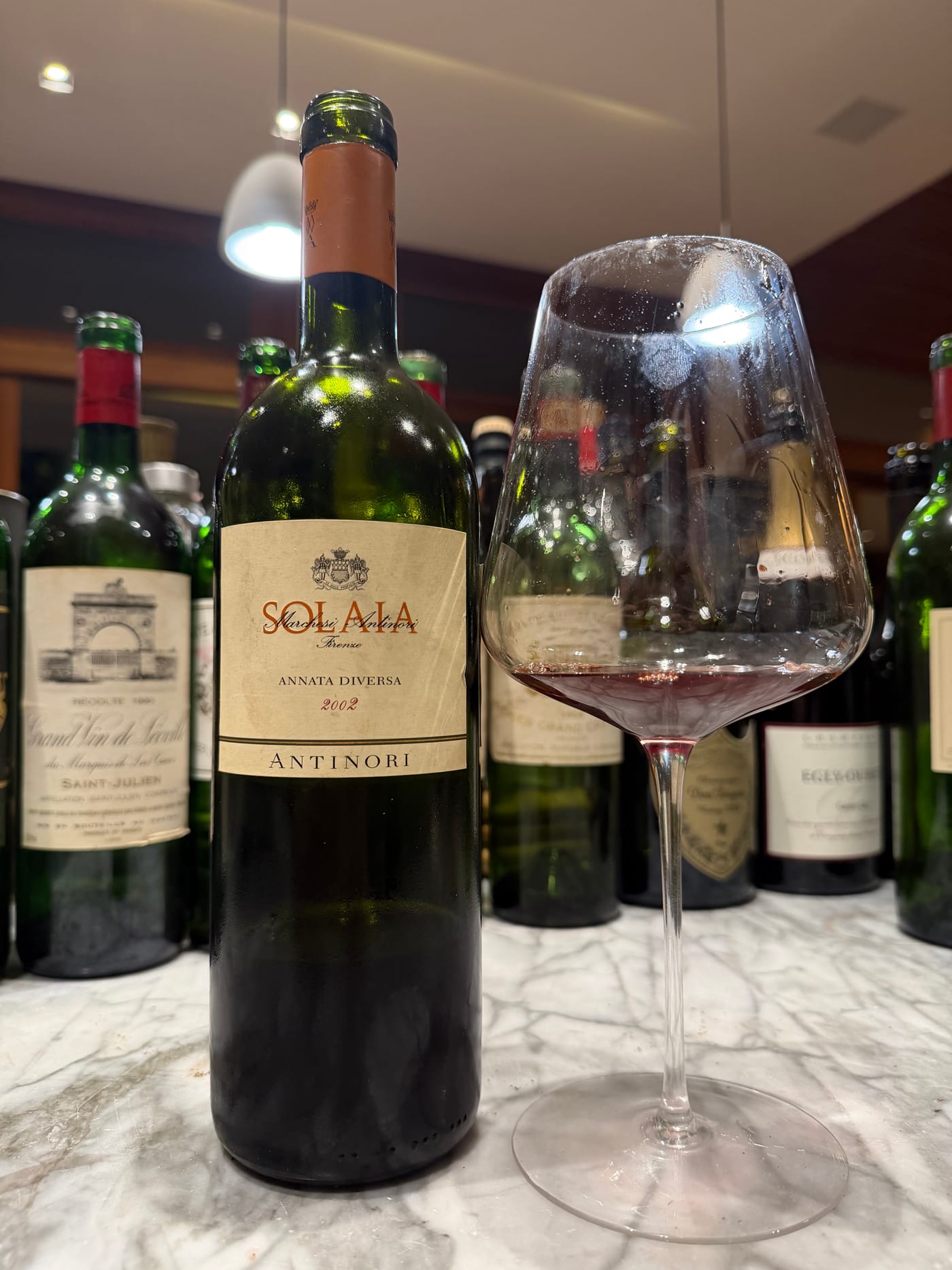
Solaia Annata Diversa 2002: A Different Vintage, a Singular Wine
Solaia 2002 is the only vintage to carry the words Annata Diversa, after a difficult Tuscan season removed Sangiovese from the blend. More than two decades later, the wine was alive, elegant and finely textured, with the composure of mature Bordeaux and an identity entirely its own.