Roman Shipwreck With Hundreds of Amphorae Found Off Sicily
A Roman Republic-era shipwreck has been found 46 metres deep off Mazara del Vallo, Sicily, with hundreds of Dressel 1A amphorae, containers often used for wine. The discovery may illuminate Mediterranean trade, but the cargo’s origin, contents and route remain under study.
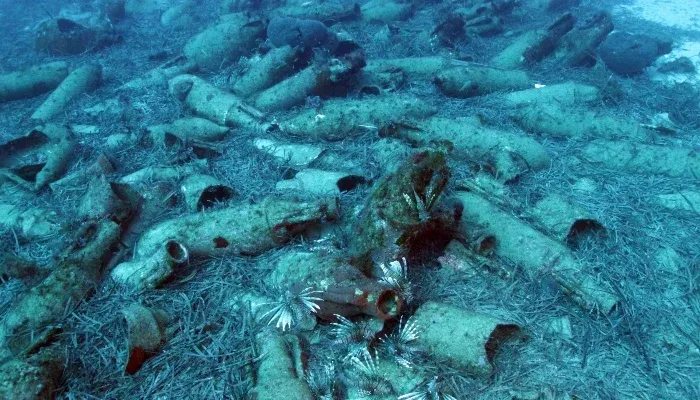
Authorities have located a Roman-era wreck near Mazara del Vallo, provisionally dated to the second or first century BC. The amphorae point to ancient wine commerce; their contents, origin and destination remain unconfirmed.
What happened
Italian authorities have identified a Roman-era shipwreck approximately three miles off Mazara del Vallo, on the western coast of Sicily, at a depth of 46 metres.
The site contains hundreds of amphorae, most of them provisionally classified as Dressel 1A, together with two lead anchor stocks and another lead structure. The wreck has been dated provisionally to between the second and first centuries BC.
The location was inspected after private citizens reported archaeological material on the seabed. The operation brought together the Carabinieri's Cultural Heritage Protection unit in Palermo, Sicily's Superintendency of the Sea, the Carabinieri diving unit in Messina and a patrol vessel from Trapani.
What is confirmed
The official record confirms the position, depth, provisional period and broad composition of the site. It describes hundreds of amphorae rather than a completed inventory and identifies Dressel 1A as the predominant form.
Dressel 1A amphorae are closely associated with the transport of Italian wine during the late Roman Republic. Their concentration makes the wreck directly relevant to the study of wine as a traded agricultural commodity and to the maritime networks that moved it through the Mediterranean.
That relevance does not depend on a recovered label, a named producer or a surviving liquid. Amphora shape, manufacture and distribution can help archaeologists reconstruct patterns of production, loading and exchange even when the original contents are no longer present.
The site will remain under the responsibility of Sicily's Superintendency of the Sea for further documentation, study and protection. Italian officials have not announced a recovery operation or public-access plan.
What remains unknown
No final count of the amphorae has been published. Reports describing approximately 500 vessels go beyond the wording of the official announcements, which state only that hundreds are present.
The contents of the vessels have not been scientifically confirmed. Dressel 1A is strongly associated with wine transport, but typology alone cannot establish what every amphora carried on this voyage or whether detectable residues survive.
The exact date of the sinking, the ship's point of departure, its intended destination and the reason it was lost remain unknown. Those conclusions will require systematic mapping, ceramic analysis and, where possible, examination of stamps, fabric and organic residues.
Authorities have not yet published a full plan of the wreck, a definitive measurement of the vessel or an assessment of how much of its wooden structure survives beneath the cargo and seabed deposits.
TCJ View
The discovery matters because it gives physical scale to a trade that is often described only through texts, maps and generalisations.
Hundreds of transport amphorae resting together on the seabed are evidence of wine moving as cargo: standardised containers, maritime risk and commercial routes operating more than two millennia ago. The wreck does not merely show that Romans made wine. It may help show how wine left one place, entered a distribution system and travelled across the Mediterranean.
The discipline now is to resist completing the story before the archaeology does. A familiar amphora form supports a strong interpretation, but it does not yet identify the wine, the vineyard, the merchant or the destination. Nor does a preliminary report justify turning 'hundreds' into a precise cargo count.
For the wine world, the most valuable result will not be the spectacle of an ancient wreck. It will be the evidence produced by its study: where the vessels were made, what they carried, how they were arranged and which commercial corridor the ship was following.
The fact is already significant. The meaning will come from the excavation record.
Sources
Italian Ministry of Culture — official announcement of the Mazara del Vallo wreck
Carabinieri Cultural Heritage Protection Command — official operational statement
ANSA — reporting based on the Ministry of Culture statement
The Guardian — international reporting on the discovery and planned research
Yahoo News / The Telegraph — source supplied for this Dispatch
WINE TASTING The Essential Guide
The Study Library · The Cellar Journal Wine tasting can look far more complicated than it really is. A professional puts their nose into a glass and starts talking about blackcurrants, violets, graphite, leather or wet stones, while someone listening may reasonably wonder whether all of those things are actually there,

ENGLISH WINE The Essential Guide
A complete introduction to English wine, connecting climate, geology, grapes, sparkling wine and modern history to explain how a marginal wine country became one of the world’s most dynamic cool-climate regions.
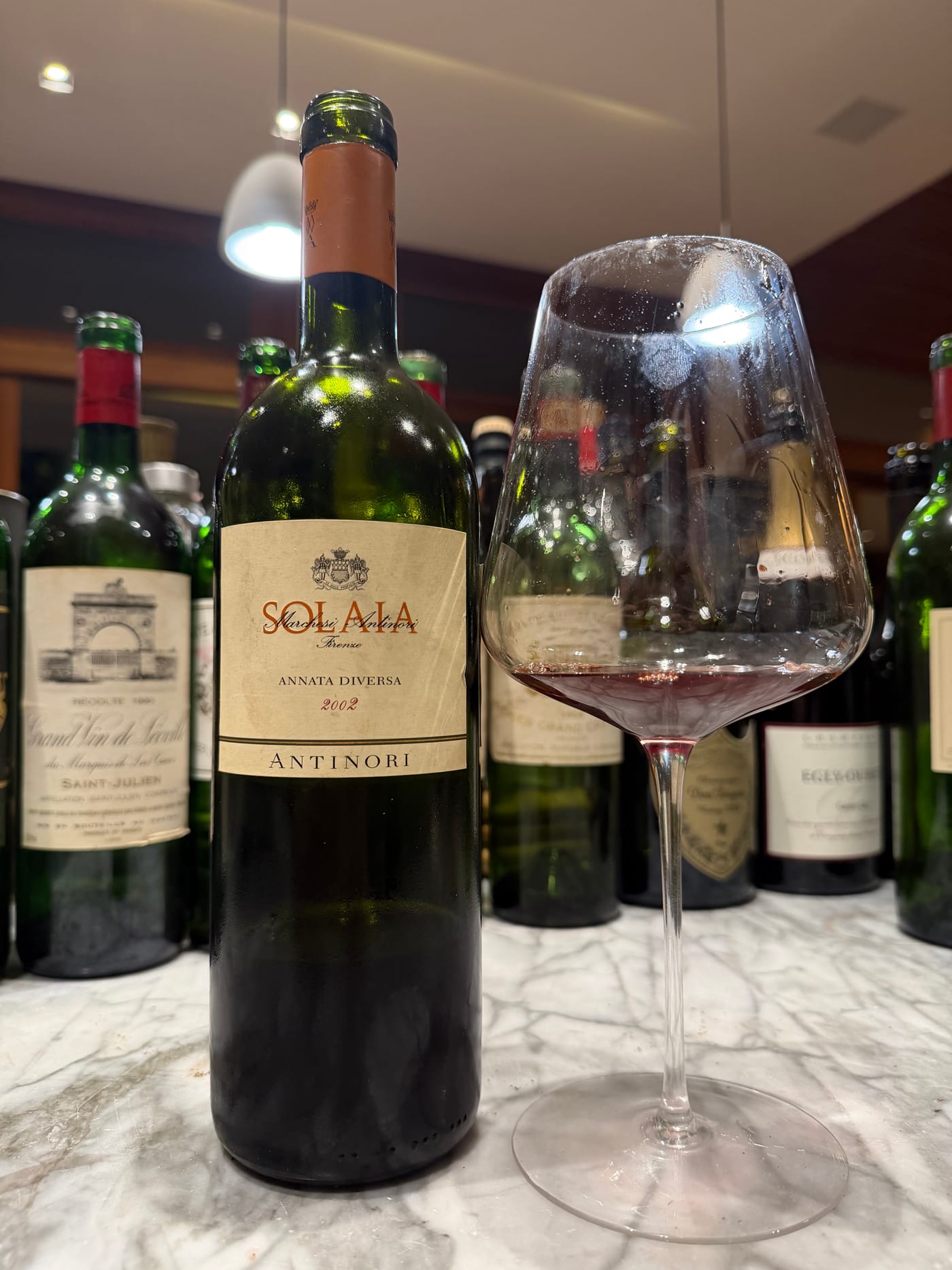
Solaia Annata Diversa 2002: A Different Vintage, a Singular Wine
Solaia 2002 is the only vintage to carry the words Annata Diversa, after a difficult Tuscan season removed Sangiovese from the blend. More than two decades later, the wine was alive, elegant and finely textured, with the composure of mature Bordeaux and an identity entirely its own.