NYCWFF Returns to the Seaport. What Can Four Days Do for New York's Food Scene?

The festival will bring nearly 50 events and more than 300 culinary figures to New York in October. Its importance will depend less on the size of the programme than on whether temporary visibility creates lasting value for the city's restaurants.
What happened
The Food Network New York City Wine & Food Festival will return from October 15 to 18 for its nineteenth edition. Organizers describe nearly 50 events involving more than 300 chefs, restaurateurs, winemakers, mixologists, creators and entertainers. The Seaport in Lower Manhattan will again serve as the principal campus, with the Rooftop at Pier 17 added as a setting for several large events.
The programme includes tastings, demonstrations and collaborative meals. Those details establish scale, but not relevance. The more useful question is what happens when a food and wine event concentrates audiences, media, sponsors and hospitality professionals in one part of the city for four days.
NYCWFF is not simply returning. It is confirming a new geography. After establishing a large main campus at the Brooklyn Army Terminal in 2024, the festival moved its center to the Seaport in 2025. Remaining there in 2026, while expanding onto Pier 17, suggests that the waterfront location has become part of the event's strategy rather than a temporary venue choice.
The Seaport is now part of the proposition
A food festival does more than occupy a site. It can teach visitors to see a neighborhood as a place to spend time and return for dinner. The Seaport is therefore not merely a backdrop. Its restaurants, public spaces, retail operations and waterfront become part of the proposition presented to visitors.
That concentration can increase foot traffic, extend visits and give the festival a coherent physical identity. It also creates a tension. The official language calls the festival citywide, yet its principal stage and much of its visibility remain in Lower Manhattan. Selected restaurant events extend beyond the campus, but the public image of 2026 will largely be built at the Seaport.
A shorter and more concentrated edition
The 2025 festival reported more than 35,000 guests over five days and participation by more than 300 chefs and culinary figures. The 2026 edition is scheduled across four days with nearly 50 events. In 2024, organizers reported more than 80 events and 45,000 guests after the move to a 450,000-square-foot campus at the Brooklyn Army Terminal.
Those figures should not be treated as a simple trend line. Event counts can change with classification, format and reporting, and the attendance totals are supplied by the organizer rather than an independent auditor. They nevertheless show a strategic change: the current festival appears more compact than the expansive Brooklyn edition and more closely tied to an established hospitality district.
A more concentrated programme may be easier to understand and produce. It also increases the pressure on each event to create encounters that could not be reproduced by a standard restaurant reservation, brand activation or celebrity appearance on its own.
What the festival can create
For restaurants and chefs, the immediate possibility is discovery. A festival appearance can introduce a dining room, cuisine or point of view to new audiences while connecting independent operators with media, visiting talent and potential partners.
For the city, the opportunity is broader. Food has become one of the ways visitors understand New York, moving between neighborhoods through restaurants as much as through museums, theaters or landmarks. NYC Tourism + Conventions estimates that the city received 65 million visitors in 2025, generating $55.6 billion in direct spending. The city's comptroller estimates that visitor spending supports between 30% and 35% of restaurant and bar employment.
That context makes a culinary festival relevant, but does not prove its economic impact. NYCWFF may generate hotel nights, restaurant visits and future reservations. It may also concentrate spending inside sponsored events and the host district. No recent independent study was found that isolates those effects.
Visibility arrives when restaurants still need it
The timing matters. New York's restaurant economy has recovered unevenly from the pandemic. According to the city comptroller, full-service restaurant employment stood at 162,300 in December 2024, 4.4% below December 2019. A later economic update reported that leisure and hospitality employment, including restaurants, bars and hotels, had been essentially flat in recent months.
A festival cannot resolve pressures such as rent, labor and food costs. What it can do is direct attention, especially toward businesses without large marketing budgets.
The 2026 festival supports Event Zero Foundation and the James Beard Foundation. Organizers report more than $14.8 million in net proceeds donated to charitable organizations over eighteen years. The connection with the restaurant industry is credible, but public figures do not show how current proceeds are divided or how much reaches operators directly.
What is confirmed
NYCWFF will take place from October 15 to 18, 2026. The official launch announcement lists nearly 50 events and more than 300 participating culinary figures. The Seaport is the main campus for a second consecutive year, and the Rooftop at Pier 17 is part of the 2026 footprint.
The organizer reported more than 35,000 guests in 2025. It also states that the festival has generated more than $14.8 million in net proceeds for charitable organizations over eighteen years. Event Zero Foundation and the James Beard Foundation are the named 2026 beneficiaries.
What remains unknown
No independent economic-impact assessment has been published for 2026. Public material does not quantify hotel stays, spending outside festival venues, later restaurant reservations, participant compensation or the geographic distribution of benefits.
Official materials are also not fully consistent about scale. The launch release lists more than 300 chefs, restaurateurs and other participants, while the festival's About page lists 500 chefs. This Dispatch uses the more conservative figure from the edition-specific announcement.
It is too early to know whether the Seaport will become a durable home or whether participating restaurants can convert a brief appearance into repeat customers.
TCJ View
NYCWFF matters because it can temporarily assemble parts of the scene that usually operate separately: neighborhood restaurants, established chefs, emerging voices, media, visitors, institutions and sponsors.
That assembly creates possibilities, but not automatically impact. Attendance measures the size of the room. It does not measure whose work is remembered after the room empties. A useful festival should not only borrow credibility from New York's restaurants. It should return attention, opportunity and resources to them.
The Seaport gives the event an address, a visual identity and infrastructure. It also makes the limits more visible. A festival presenting itself as citywide from a concentrated commercial district should show how its platform reaches beyond the campus.
The best possibility is not simply a busier waterfront in October. It is a door into the city's dining culture, encouraging discovery long after the final event. Whether NYCWFF can move from spectacle to circulation will define its value to New York.
Sources
NYCWFF: 2026 festival announcement and programme scale
NYCWFF: 2025 attendance and Seaport results
NYCWFF: Beneficiaries and cumulative charitable proceeds
James Beard Foundation: 2026 festival partnership
NYC Tourism + Conventions: 2025 tourism results, March 2026
New York City Comptroller: Tourism's role in the city economy, March 2025
New York City Comptroller: Monthly economic outlook, August 2026
Business Wire: NYCWFF move to Brooklyn Army Terminal, February 29, 2024
Staten Island Advance: 2026 festival overview, September 2026

WINE TASTING The Essential Guide
The Study Library · The Cellar Journal Wine tasting can look far more complicated than it really is. A professional puts their nose into a glass and starts talking about blackcurrants, violets, graphite, leather or wet stones, while someone listening may reasonably wonder whether all of those things are actually there,
ENGLISH WINE The Essential Guide
A complete introduction to English wine, connecting climate, geology, grapes, sparkling wine and modern history to explain how a marginal wine country became one of the world’s most dynamic cool-climate regions.
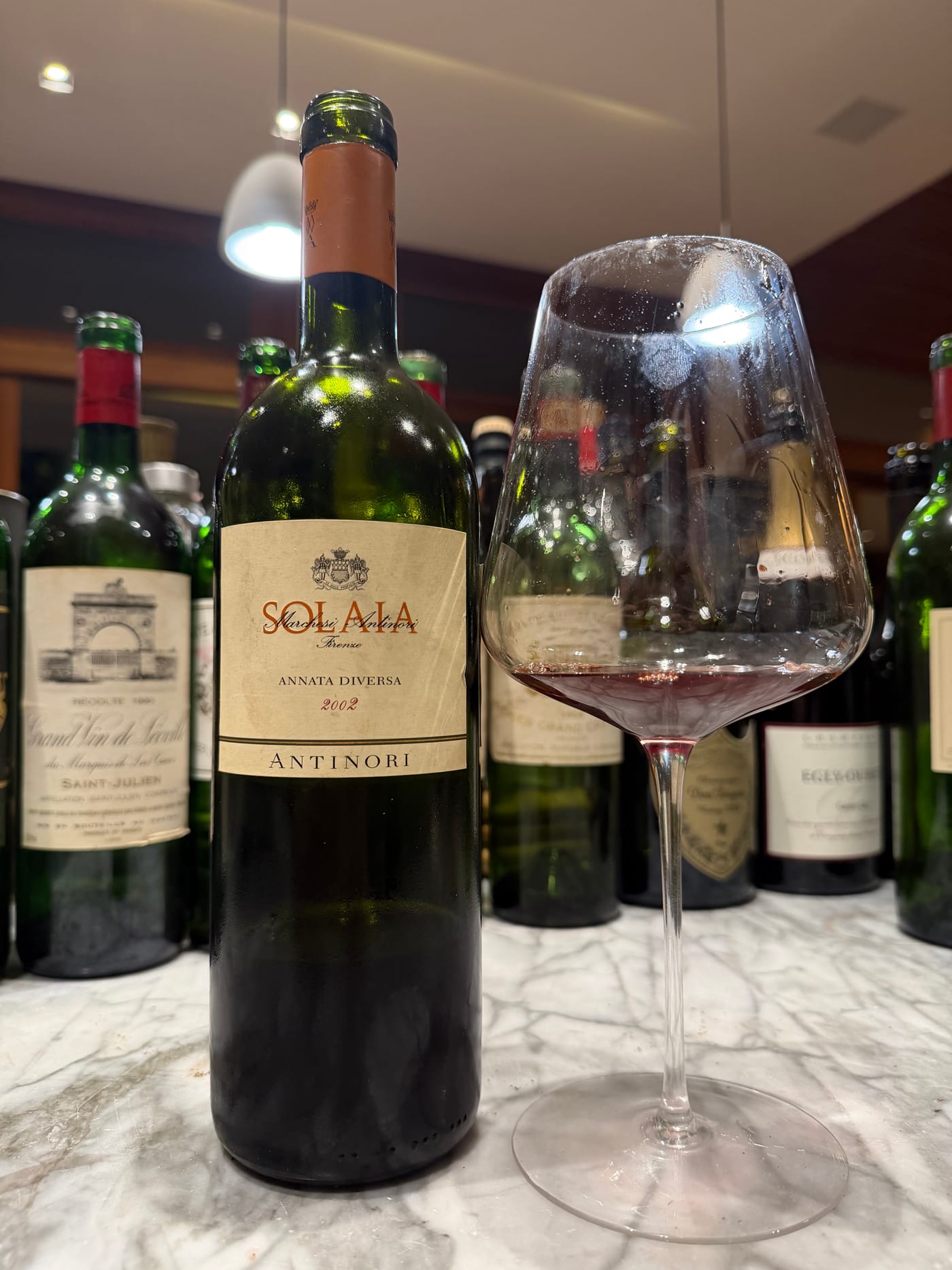
Solaia Annata Diversa 2002: A Different Vintage, a Singular Wine
Solaia 2002 is the only vintage to carry the words Annata Diversa, after a difficult Tuscan season removed Sangiovese from the blend. More than two decades later, the wine was alive, elegant and finely textured, with the composure of mature Bordeaux and an identity entirely its own.