Geneva Begins an Early Harvest as Its Wine Economy Contracts
Geneva began its 2026 wine harvest early after a hot, dry summer, even as falling Swiss wine consumption, growing stocks and foreign competition deepen the region’s crisis. The vintage may be promising, but many growers face fewer buyers and pressure to reduce vineyard area.

Healthy grapes are approaching the cellar ahead of schedule. For some growers, however, the central question is no longer when to harvest, but whether their fruit has a buyer.
What happened?
Winegrowers in Geneva are preparing for an unusually early 2026 harvest after a season marked by heat and limited rainfall. The first grapes are approaching maturity with producers reporting healthy fruit and promising quality.
Yet the timing of the harvest is only one part of the story. The new crop is arriving as Geneva's wine sector faces elevated stocks, weaker demand and growing uncertainty over the price and destination of its grapes.
In early August, the Interprofession du vignoble et des vins de Genève said it could not publish indicative grape prices for the 2026 harvest. It was the first time the regional body had abandoned the exercise, saying it was unable to provide coherent recommendations under current market conditions.
The result is a striking contradiction. The vineyard may deliver sound grapes ahead of schedule, while some growers enter harvest without clarity over who will buy them or whether the price will cover the cost of production.
What is confirmed
The economic pressure predates the harvest. Earlier in 2026, wine merchant Schenk informed a group of Geneva growers that it would not purchase their 2026 crop. Local reporting indicated that 17 growers and approximately seven per cent of the canton's production were affected.
Geneva has also reduced authorised yields for AOC wines in 2026. The limits for Chasselas and Riesling Sylvaner were lowered from 1.2 to 1 kilogram per square metre. Gamay was reduced from 1.1 to 1 kilogram, while the limit for Premier Cru wines was set at 950 grams. The stated objective was to prevent already high cellar stocks from increasing further.
The cantonal government has introduced financial support for growers who maintain vineyard parcels without harvesting them. The measure, funded with 2.3 million Swiss francs, applies during 2026 and 2027 and is intended to preserve vineyards while temporarily removing grapes from the market.
These interventions show that the crisis is not based on a single difficult commercial relationship. It has become a structural question involving production limits, inventories, grape prices, vineyard area and public support.
What remains unknown
The precise start date of the wider Geneva harvest has not yet been established. Early picking may involve specific varieties or fruit intended for particular styles rather than the complete regional crop.
The available reporting does not provide a final estimate for the size of the 2026 harvest, nor does it quantify how far the season is ahead of Geneva's long term average.
Descriptions of healthy or high quality fruit remain preliminary. A complete assessment will require maturity data, yields at harvest and results from the cellar.
It is also unclear how many growers will leave grapes unharvested, how much fruit may remain without a buyer and whether the absence of indicative prices will produce significant differences between private contracts.
Heat and drought have accelerated vineyard development across parts of Europe in 2026. However, a direct attribution of Geneva's early harvest to long term climate change would require specific regional data and should not be made from the current reporting alone.
TCJ View
An early harvest offers a convenient image of urgency, but Geneva's central problem did not begin in the vineyard.
The sector enters the 2026 harvest with high stocks, reduced production limits and growers who cannot be certain that their grapes will find a buyer. Fruit quality, traditionally one of the defining measures of a vintage, no longer guarantees its economic viability.
This is what makes Geneva relevant beyond Switzerland. Across several European regions, authorities and wine organisations are attempting to reconcile agricultural production with a market that is absorbing less wine. Lower yields, temporary vineyard withdrawals and financial support are becoming tools of market management rather than responses to poor fruit.
Geneva brings that tension into unusually clear focus. The same conditions that may produce an early, technically promising harvest can also bring the economic crisis forward. Grapes mature according to the season. Demand does not.
The absence of an indicative grape price is therefore more consequential than the early picking date. It signals that the regional industry cannot easily define a value for its crop before harvest begins.
A good vintage can still arrive at the wrong moment. In Geneva, 2026 may test whether quality in the vineyard is enough when the market beyond it has stopped offering certainty.
Sources
MKT: À Genève, des vendanges précoces mais des viticulteurs à genoux
Market background: Un négociant en vin abandonne une partie du vignoble genevois
Production limits: À l'approche des vendanges, les Cantons serrent la vis sur les rendements
Official measure: Mesure cantonale de maintien du vignoble genevois
Indicative prices: Genève renonce à publier des prix indicatifs pour 2026
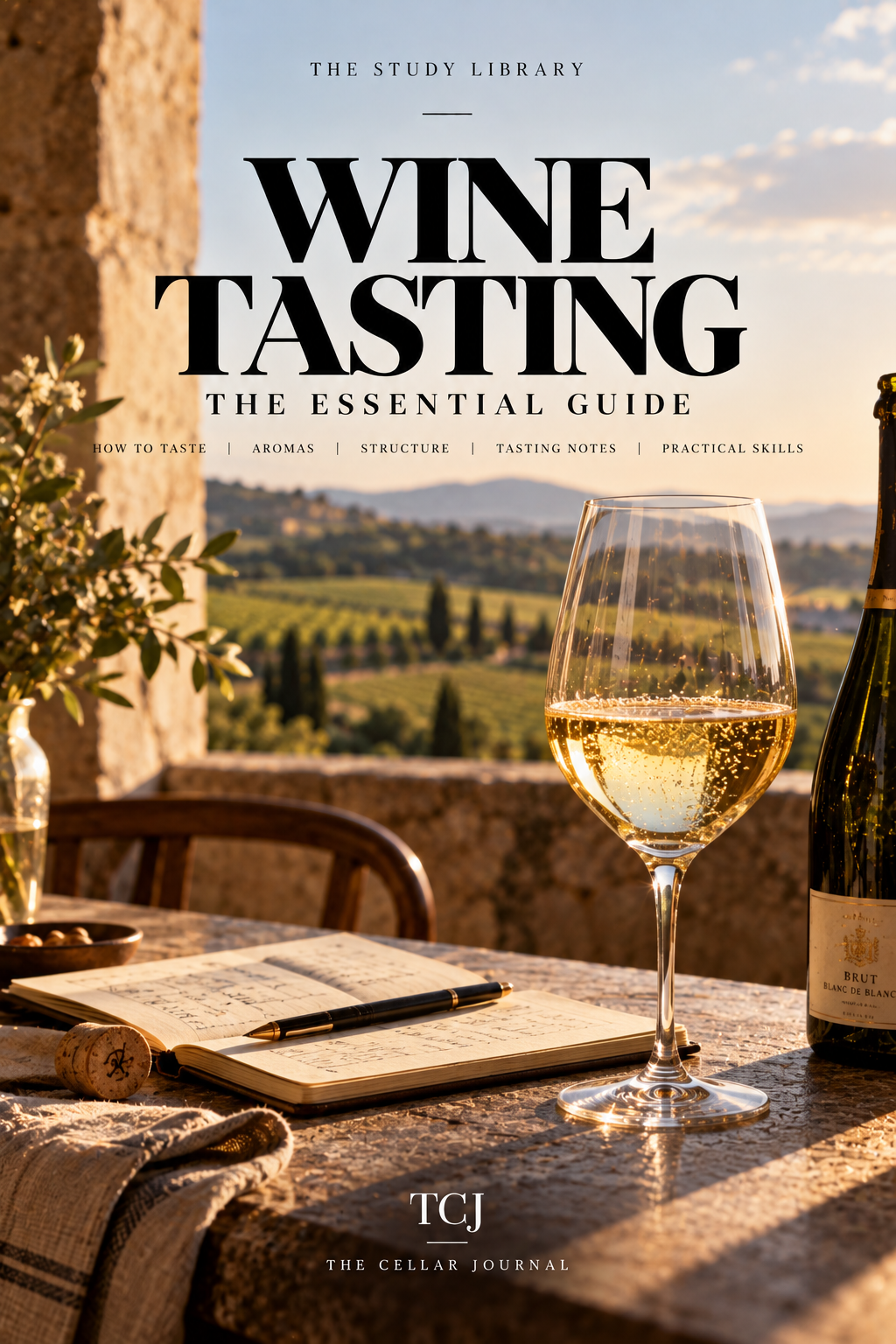
WINE TASTING The Essential Guide
The Study Library · The Cellar Journal Wine tasting can look far more complicated than it really is. A professional puts their nose into a glass and starts talking about blackcurrants, violets, graphite, leather or wet stones, while someone listening may reasonably wonder whether all of those things are actually there,
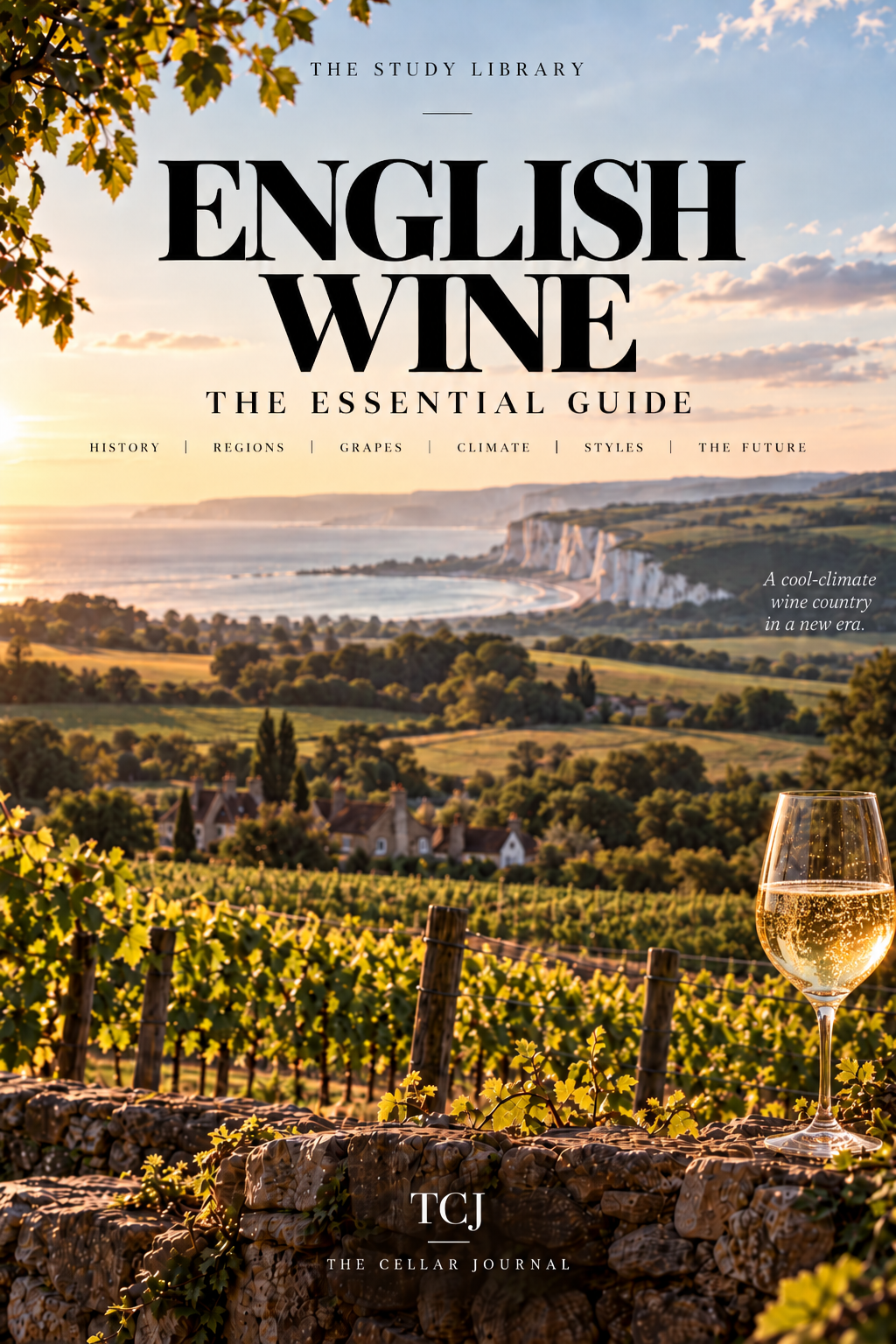
ENGLISH WINE The Essential Guide
A complete introduction to English wine, connecting climate, geology, grapes, sparkling wine and modern history to explain how a marginal wine country became one of the world’s most dynamic cool-climate regions.
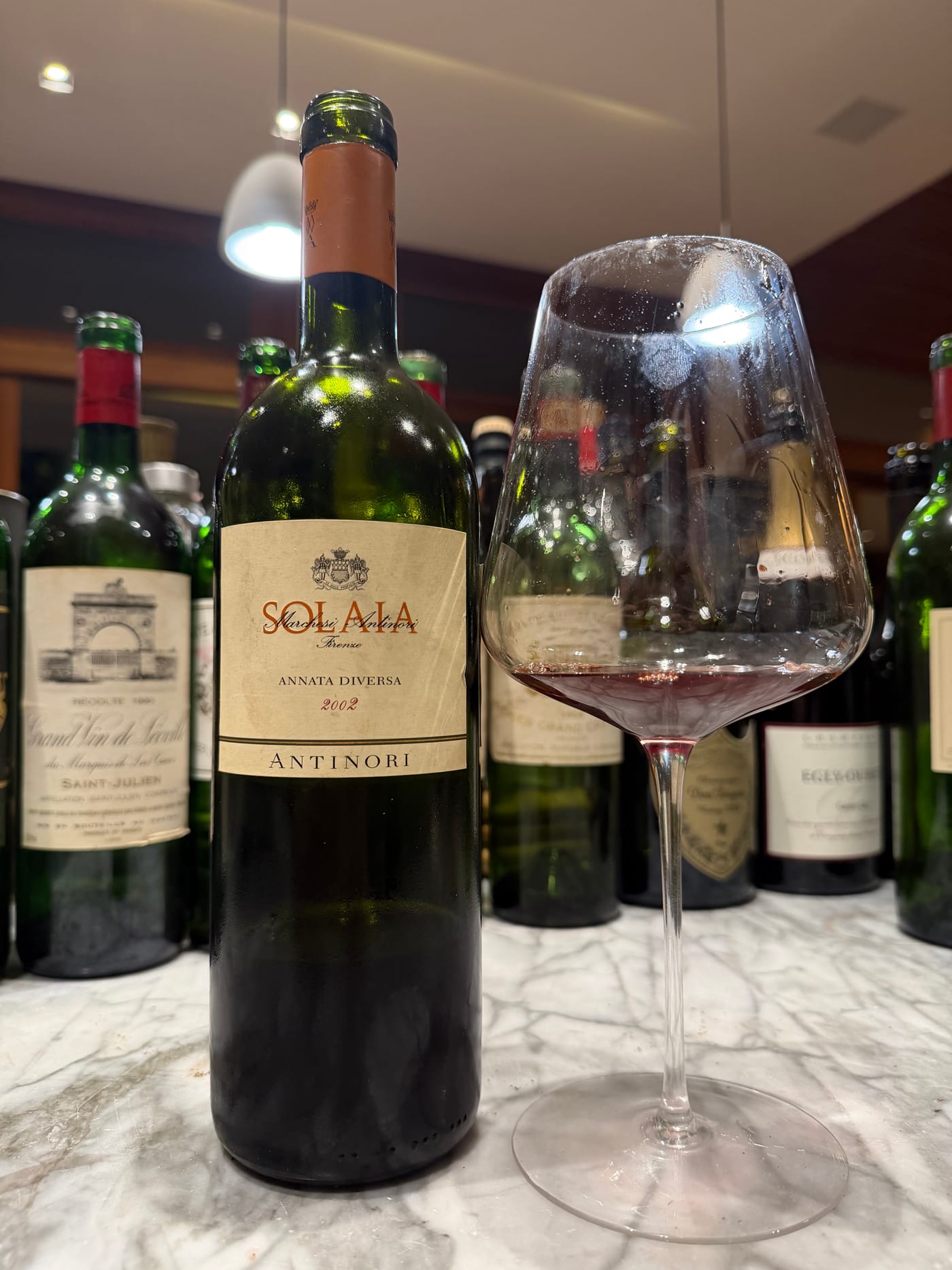
Solaia Annata Diversa 2002: A Different Vintage, a Singular Wine
Solaia 2002 is the only vintage to carry the words Annata Diversa, after a difficult Tuscan season removed Sangiovese from the blend. More than two decades later, the wine was alive, elegant and finely textured, with the composure of mature Bordeaux and an identity entirely its own.