Emirates Has Spent $1 Billion on Wine. That Is Not What Its Cellar Is Worth.
Emirates has invested more than USD 1 billion in wine since 2006 and now stores around five million bottles in France. The figure describes two decades of purchasing, not the current value of the cellar.
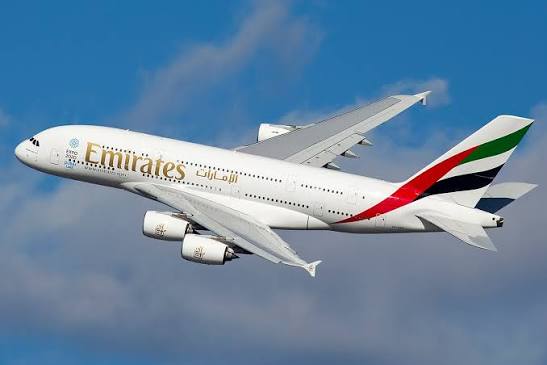
The airline's new 2026 list draws on five million bottles aged in France. The real story is not a vault of luxury, but a supply chain built around time.
What happened
Emirates has announced a new group of wines for its four passenger cabins, drawing attention again to an operation that the airline says has received more than USD 1 billion in investment since 2006. Its current disclosure places approximately five million bottles in dedicated storage facilities in France.
The 2026 programme is built at several speeds. First Class will receive wines including Château Mouton Rothschild 2003, Chevalier-Montrachet Grand Cru 2015, Seña 2016, Penfolds RWT 2015 and Dom Pérignon 2017. Business Class includes La Dame de Montrose 2014 alongside a 2024 white Châteauneuf-du-Pape. Premium Economy combines mature Bordeaux with recent Chablis and the airline's first English sparkling wine. Economy receives younger, large-volume selections.
That range is more revealing than the famous names alone. Emirates is not maintaining one ceremonial collection for its most expensive seats. It is operating a layered inventory in which origin, volume, maturity, cabin and route must be coordinated years before a bottle reaches an aircraft.
What the billion-dollar figure actually means
The phrase "billion-dollar wine cellar" is memorable, but it joins two numbers that describe different things. Emirates says it has invested more than USD 1 billion in its wine programme since 2006. That is cumulative spending across roughly two decades. The company does not say that the five million bottles currently stored are worth USD 1 billion.
A simple division would suggest an average of more than USD 200 for every bottle now in the cellar. That calculation is invalid. The numerator includes wine acquired and already served since 2006, while the denominator counts only current stock. Emirates also does not publish whether the programme total includes storage, insurance, transport, staff and other operating costs, or only bottle purchases.
A second figure also requires correction. The article that prompted this Dispatch says investment over the past year exceeded AED 186 million. Emirates published that number in December 2023 to describe purchases made during 2023. It is not a newly disclosed total for 2025 or 2026. Repeating it as a current annual figure turns an old data point into apparent news.
A cellar designed for future service
The strategy itself is real and unusual in aviation. Emirates buys some wines years before they are scheduled for service and stores them under controlled conditions in France. The airline says Bordeaux reds intended for Business Class typically remain in storage for eight to ten years. Bottles selected for First Class may be held for at least 12 to 15 years.
Time is therefore part of the product. Buying early can secure allocations that would be difficult to assemble close to release, particularly for small Burgundy appellations, mature Bordeaux and prestige Champagne. Cellaring can also allow structured wines to enter service after development rather than when they are youngest and most available.
The 2026 list shows the result. A 2003 First Growth can appear beside wines from 2014, 2015, 2016, 2017 and current releases. The airline is effectively building future menus from overlapping generations of inventory. Most restaurant lists react to what distributors can supply now. Emirates can decide that a bottle purchased years ago is ready for one cabin and one group of routes.
This is operating inventory, not a museum
The reported size of the cellar has moved substantially. Emirates cited seven million bottles in 2019, 6.5 million in 2022, around six million in late 2023 and around five million in September 2026. Le Monde reported 6.5 million in March 2024, with most stored near Beaune. These snapshots do not form a clean inventory series because the dates, rounding and definitions may differ.
They do establish one point: bottles continually enter and leave. Le Monde estimated in 2024 that Emirates served 3.5 million bottles a year across its network. The cellar is large because the airline needs both long ageing and industrial throughput, not because every bottle is intended to appreciate indefinitely.
This distinction changes how the programme should be judged. A collector can wait for one bottle. An airline must forecast passenger demand, cabin mix, routes, menus and fleet capacity while managing breakage, storage, currency exposure and changing tastes. Maturity creates differentiation, but it also immobilises capital and increases the cost of being wrong.
What this scale means for producers
Emirates carried 53.2 million passengers in its 2025-26 financial year. Access to even a small part of that audience can give a producer both volume and international visibility. Le Monde reported that airlines may require at least 60,000 bottles of a vintage for broad listings, a threshold many estates cannot or do not wish to supply.
Emirates has previously disclosed purchases on a different scale. In 2015, it said 1.8 million bottles from Bordeaux represented close to half of its First and Business Class wine acquisitions. It also reported buying 2,000 cases from Corton-Charlemagne, equivalent, by the airline's calculation, to 10 percent of that appellation's production.
Those examples are historical, not evidence of current volumes. They nevertheless explain why the programme matters beyond the cabin. A buyer willing to commit early and hold stock for a decade can influence allocations, provide producers with long-term demand and place mature wine before a global audience. It can also favour estates capable of dependable supply, leaving smaller growers outside the largest contracts.
What is confirmed
Emirates says it has invested more than USD 1 billion in its wine programme since 2006 and currently stores around five million bottles in dedicated facilities in France. Its latest selection will be introduced across First, Business, Premium Economy and Economy cabins during 2026.
The company purchases some wines years before service and applies different ageing periods by cabin. The latest release confirms that mature Bordeaux and Burgundy are only part of a broader portfolio that includes recent vintages, several countries and different volume requirements.
What remains unclear
Emirates does not disclose the current acquisition cost, accounting value or estimated market value of the five million bottles. It does not separate bottle purchases from the wider costs of its wine programme, nor publish annual storage, insurance, loss or logistics expenses.
The company also does not explain why its reported inventory has moved from seven million bottles in 2019 to approximately five million in 2026. Without consistent definitions for each disclosure, the difference cannot be treated as consumption, disposal or a deliberate reduction in stock.
There is no public measure of the programme's return. Passenger preference, incremental ticket revenue, cost per cabin, waste and the commercial value of exclusivity remain undisclosed. The scale is clear. The economics are not.
TCJ View
The Emirates cellar deserves attention, but not because it resembles a billionaire's private collection. Its significance lies in converting patience into infrastructure. The airline buys time, stores it in France and assigns it later by cabin and route.
That model gives wine an unusually strategic role in aviation. A mature bottle becomes a way to distinguish a premium cabin that competitors cannot reproduce simply by buying from the current market. The advantage comes from provenance, allocation and planning, not only from price.
But scale should make the reporting more precise, not less. More than USD 1 billion spent since 2006 is not the same as a cellar worth USD 1 billion today. Five million bottles is not a valuation. An annual investment figure from 2023 should not be presented as if it described 2026.
The stronger story survives those corrections. Emirates has built one of the wine world's most consequential ageing and distribution systems outside a producer's own cellar. What remains missing is the information needed to decide whether this patience is also an efficient business.
Sources
Upscale Living Magazine: Inside Emirates' Billion-Dollar Wine Cellar, September 2026
Emirates: 2026 wine selection, current cellar size and ageing policy, September 2, 2026
Emirates: 2023 wine investment and six-million-bottle inventory, December 7, 2023
Emirates: USD 1 billion programme, 6.5 million bottles and ageing periods, September 7, 2022
Emirates: 2019 French wine investment, seven-million-bottle inventory and annual portfolio
Emirates: 2015 investment, Bordeaux purchases and Corton-Charlemagne allocation
Le Monde: airline wine volumes, supplier requirements and Emirates service scale, March 26, 2024
Emirates Group: 2025-26 annual report and passenger volume
WINE TASTING The Essential Guide
The Study Library · The Cellar Journal Wine tasting can look far more complicated than it really is. A professional puts their nose into a glass and starts talking about blackcurrants, violets, graphite, leather or wet stones, while someone listening may reasonably wonder whether all of those things are actually there,
ENGLISH WINE The Essential Guide
A complete introduction to English wine, connecting climate, geology, grapes, sparkling wine and modern history to explain how a marginal wine country became one of the world’s most dynamic cool-climate regions.
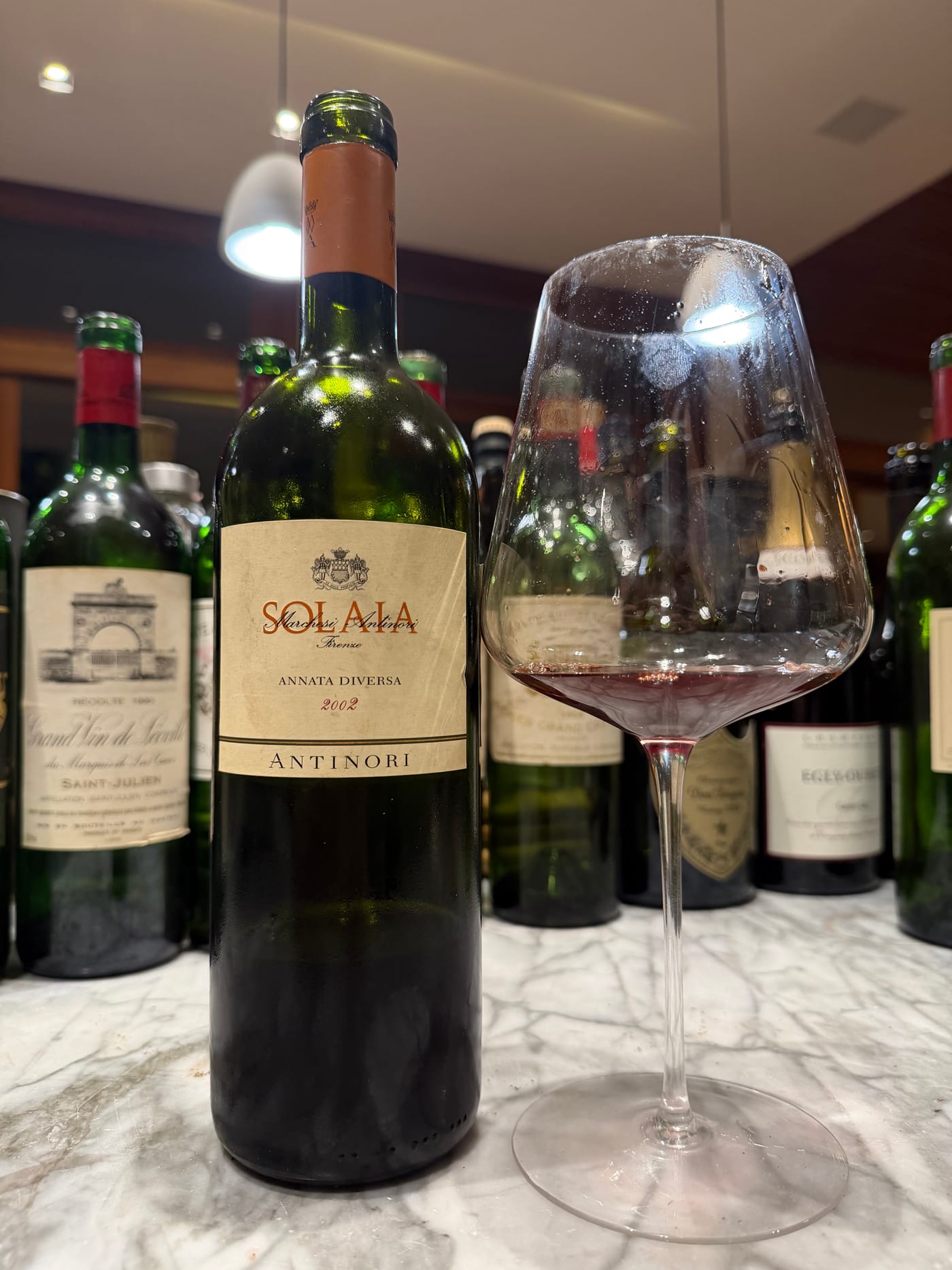
Solaia Annata Diversa 2002: A Different Vintage, a Singular Wine
Solaia 2002 is the only vintage to carry the words Annata Diversa, after a difficult Tuscan season removed Sangiovese from the blend. More than two decades later, the wine was alive, elegant and finely textured, with the composure of mature Bordeaux and an identity entirely its own.