Drought Cuts Villány’s Expected Grape Harvest by 30 Percent
Villány winegrowers expect Hungary’s southernmost region to harvest about 30% fewer grapes in 2026 after drought and heat reduced berry size and advanced ripening. Quality may remain intact, but final volume, economic losses and differences among vineyards are still unknown.

Growers in Hungary’s southernmost wine region expect substantially less fruit as dry heat produces smaller berries and accelerates ripening. The estimate is clear; the final regional volume and consequences for individual producers are not.
What happened
Winegrowers in Villány expect the region’s 2026 grape harvest to be approximately 30 percent smaller than in recent years after prolonged drought and intense heat reduced berry size and accelerated ripening.
The estimate was reported by Gergely Nagy, secretary of the Villány Wine Region Hill Community Council. He described a season in which low rainfall was compounded by insufficient atmospheric moisture, leaving vines under sustained water stress.
The immediate consequence is lower expected volume. According to the report, growers have been brought into the vineyards earlier as the heat pushed fruit toward maturity ahead of the usual rhythm of the season.
What is confirmed
The 30 percent figure is a regional expectation supplied by the Villány winegrowers’ organisation, not a final harvest balance. It compares the anticipated 2026 crop with the volumes achieved in recent years.
The physical mechanism described by growers is consistent across the report: water scarcity has limited berry growth. Smaller berries mean less grape mass available at harvest even where the fruit reaches maturity.
Villány is Hungary’s southernmost wine region, and its 2026 harvest is beginning under drought conditions affecting much of the country. The report connects the reduced regional crop to prolonged dry heat rather than to a single storm, frost event or disease outbreak.
Nagy said grape quality is expected to remain largely unaffected. That statement concerns the present condition of the fruit; it does not yet amount to a completed assessment of the wines or of every vineyard in the region.
What remains unknown
The harvest is still in progress, so the final tonnage has not been established. Rainfall, picking decisions and the performance of later-ripening parcels may still move the regional result away from the current estimate.
No breakdown has been published by grape variety, village, vineyard age or farming system. The available information therefore does not show whether the losses are evenly distributed or concentrated in the driest sites and most exposed plantings.
The report does not quantify the economic effect on growers, wineries or grape contracts. A 30 percent reduction in fruit does not translate automatically into the same reduction in finished-wine volume, revenue or market supply.
Nor is final wine quality known. Fruit condition at harvest can support an early assessment, but balance, acidity, alcohol and the performance of individual lots can only be judged after picking and vinification.
TCJ View
The central fact in Villány is not that drought has made wine impossible. It is that growers expect to preserve quality while losing a substantial part of the crop.
That distinction matters. The wine industry often discusses climate pressure through the language of style: earlier ripening, higher sugar, changing acidity and shifting harvest dates. Villány shows the more immediate arithmetic. A vineyard can deliver sound fruit and still deliver too little of it.
Lower volume concentrates risk. Fixed vineyard costs remain, labour and harvest logistics still have to be organised, and the difference between a viable crop and a difficult year can be measured in berry size rather than in visible catastrophe. Quality, even when maintained, does not replace missing tonnes.
The long-term question is therefore operational. Adaptation cannot be judged only by whether a region can continue to produce recognisable wines. It must also be judged by whether vineyards can retain enough water, sustain enough yield and remain economically workable under repeated dry seasons.
Villány’s 30 percent estimate is not yet a final result, and it should not be enlarged into a verdict on Hungary as a whole. But it is already a useful measure of climate pressure: not an abstract projection, but less fruit on the vine in a region now forced to treat drought as a recurring condition rather than an exceptional season.
Sources
Euronews — Villány harvest estimate, grower testimony and drought conditions

WINE TASTING The Essential Guide
The Study Library · The Cellar Journal Wine tasting can look far more complicated than it really is. A professional puts their nose into a glass and starts talking about blackcurrants, violets, graphite, leather or wet stones, while someone listening may reasonably wonder whether all of those things are actually there,

ENGLISH WINE The Essential Guide
A complete introduction to English wine, connecting climate, geology, grapes, sparkling wine and modern history to explain how a marginal wine country became one of the world’s most dynamic cool-climate regions.
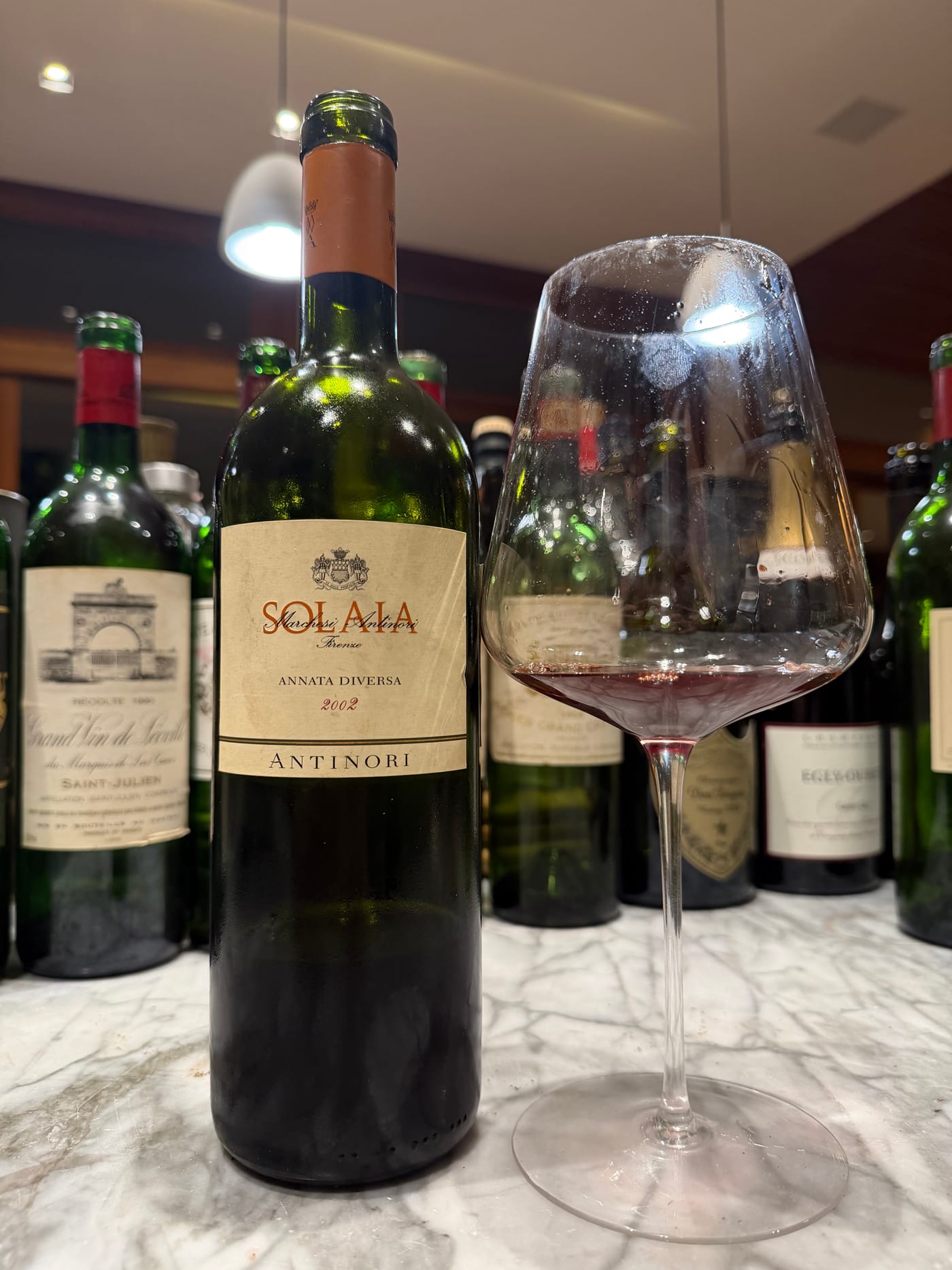
Solaia Annata Diversa 2002: A Different Vintage, a Singular Wine
Solaia 2002 is the only vintage to carry the words Annata Diversa, after a difficult Tuscan season removed Sangiovese from the blend. More than two decades later, the wine was alive, elegant and finely textured, with the composure of mature Bordeaux and an identity entirely its own.