Champagne Is Moving Its Memory Beyond the Cellar

Five years after reopening, Épernay's municipal wine museum has joined France's national collections catalogue. The development makes a larger shift visible: Champagne is treating its history as public knowledge, not only as a commercial narrative.
What happened
On August 5, France's Ministry of Culture included Épernay's Musée du Vin de Champagne et d'Archéologie Régionale among the latest museums contributing to Joconde, the national collective catalogue of the collections held by the country's Musées de France. The museum is therefore extending the work begun with its physical reopening into a public digital record.
The timing is significant. The institution marked five years since its reopening in May 2026. It had returned to the public on May 29, 2021, after 23 years of closure and a decade-long restoration of Château Perrier. A local feature published on August 20 invited readers to rediscover the museum, but the durable fact is not the recommendation. It is the construction of a municipal cultural institution around the history of Champagne.
The Ministry of Culture recorded the restoration cost at €24.2 million before tax. Public support included €4.56 million from the Grand Est region, €3.3 million from the department and €2.18 million from the state, alongside €2.5 million in private patronage. The city of Épernay remained the principal funder.
A professional case study published in May 2026, based on a presentation by director and curator Laure Ménétrier, reported approximately 40,000 visitors a year. More than 75 per cent came from outside the Marne department. Those figures describe a local museum functioning simultaneously as a civic institution and a destination for people arriving in Champagne.
The institution behind the label
The museum occupies Château Perrier, built between 1852 and 1857 for Charles Perrier of Perrier-Jouët and classified as a historic monument in 2013. Its original combination of residence, reception rooms and wine facilities already linked domestic wealth, commerce and production. The restored building now places that private history inside a public institution.
The scale of the holdings is larger than the museum's name may suggest. The city states that the museum is among 50 Musées de France holding more than 100,000 objects. Its collections include about 80,000 regional archaeological pieces and 6,000 objects devoted to the history of Champagne. More than 2,000 objects are displayed across three floors.
The permanent route is organised around four subjects: geology and the formation of the chalk subsoil, regional archaeology, the history and production of Champagne, and the collectors and explorers who shaped the holdings. The Ministry describes chalk as the connecting material, linking the region's earliest farmers to its winegrowers. That structure matters because it locates the wine inside a much longer history of land, settlement, labour and exchange.
Joining Joconde adds another layer. The national database does not replace the visit and it does not make the entire collection instantly available. It creates a framework in which catalogued objects can be documented, searched and compared beyond Épernay. For a wine region whose image is often controlled through brands, hospitality and private archives, that is a materially different form of access.
What is confirmed
The Ministry of Culture confirms the museum's inclusion among new Joconde contributors in August 2026, its reopening in 2021 after 23 years and its policy of restoration, acquisition and online publication. The museum itself confirms that its fifth anniversary was celebrated on May 23, 2026.
The Ministry also confirms the €24.2 million pre-tax restoration cost and the principal public and private contributions. Épernay's municipal site confirms the size and composition of the holdings, including the archaeological and viticultural collections. The museum's official route confirms that more than 2,000 objects are presented through four sections.
The annual audience figures are reported through a professional cultural-programming case study rather than a municipal statistical release. They should therefore be attributed: approximately 40,000 visitors a year, with more than three quarters arriving from outside Marne. The separate milestone of more than 100,000 cumulative visitors by 2024 was reported by Le Monde and in museum presentation material.
What remains unknown
The available sources do not establish how many collection records are currently live on Joconde, how quickly further records will be added or what proportion of the viticultural holdings will be digitised first. Participation in the catalogue should not be described as complete digitisation of more than 100,000 objects.
Public reporting also does not provide a complete annual attendance series, operating budget, earned-income ratio or comparison with house-owned visitor centres in Épernay. The museum's cultural value can be documented without claiming that it has already transformed the economics of regional tourism.
Nor does the existence of a public museum settle whose history is represented. The balance among large houses, independent growers, vineyard workers, scientific research, industrial development and patterns of consumption remains an editorial and curatorial question that must be assessed through the objects and exhibitions themselves.
TCJ View
The most important distinction is between promotion and memory. A visitor centre explains a company. A public museum must explain a territory, including the geology, people, technologies and institutions that existed before any current marketing position. Épernay's museum is valuable precisely because Champagne is too important to be narrated only by those selling it.
That does not make the museum neutral. Every collection is built through choices about what to preserve, classify and display. But public cataloguing makes more of those choices visible and contestable. Joconde can turn an object from scenery in a regional story into a documented item available to researchers, students and readers who may never enter Château Perrier.
Wine regions often speak about heritage when they mean continuity of prestige. The stronger test is whether they invest in the patient infrastructure of heritage: conservation, scholarship, access, education and records that can outlast a campaign. Five years after reopening, Épernay can point to a restored monument, a collection of national scale, an audience reaching beyond the department and a new connection to France's public catalogue.
The source article asked readers to rediscover a museum. The larger story is why Champagne needed this museum in the first place. A globally familiar name can still have a poorly understood past. By placing chalk, archaeology, labour, production and collecting inside the same institution, Épernay offers a more demanding proposition: the identity of a wine region is not only what it produces now, but what it is prepared to preserve and make public.
Sources
L'Est Éclair: August 20, 2026 feature that prompted this review
French Ministry of Culture: August 2026 Joconde notice and 2021 opening and restoration record
City of Épernay and the museum: collections, permanent route and fifth-anniversary programme
Correspondances and Le Monde: annual audience figures and the cumulative visitor milestone
WINE TASTING The Essential Guide
The Study Library · The Cellar Journal Wine tasting can look far more complicated than it really is. A professional puts their nose into a glass and starts talking about blackcurrants, violets, graphite, leather or wet stones, while someone listening may reasonably wonder whether all of those things are actually there,
ENGLISH WINE The Essential Guide
A complete introduction to English wine, connecting climate, geology, grapes, sparkling wine and modern history to explain how a marginal wine country became one of the world’s most dynamic cool-climate regions.
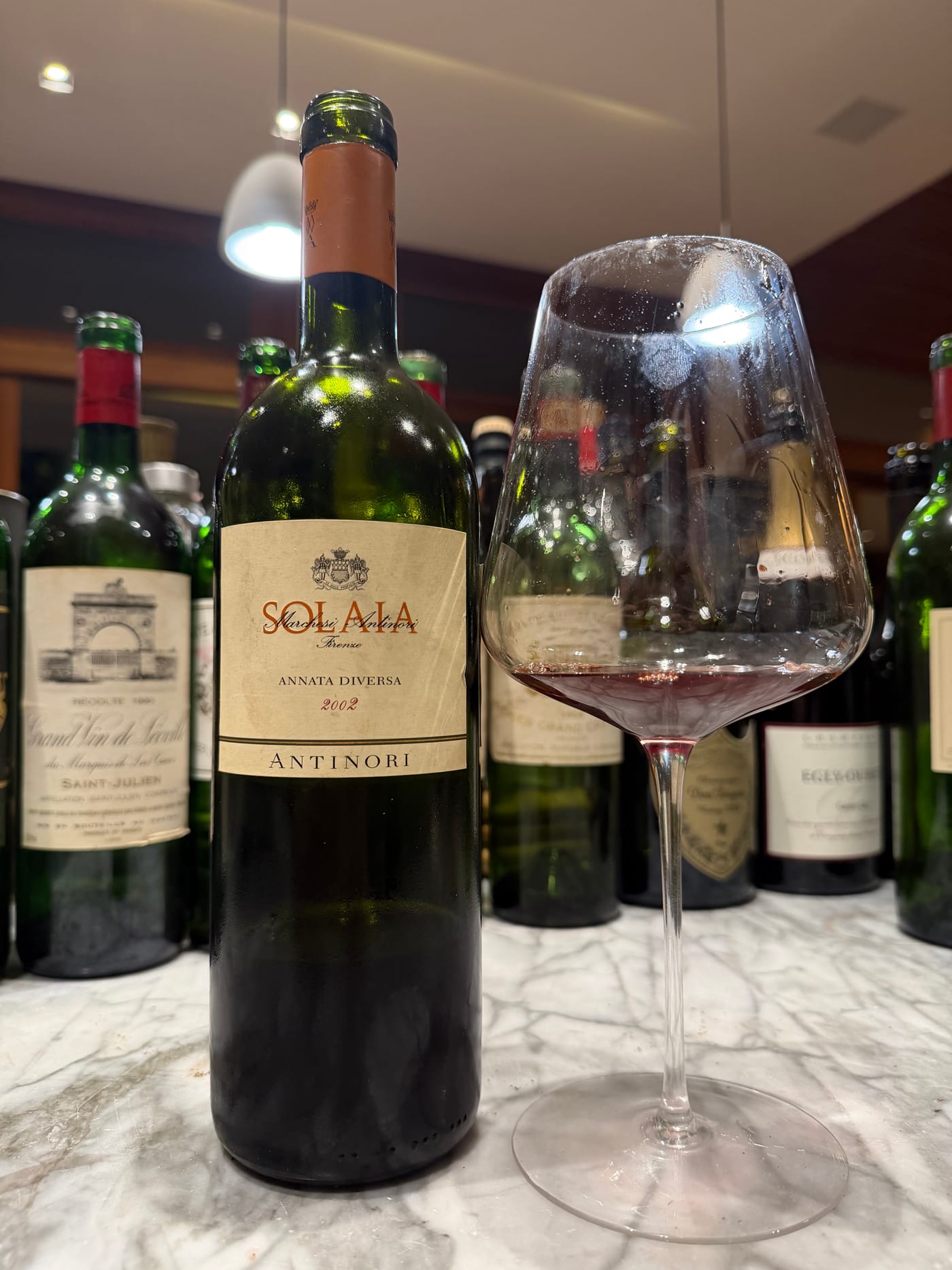
Solaia Annata Diversa 2002: A Different Vintage, a Singular Wine
Solaia 2002 is the only vintage to carry the words Annata Diversa, after a difficult Tuscan season removed Sangiovese from the blend. More than two decades later, the wine was alive, elegant and finely textured, with the composure of mature Bordeaux and an identity entirely its own.