Cain Vineyard Has New Owners. Its Brand Has Different Ones.

Maya Dalla Valle and Coastal Vineyard Care Associates have acquired the historic Spring Mountain estate, completing a rare separation between a vineyard and the name built from it.
What happened
A partnership formed by Maya Dalla Valle and Coastal Vineyard Care Associates has purchased the Cain Vineyard estate on Spring Mountain from the Meadlock family. The transaction covers 500 acres. Dalla Valle owns 50 percent of the partnership, while CVCA, a California vineyard management company, owns the remaining half. The purchase price was not disclosed.
The acquisition concerns the land, not the Cain wine brand. Third Leaf Partners, a San Francisco investment firm, acquired the Cain name and remaining inventory in December 2025. The two transactions have therefore divided a historic estate into separate assets: the trademark and commercial business under one owner, and the mountain vineyard under another.
That distinction gives the story greater relevance than a conventional Napa property sale. Cain Five was created as an estate wine from five Bordeaux varieties grown on this specific mountain. The future of the name now depends partly on grapes cultivated by owners who do not own the brand.
What is confirmed
Wine Spectator's reporting, reproduced by Shanken News Daily, identifies 87 vineyard acres planted before the 2020 Glass Fire. Fifteen acres survived, and 52 acres have since been replanted. The winery and every estate building were destroyed, while most of the vines eventually died. Cain's own history records that replanting began in late 2020 and accelerated in 2021.
The site occupies a bowl near the crest of the Mayacamas Range at elevations from approximately 1,400 to 2,100 feet. Its soils are primarily sedimentary, formed from sandstone and shale, rather than the volcanic material common in other parts of Napa. Small vineyard blocks, steep slopes and multiple exposures created the variation used in Cain Five's Cabernet Sauvignon, Cabernet Franc, Merlot, Malbec and Petit Verdot blend.
CVCA brings agricultural capacity to the partnership. Founded in 1983, the company provides vineyard development, farming and viticultural services and works with sustainable, organic, biodynamic and regenerative programmes. Its expansion into Napa was already under way before this acquisition. Dalla Valle contributes the perspective of a Napa owner and winemaker whose family estate is based in Oakville.
Dalla Valle has said that the partnership intends to protect and restore the property and that she plans to create a new wine from selected parcels. Separate regional reporting indicates that fruit will also continue to be supplied to Cain. The arrangement can preserve a link between the vineyard and its historic brand, but the exact commercial terms have not been made public.
The fire did more than destroy a winery
Cain had already spent years rebuilding before the ownership split. After the Glass Fire, the estate's priority was the vineyard rather than the reconstruction of a hospitality building or cellar. Erosion control, irrigation infrastructure and new planting came first. Production moved temporarily to a neighbouring facility, while older wines stored away from the property provided commercial continuity.
The fire also created an unusually long agricultural timetable. A replanted mountain vineyard cannot replace mature fruit immediately. New vines need years before producing meaningful crops, and rebuilding on steep terrain requires decisions about rootstocks, varieties, trellising, water and fire resilience. The buyer is therefore acquiring a recovery project, not a finished Napa estate.
This helps explain why the partnership is structurally notable. Maya Dalla Valle represents long-term winemaking ambition, while CVCA supplies specialised farming and operational scale. The combination is more directly aligned with vineyard reconstruction than a buyer interested primarily in an existing brand, visitor centre or inventory.
What remains unknown
Neither the price nor the partnership's total investment commitment has been disclosed. There is no public schedule for rebuilding a winery on the estate, and the name of Dalla Valle's planned wine project has not been announced. It is also unclear which parcels will be reserved for the new label, which will supply Cain and whether the vineyard will retain any formal estate relationship with the Cain brand.
The current reporting does not establish who will make future Cain wines, where they will be produced or how the brand owner and vineyard partnership will divide decisions concerning farming and style. Chris Howell, who directed Cain for decades, remained associated with the brand after the 2025 transaction, but no detailed long-term operating structure has been published for the newly separated assets.
It would also be premature to describe the acquisition as a completed restoration. Fifty-two replanted acres represent material progress, but the property is still recovering from the loss of most of its vines and all of its buildings. The transaction provides ownership and expertise. It does not remove the agricultural and financial work still required.
TCJ View
Cain presents an unusually clear test of what an estate name means. For more than four decades, the brand, the vineyard and the Cain Five blend reinforced one another. After the fire and two separate sales, those elements no longer sit inside a single ownership structure. The trademark can continue without owning the mountain, while the mountain can now support a second identity.
That separation is not necessarily a loss. The brand has capital and inventory under Third Leaf, and the land has owners whose combined expertise is unusually relevant to rebuilding a damaged vineyard. A supply relationship could allow Cain to preserve continuity while the new partnership develops another expression of the same site. In practical terms, specialisation may succeed where a single owner could not justify every part of the recovery.
The risk is that origin becomes an agreement rather than an integrated fact. If farming priorities, grape allocation or commercial goals diverge, Cain Five's relationship with Cain Vineyard may become less direct over time. The importance of this acquisition will therefore be measured not by the sale itself, but by the coordination that follows it. Napa has found buyers for both the name and the land. It still has to prove that two ownership groups can preserve the meaning they once created together.
Sources
Shanken News Daily and Wine Spectator: buyers, ownership shares, estate area, planted acreage, price disclosure and planned new winehttps://www.shankennewsdaily.com/2026/08/21/40715/wine-spectator-maya-dalla-valle-and-partners-purchase-napas-cain-vineyard/
Cain Vineyard & Winery: estate history, site, elevations, soils, varieties and post-fire replantinghttps://www.cainfive.com/all-about-cain/
Cain Vineyard & Winery and SevenFifty Daily: fire damage, recovery priorities and the agricultural rebuilding processhttps://www.cainfive.com/planting-a-new-future-sevenfifty-daily-june-2022/
San Francisco Chronicle: December 2025 acquisition of the Cain brand and inventory by Third Leaf Partnershttps://www.sfchronicle.com/food/wine/article/cain-vineyards-winery-spring-mountain-22094636.php
Coastal Vineyard Care Associates: vineyard management, development and farming methodshttps://www.coastalvineyardcare.com/vineyard-management
Wine Industry Advisor: CVCA history, North Coast expansion and viticultural focushttps://wineindustryadvisor.com/2026/04/29/trini-amador-iv-joins-coastal-vineyard-care-associates-to-expand-in-north-coast/
The Drinks Business: original news leadhttps://www.thedrinksbusiness.com/2026/08/fire-damaged-napa-vineyard-acquired-by-joint-owners/
WINE TASTING The Essential Guide
The Study Library · The Cellar Journal Wine tasting can look far more complicated than it really is. A professional puts their nose into a glass and starts talking about blackcurrants, violets, graphite, leather or wet stones, while someone listening may reasonably wonder whether all of those things are actually there,
ENGLISH WINE The Essential Guide
A complete introduction to English wine, connecting climate, geology, grapes, sparkling wine and modern history to explain how a marginal wine country became one of the world’s most dynamic cool-climate regions.
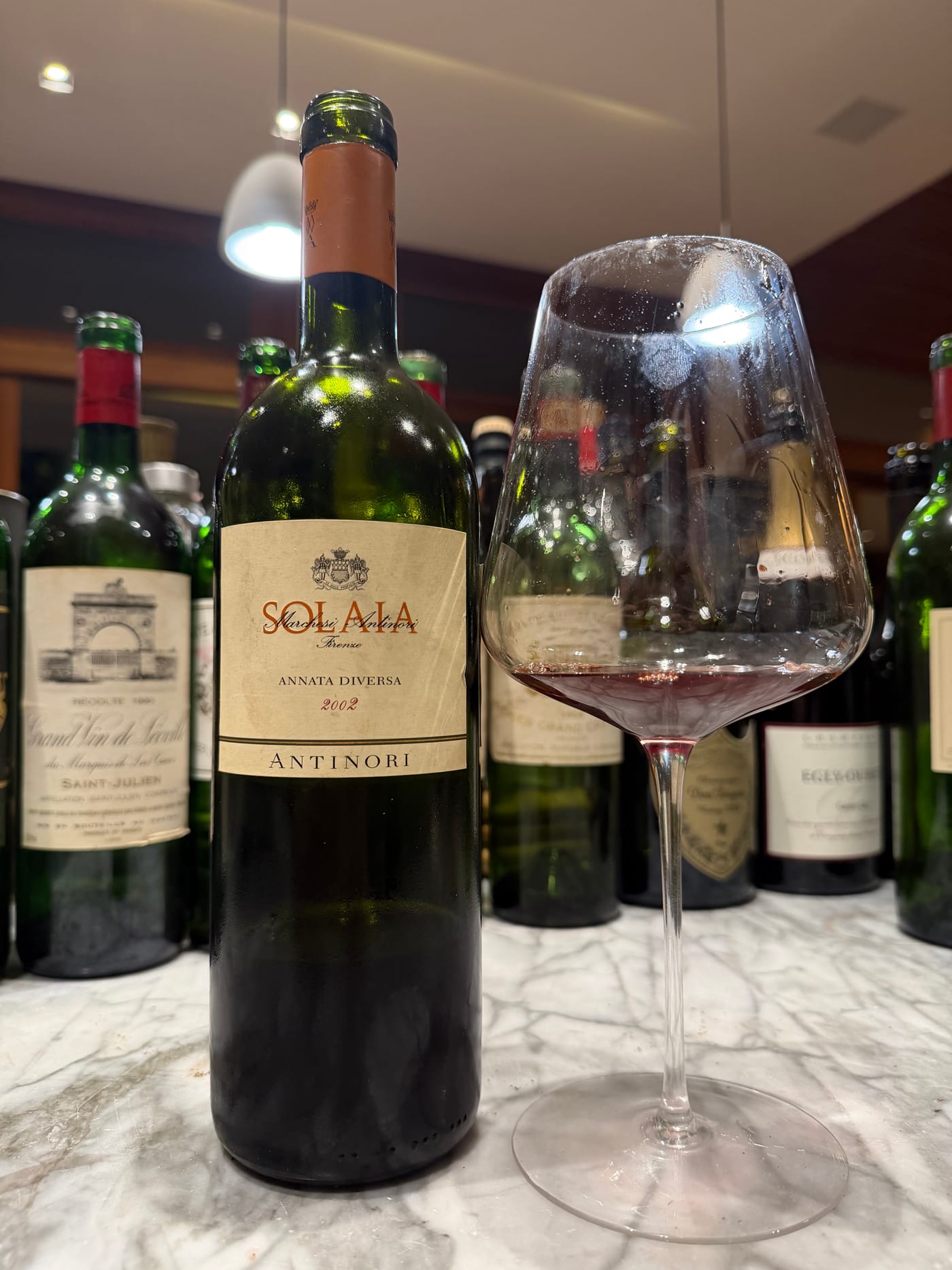
Solaia Annata Diversa 2002: A Different Vintage, a Singular Wine
Solaia 2002 is the only vintage to carry the words Annata Diversa, after a difficult Tuscan season removed Sangiovese from the blend. More than two decades later, the wine was alive, elegant and finely textured, with the composure of mature Bordeaux and an identity entirely its own.