At 200, the Sydney Royal Wine Show Opens Its Judging Room

More than 1,600 entries marked the bicentenary. The more consequential change was a new programme that made the construction of wine-show standards visible to a wider professional audience.
What happened
The Sydney Royal Wine Show completed four days of judging on July 30 as it marked 200 years since wine was first included in the Agricultural Society of New South Wales Show. The Royal Agricultural Society of NSW says the 2026 competition assessed more than 1,600 Australian wines and awarded 109 gold medals. The full trophy results are scheduled to be announced at the Sydney Royal Wine Show Awards Lunch on August 21.
The anniversary is not the 200th uninterrupted edition. Wine first appeared in 1826, when a small gold medal was offered for the best colonial wine, but the competition was suspended during periods of war and influenza. The more accurate description is a bicentenary: 200 years since wine entered the Society's agricultural programme.
For the current competition, six panels were used. Each included a chair, two senior judges and two associate judges. Wines were assessed on a 100-point scale, with gold awarded from 95 points, silver from 90 and bronze from 85. Eligible entries had to be Australian produced and commercially bottled or otherwise commercially available.
The judging room opened
The significant addition was not another medal class. For the bicentenary, the Society launched a judging immersion programme and followed the competition with Sydney Royal 200: The Wine Show Conversation on July 31. Around 200 wine professionals took part in a day designed to expose how a show moves from blind assessment to a final result.
Participants worked through four blind brackets and recorded their own scores while seated with experienced judges. The programme also brought together former and current chairs, winemakers and trade specialists to discuss the history and operation of the show. This did not make the public part of the official judging panel. It created a parallel educational exercise in which the reasoning behind classification could be observed and questioned.
That distinction matters. A medal often arrives in the market as a finished symbol, detached from the process that produced it. By showing the sequence of blind evaluation, discussion and calibration, the programme shifted attention from the award to the standard behind it.
Two centuries of moving standards
The Sydney show has never judged a fixed idea of Australian wine. Its categories have changed with the industry. The original colonial-wine award was followed by a fully established wine section in 1869. A separate wine show began in 1947. Gold, silver and bronze medals replaced first, second and third places in 1961, and the current 100-point system was adopted in 2013 after a trial the previous year. A consumer tasting festival followed in 2018.
The vocabulary changed as well. Historical classes organised around terms such as Hock, Claret and Burgundy gave way to categories based on varieties, regions, production methods and styles. The current schedule covers white, rosé, red, sparkling and fortified wines, together with alcohol-free and low-alcohol products. The competition is therefore not only recording quality within Australian wine. Through its classes, thresholds and judging language, it is also deciding which differences deserve formal recognition.
The NOLO correction
Coverage of the anniversary can make the alcohol-free and low-alcohol class appear to be a 2026 innovation. The official record does not support that interpretation. The class was already present in the Sydney Royal's 2024 results catalogue, so TCJ does not describe it as new this year.
The 2024 rules were unusually specific. Products had to begin as fully fermented wine and then undergo de-alcoholisation. They had to be made from grapes, and low-alcohol entries had to contain less than 1.15 per cent alcohol by volume. This definition excluded grape-based drinks that had never been vinified. It shows how a competition can acknowledge an emerging market while still drawing a technical boundary around what it accepts as wine.
The category remains relevant to the bicentenary, but as evidence of continuity rather than novelty. The Sydney Royal has repeatedly adjusted its architecture when production methods and consumer categories change. The question for 2026 is not whether the show noticed NOLO. It is how an old institution explains and defends the standards applied to every class.
What the medals can and cannot say
A total of 109 gold medals is evidence about the entries submitted and the standards applied by these panels. It is not a census of Australian wine and cannot establish that the national vintage or industry as a whole has reached a new level. Producers choose whether to enter, classes contain different numbers of wines and the final results depend on a defined judging system.
That limitation does not make the medals meaningless. Shows can offer producers independent comparison, structured feedback and access to trained judges. Associate positions and the new immersion programme also make the competition part of professional education. The value lies less in presenting a score as universal truth than in building a repeatable process that can be examined over time.
TCJ View
The easiest bicentenary story is longevity. The more useful one is adaptation. Sydney Royal has survived because it has repeatedly revised the categories, language and scoring systems through which Australian wine is judged. In 2026, its most relevant move was to make part of that construction visible.
Wine competitions exercise influence before any medal appears on a bottle. They determine which products can enter, which differences become categories, which thresholds define distinction and which professionals acquire authority as judges. Opening those mechanisms to scrutiny is not a ceremonial gesture. It is a way of making institutional power more accountable.
The next test is whether this transparency produces clearer criteria, more useful feedback and a broader route into judging without weakening rigour. If it does, the Sydney Royal's 200th year will matter for more than a historical date. It will mark the moment when one of Australian wine's oldest institutions began explaining not only which wines received recognition, but how recognition itself is made.
Sources
Royal Agricultural Society of NSW: Sydney Royal Wine Show competition page, bicentenary history, 2026 dates, judging structure and medal thresholds
Royal Agricultural Society of NSW: 2024 Sydney Royal Wine Show results catalogue and Class 59 rules
Sydney Royal 200: The Wine Show Conversation: official event programme and judging-immersion format
Wine Communicators of Australia: Sydney Royal 200 Awards Lunch listing
The Shout: 2026 judging report and panel size
Australian Financial Review: anniversary report used as the original news lead; factual claims independently checked against primary sources
WINE TASTING The Essential Guide
The Study Library · The Cellar Journal Wine tasting can look far more complicated than it really is. A professional puts their nose into a glass and starts talking about blackcurrants, violets, graphite, leather or wet stones, while someone listening may reasonably wonder whether all of those things are actually there,
ENGLISH WINE The Essential Guide
A complete introduction to English wine, connecting climate, geology, grapes, sparkling wine and modern history to explain how a marginal wine country became one of the world’s most dynamic cool-climate regions.
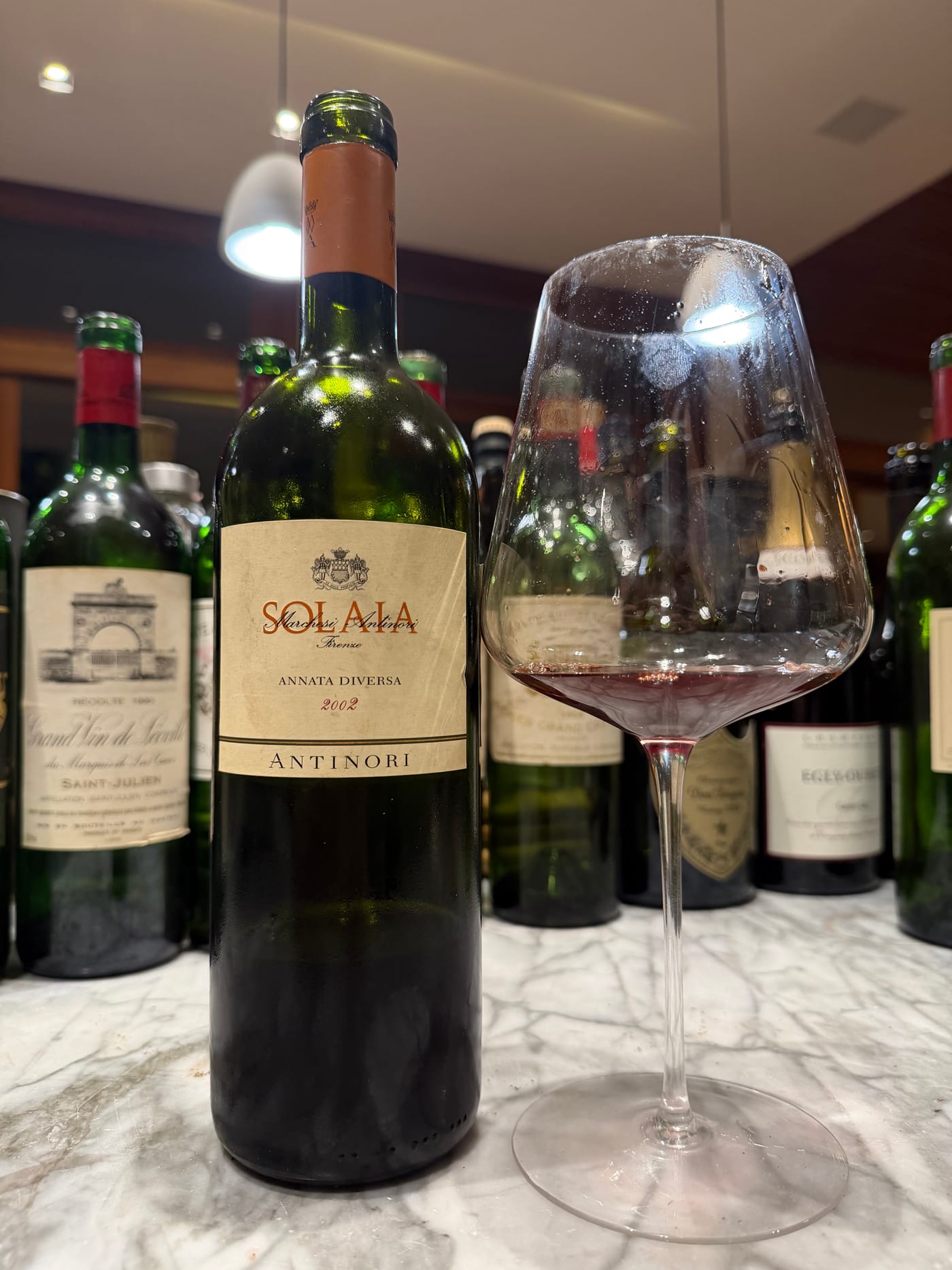
Solaia Annata Diversa 2002: A Different Vintage, a Singular Wine
Solaia 2002 is the only vintage to carry the words Annata Diversa, after a difficult Tuscan season removed Sangiovese from the blend. More than two decades later, the wine was alive, elegant and finely textured, with the composure of mature Bordeaux and an identity entirely its own.