Alsace Opens Its Harvests on a Single Day

Crémant d'Alsace, AOC Alsace and most grands crus were authorised to begin together on August 18. The record date matters, but the deeper signal is the disappearance of the region's usual sequence.
What happened
Alsace officially opened the 2026 harvest on Tuesday, August 18, for Crémant d'Alsace, AOC Alsace and most grand cru sites. The decision was taken with the Institut national de l'origine et de la qualité, or INAO, following a season marked by repeated heat episodes and unusually rapid development.
The regional order is normally staggered. Grapes for Crémant d'Alsace are authorised first, followed by fruit for still AOC Alsace wines and then by the grands crus. This year, the three calendars were opened together, with exceptions retained for certain grands crus whose rules or maturity require a different date.
Théo Grischko, director general of the Association des Viticulteurs d'Alsace, told AFP that the simultaneous opening was designed to give growers room to respond to wide differences in maturity. The date authorises picking. It does not require every estate or parcel to be harvested at once.
The region had already moved into August in 2025, when fruit for sparkling wine could be harvested from August 19 and still-wine picking began on August 25. In 2026, the opening moved one day earlier and expanded across almost the entire appellation structure.
Why the single date matters
An early harvest is visible and easy to report. A simultaneous opening is more revealing. It shows a regulatory calendar being asked to absorb conditions that no longer progress in an orderly regional sequence.
Alsace contains different grape varieties, elevations, exposures, soils and production objectives. Fruit intended for sparkling wine is generally gathered according to a different balance from fruit destined for dry still wine or a grand cru. Opening those categories together does not mean they reached the same maturity. It means the old hierarchy of dates was no longer flexible enough for the variation observed in the vineyards.
That distinction prevents two common errors. Precocity is not itself proof of quality, and a healthy crop is not necessarily a balanced one. Disease pressure may be low while heat and water stress reduce berry size, accelerate sugar accumulation or place acidity under pressure. Those outcomes can differ sharply between one site and the next.
What is confirmed
The Association des Viticulteurs d'Alsace confirmed August 18 as the opening date for the three principal appellation categories, subject to exceptions for some grands crus. It also reported that an unusually large number of estates had requested permission to begin before the general opening where fruit was already sufficiently mature.
A late-July estimate from the Alsace Chamber of Agriculture placed the 2026 crop at 804,000 hectolitres. That is approximately 4.4 per cent below the 840,681 hectolitres recorded in 2025, but the 2026 figure remains a forecast rather than a final harvest result.
Marie-Noëlle Lauer, a viticulture adviser at the Chamber of Agriculture, described weather conditions as exceptional and cited temperatures reaching 44°C in the shade. The crop was nevertheless described as healthy and without downy mildew. Copernicus provides the broader context: Western Europe experienced its warmest combined June and July period on record in 2026, with much of the region also drier than average.
What remains unknown
The final volume will not be known until the crop has been gathered and declared. The current estimate cannot show how losses or concentration are distributed among varieties, villages and individual sites.
There is not yet enough public evidence to judge the composition of the fruit across the region. Acidity, pH, sugar, berry weight and phenolic maturity will matter more to the finished wines than the opening date alone. The reported disparity in maturity makes regional generalisations especially unreliable.
It is also too early to know whether 2026 represents an exceptional administrative response or a model that Alsace will need more frequently. One record date does not establish a new norm. Two consecutive August openings, however, make the direction of travel difficult to dismiss.
TCJ View
The important story is not that Alsace harvested early. Many European regions now encounter earlier calendars. The important story is that one date had to contain several different viticultural realities.
The simultaneous opening gives growers necessary discretion, but it also reveals the limits of a calendar built for more predictable progression. Regulation is shifting from setting a regional rhythm to creating enough space for decisions at vineyard level. In a region as varied as Alsace, that flexibility is rational. It also places greater weight on the judgment, labour and analytical capacity of each estate.
Climate pressure does not make a vineyard uniform. It often increases contrast. A deep-rooted vine on a cooler site may continue to function while a younger parcel nearby stalls under water stress. One variety may accumulate sugar rapidly while another retains acidity. The record date captures acceleration. The reported disparity captures the harder problem.
For Alsace, the question is therefore larger than how early the next harvest might begin. It is whether vineyard practice, seasonal labour, cellar capacity and appellation rules can adapt without narrowing the range of styles the region is able to produce. August 18 is a date for the record books. The simultaneous opening is the fact that deserves to remain in view.
Sources
Le Figaro with AFP: record early opening of the Alsace harvest
AFP: simultaneous opening, maturity disparity and crop estimate
Copernicus Climate Change Service: July 2026 climate bulletin
Reuters: drought and heat compress the 2026 French harvest calendar
WINE TASTING The Essential Guide
The Study Library · The Cellar Journal Wine tasting can look far more complicated than it really is. A professional puts their nose into a glass and starts talking about blackcurrants, violets, graphite, leather or wet stones, while someone listening may reasonably wonder whether all of those things are actually there,
ENGLISH WINE The Essential Guide
A complete introduction to English wine, connecting climate, geology, grapes, sparkling wine and modern history to explain how a marginal wine country became one of the world’s most dynamic cool-climate regions.
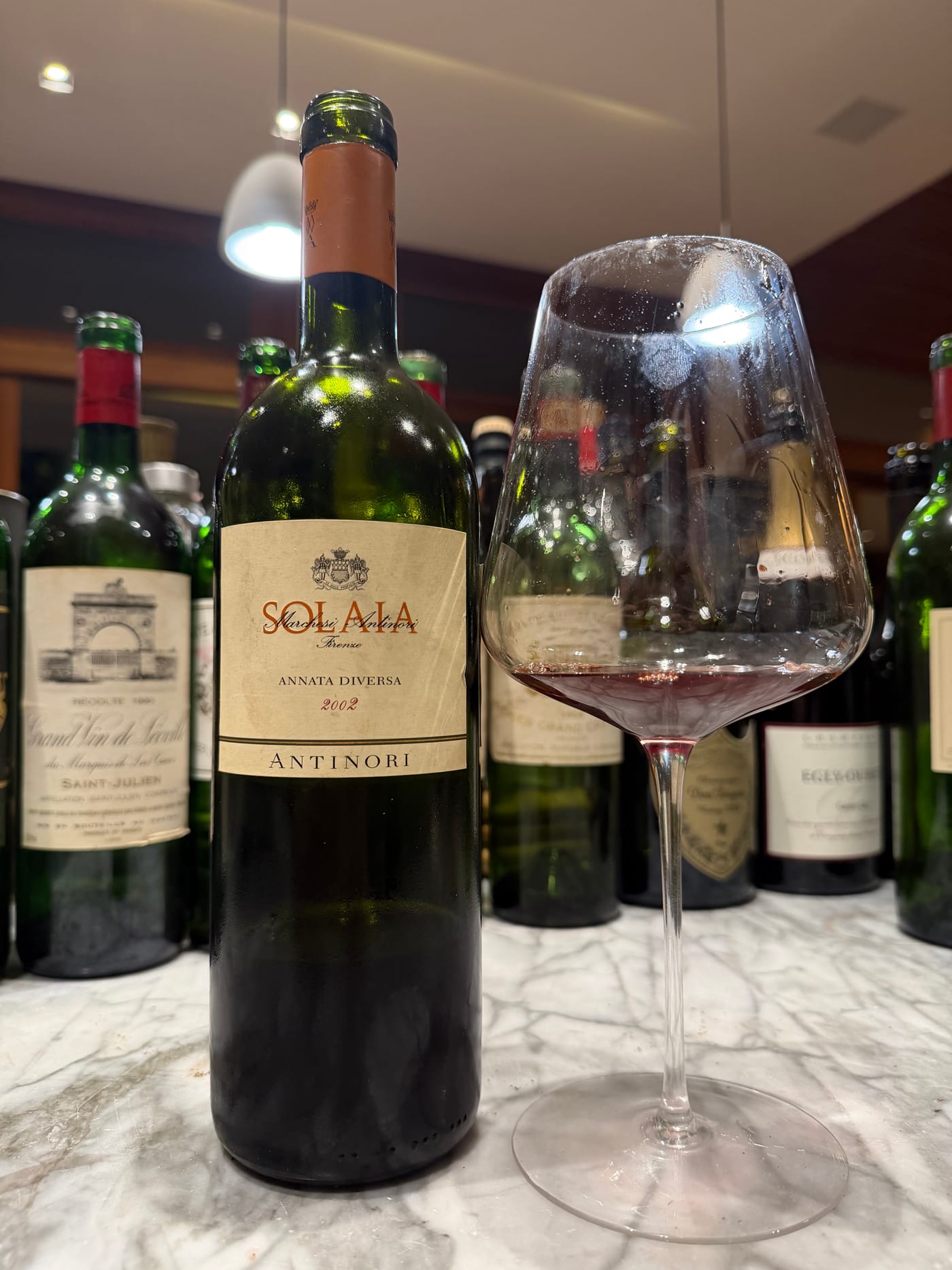
Solaia Annata Diversa 2002: A Different Vintage, a Singular Wine
Solaia 2002 is the only vintage to carry the words Annata Diversa, after a difficult Tuscan season removed Sangiovese from the blend. More than two decades later, the wine was alive, elegant and finely textured, with the composure of mature Bordeaux and an identity entirely its own.