A Possible Wine Press Connects Wine to Daily Life in Ancient Memphis
Archaeologists have found a possible wine press beside residential remains in ancient Memphis. Its structure and grape seeds support the interpretation, but its date and exact function remain unconfirmed.
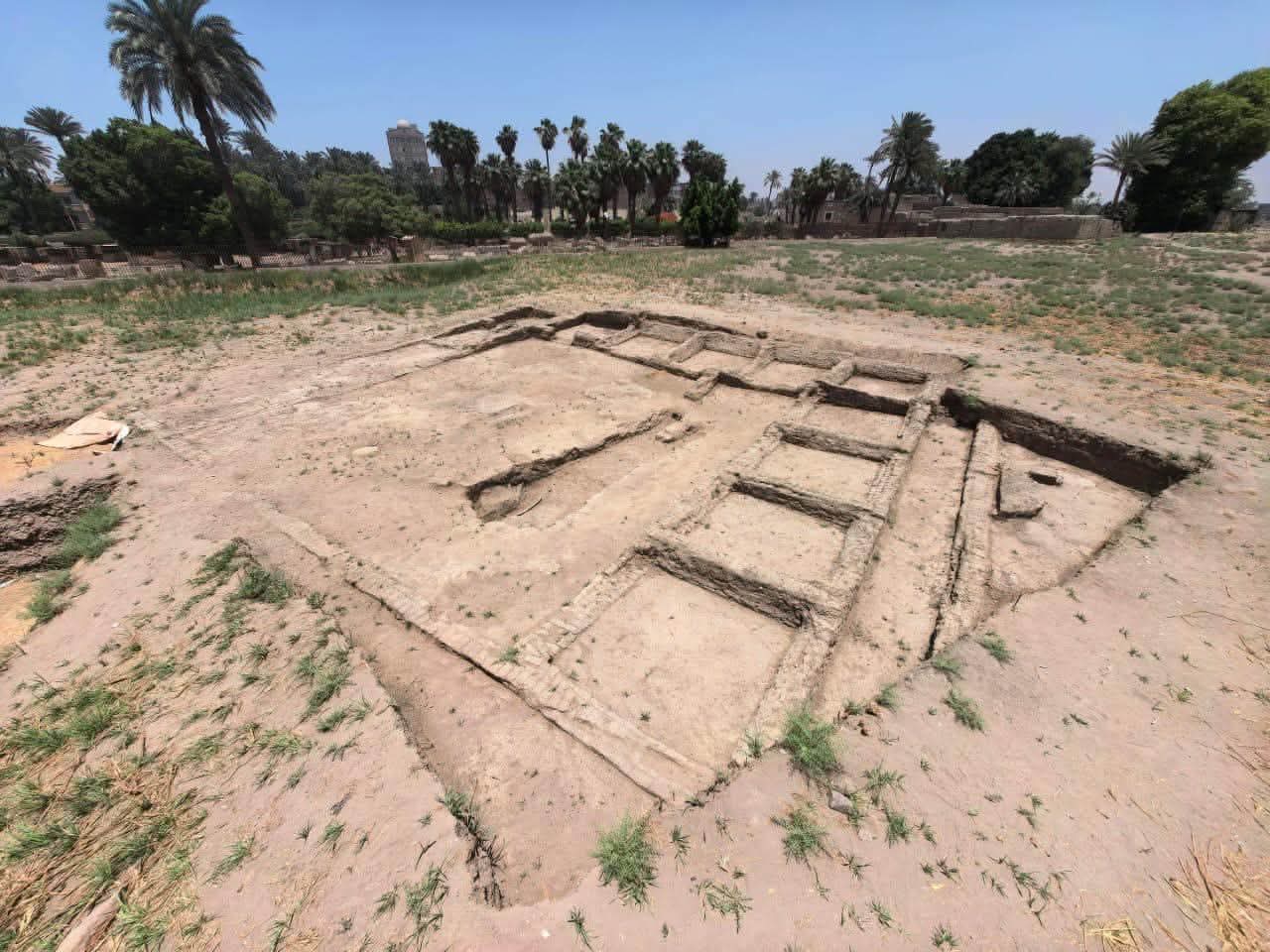
A limestone installation, grape seeds and a nearby housing complex offer a different view of ancient Egyptian wine production. The interpretation is credible, but the structure's function and date have not yet been established in a published study.
What happened
A joint Egyptian-Chinese archaeological mission has uncovered a mud-brick residential complex and a limestone installation that may have been used to press grapes near the Temple of Sekhmet at Mit Rahina, the site of ancient Memphis.
The mission is a collaboration between Egypt's Supreme Council of Antiquities and the Shanghai Museum. According to Egypt's Ministry of Tourism and Antiquities, the stone installation stands east of the temple and has an upper basin sloping toward a central opening, with a lower basin positioned to collect liquid. Openings associated with the basins may have secured amphorae. Grape seeds were found inside the structure.
The architecture and seeds support the interpretation of a wine press, but the official announcement still describes the function as probable rather than proven. No excavation report, archaeobotanical analysis, residue study or firm date for the installation has yet been published.
The excavation also produced stone blocks, statue fragments, pottery, faience amulets, small figures, ostraca and votive objects. Many of the architectural fragments date to the New Kingdom, particularly the reign of Ramesses II, while evidence from the wider area indicates settlement from the Third Intermediate and Late periods through the Ptolemaic and Greco-Roman eras.
The discovery is not evidence that Egypt invented wine
Wine in ancient Egypt is not a new discovery. Archaeological and chemical evidence has documented grape wine for thousands of years. By the Old Kingdom, vineyards, wine production and named wines appeared in tomb scenes, offering lists and inscribed containers. Later jars recorded information that could include origin, year and people responsible for production.
The Memphis find should therefore not be framed as the beginning of Egyptian wine or as a challenge to the wider history of wine in the Near East. Its value lies elsewhere. If the installation is confirmed, it adds a physical production site to an urban area better known through temples, sculpture and royal history.
A wine jar proves that wine was stored or moved. An image shows how production was represented. A press can reveal where work happened, how space was organized and how grape processing fitted into the economy of a settlement. That is why the location beside residential remains matters.
From a temple precinct to a lived-in neighbourhood
The Temple of Sekhmet formed part of the larger complex of the Great Temple of Ptah, the principal sanctuary of Memphis. The temple remains were discovered accidentally during house construction in 1959 and excavated in 1961 and 1962. Visible remains were documented again in 2015, but the current mission is carrying out the first new excavation around the temple in more than six decades.
The latest finds indicate that the area did not become empty when the temple's religious importance declined. Parts of it were reused as a residential neighbourhood. The possible press places agricultural processing within that later landscape, although the relationship between the installation and the houses still needs to be demonstrated through stratigraphy and dating.
Memphis was active for more than three millennia, and its surviving remains are fragmented by modern settlement and agriculture. Much of its history cannot be reconstructed from monumental buildings alone. Housing, pottery, food remains and production installations are essential because they document the ordinary systems that allowed a large city to function.
Why the grape seeds matter, and why they are not enough
The layout of the basins is consistent with liquid processing, while grape seeds provide direct botanical evidence within the installation. Together, they make a wine-related function plausible. The openings that may have held amphorae add another element to that interpretation.
Important questions remain. The ministry has not said whether the seeds were recovered from a sealed archaeological layer, whether they have been dated, or whether specialists have identified them as cultivated grape material. It is also unclear whether the installation was used exclusively for wine rather than another grape product, how large it was, or whether it served one household, a workshop or a wider market.
Those limits do not diminish the discovery. They define its current stage. Archaeology becomes less reliable when an initial interpretation is repeated as a final conclusion before the site record and scientific analyses are available.
What is confirmed
The Egyptian-Chinese mission found a limestone installation with two basins, collection openings and grape seeds east of the Temple of Sekhmet. Mud-brick residential remains and a broad group of artefacts were uncovered nearby. The mission is led by Reham Zaki of the Supreme Council of Antiquities and Chen Jie of the Shanghai Museum.
The wider evidence shows continued occupation in this part of Memphis across several historical periods. Excavations and architectural documentation will continue in future seasons.
What remains unknown
The installation's date, duration of use and exact relationship to the residential complex have not been published. Its identification as a wine press remains an archaeological interpretation, not a completed scientific conclusion.
No information has been released on residue analysis, radiocarbon or other dating of the grape seeds, production capacity, vineyard sources, storage areas or distribution. There is also no basis yet for reconstructing the type, colour or style of wine that may have been produced.
TCJ View
The most interesting part of this discovery is not its age and not the possibility of adding another ancient wine press to a map. It is the connection between wine production and the daily organization of a city.
Ancient wine is often presented through royal tombs, ceremonial images and exceptional containers. Those sources are important, but they emphasize status and symbolism. A production installation beside housing asks different questions: who performed the work, who controlled the space, where the grapes came from and where the finished product went.
The site may eventually show that wine remained part of Memphis after its monumental centre changed function. Or later analysis may narrow or revise the initial interpretation. Both outcomes would be useful. The value of archaeology is not to make the history of wine older at every opportunity, but to make that history more specific.
For now, the correct description is also the most interesting one: a possible wine press in a lived-in part of ancient Memphis. Its importance will depend on what future excavation can connect to it.
Sources
Ancient Egypt Research Associates: Memphis research and site history
Penn Museum: The beginnings of winemaking and viniculture in the ancient Near East and Egypt

WINE TASTING The Essential Guide
The Study Library · The Cellar Journal Wine tasting can look far more complicated than it really is. A professional puts their nose into a glass and starts talking about blackcurrants, violets, graphite, leather or wet stones, while someone listening may reasonably wonder whether all of those things are actually there,

ENGLISH WINE The Essential Guide
A complete introduction to English wine, connecting climate, geology, grapes, sparkling wine and modern history to explain how a marginal wine country became one of the world’s most dynamic cool-climate regions.
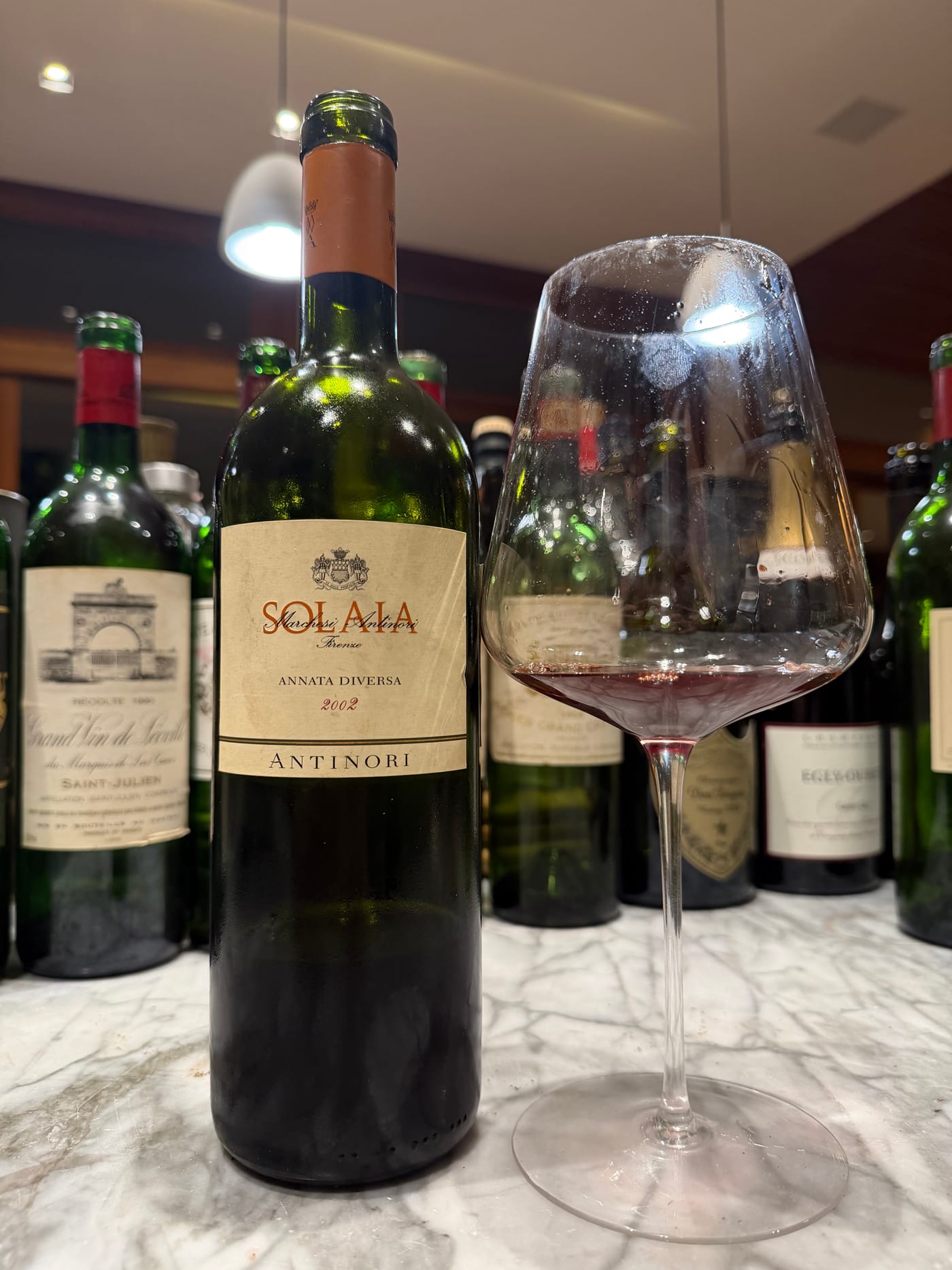
Solaia Annata Diversa 2002: A Different Vintage, a Singular Wine
Solaia 2002 is the only vintage to carry the words Annata Diversa, after a difficult Tuscan season removed Sangiovese from the blend. More than two decades later, the wine was alive, elegant and finely textured, with the composure of mature Bordeaux and an identity entirely its own.