A $97 Million Fraud Exposed the Weakest Link in Wine-Backed Lending

Stephen Burton received six years in prison after investors financed purported loans secured by rare bottles. The case shows why value means little without independent proof of ownership, location and custody.
What happened
Stephen Burton, the founder and chief executive of Bordeaux Cellars, was sentenced on September 3 to six years in federal prison. He had pleaded guilty in July 2025 to wire fraud conspiracy and money laundering conspiracy in a scheme that raised more than $97 million from over 140 investors.
Burton and his business partner, James Wellesley, told investors that Bordeaux Cellars arranged short-term loans for wealthy wine collectors. The collectors supposedly pledged valuable bottles as collateral, while the company kept custody of the wine until each loan was repaid. Investors were promised regular interest and the apparent protection of a physical asset.
The borrowers did not exist as represented, and Bordeaux Cellars did not control the wine described in the loan documents. Incoming money was used for personal expenses and to make supposed interest payments to earlier investors. The operation ran from at least June 2017 through February 2019.
Prosecutors calculated that the company returned approximately $14 million of the amount raised, leaving losses above $83 million. Wellesley pleaded guilty separately and received a ten-year sentence in April. Burton's shorter sentence followed a hearing at which his lawyer said he had helped prosecutors trace funds and provided information about his co-defendant.
This was not a counterfeit-wine case
Wine fraud is often understood through the bottle: a forged label, a refilled container, a false vintage or a fabricated provenance. Bordeaux Cellars used a different vulnerability. It did not primarily need investors to believe that a particular bottle was authentic. It needed them to believe that a large inventory existed, belonged to the purported borrowers and remained available to secure their money.
The distinction matters. Investors were not purchasing cases for their own cellars. They were financing loans said to be backed by wine. The asset was therefore one step removed from them, described through schedules, valuations and custody representations rather than inspected as part of an ordinary transfer.
The company claimed that the collateral included more than 25,000 bottles from producers such as Domaine de la Romanée-Conti and Château Lafleur. Reporting based on the criminal case found that Bordeaux Cellars controlled only 217 bottles in March 2018, thousands fewer than its loan documentation indicated. The prestige of the names gave the collateral a recognizable value story. It did not prove the inventory.
Why rare wine made the structure persuasive
Fine wine can appear well suited to asset-backed lending. Bottles can carry substantial value, established wines have observable secondary-market prices, and a collection can remain in storage while a loan is outstanding. Unlike a house, however, wine has no public title registry. An inventory description can move between an appraisal and a lending presentation without the bottle moving at all.
Value also depends on bottle size, condition, provenance, storage, packaging and liquidity. An appraisal is therefore not equivalent to control, and control is not equivalent to ownership. Each claim needs separate evidence.
The celebrated bottles were also a language of reassurance. Romanée-Conti, Lafleur, Pétrus or first-growth Bordeaux can make a proposal feel tangible even when the investor cannot see the asset. Familiarity with the label can substitute psychologically for verification of the property.
The questions that should have preceded the money
A wine-backed loan requires more than an appraisal. It needs proof of ownership, independent confirmation of physical custody, restrictions on release, appropriate insurance and evidence that the same inventory has not been pledged elsewhere.
The central controls are ordinary questions. Who counted the bottles? Who matched them to the loan schedule? Who confirmed title? Could the lender contact the warehouse directly? Who could authorize a withdrawal? How often was the inventory reconciled? What would happen if the borrower defaulted and the collection had to be sold quickly?
The Bordeaux Cellars story demonstrates what happens when a valuation document is allowed to answer questions it cannot answer. A number on paper may estimate what wine could be worth. It does not establish that the wine is present, unencumbered and recoverable.
A transnational scheme with a long pursuit
Bordeaux Cellars operated through companies registered in London and Hong Kong and solicited investors at conferences in the United States and overseas. Approximately half of the more than 140 victims were in the United States, according to prosecutors.
Burton was indicted in Brooklyn in 2022. He was arrested in Morocco after entering the country with a false Zimbabwean passport and was extradited to the United States in December 2023. Wellesley was arrested in the United Kingdom and extradited in July 2025 after contesting the process.
The timeline matters because the sentence closes only part of the case. The scheme collapsed in 2019, but the criminal process crossed several jurisdictions and lasted years. Wine may have supplied the collateral story, but international company structures and the movement of money made recovery and prosecution more complex.
What is confirmed
Burton pleaded guilty to wire fraud conspiracy and money laundering conspiracy and received a six-year sentence. Wellesley pleaded guilty to wire fraud conspiracy and received ten years. The scheme raised more than $97 million from over 140 investors, returned approximately $14 million and caused losses above $83 million.
The investment proposition was based on loans to purported wealthy collectors, fully secured by wine said to remain in Bordeaux Cellars' custody. The collectors did not exist as represented, the company did not maintain custody of most of the stated collateral, and new investor money funded earlier payments and personal expenses.
What remains unknown
Burton agreed to a $26 million forfeiture order, but no complete public accounting shows how much has been collected or returned to victims. An order is not recovery, and restitution and forfeiture are not interchangeable totals.
The public record does not provide a loan-by-loan account of warehouse confirmations, collateral reviews or possible duplicate pledges. The 217 bottles documented at one point do not establish ownership or availability to every lender.
The sentence does not measure the size of legitimate wine-backed lending or establish that the structure itself is fraudulent. It records the consequences of one operation in which basic representations about borrowers and collateral were false.
TCJ View
The most revealing part of this fraud is that the wine barely needed to be present. Its reputation did the work first.
Fine wine compresses origin, scarcity, time and price into an object small enough to be stored and traded. That can make it credible as collateral, but it can also make description seem as persuasive as possession. The market has improved its language around authenticity and provenance. Finance requires another vocabulary: title, custody, control, encumbrance and liquidation.
A genuine bottle can still be useless collateral if it belongs to someone else or can leave storage without the lender's consent. The failure here was not one of taste. It was the decision to accept prestige as evidence. A great name can support a price, but it cannot confirm a warehouse.
The sentence closes the prosecution of the scheme's founder. It leaves a harder question: when wine becomes a financial asset, who proves that the physical object and the financial promise are still the same thing?
Sources
Bloomberg: Stephen Burton sentenced to six years, September 3, 2026
U.S. Attorney's Office, Eastern District of New York: James Wellesley sentenced, April 20, 2026
U.S. Attorney's Office, Eastern District of New York: Wellesley extradition and allegations, July 11, 2025
Reuters: Wellesley plea and wine-inventory details, October 7, 2025
U.S. Attorney's Office, Eastern District of New York: Burton extradition, December 16, 2023
U.S. Attorney's Office, Eastern District of New York: Indictment announcement, March 1, 2022
Associated Press: Wellesley extradition and case summary, July 11, 2025

WINE TASTING The Essential Guide
The Study Library · The Cellar Journal Wine tasting can look far more complicated than it really is. A professional puts their nose into a glass and starts talking about blackcurrants, violets, graphite, leather or wet stones, while someone listening may reasonably wonder whether all of those things are actually there,

ENGLISH WINE The Essential Guide
A complete introduction to English wine, connecting climate, geology, grapes, sparkling wine and modern history to explain how a marginal wine country became one of the world’s most dynamic cool-climate regions.
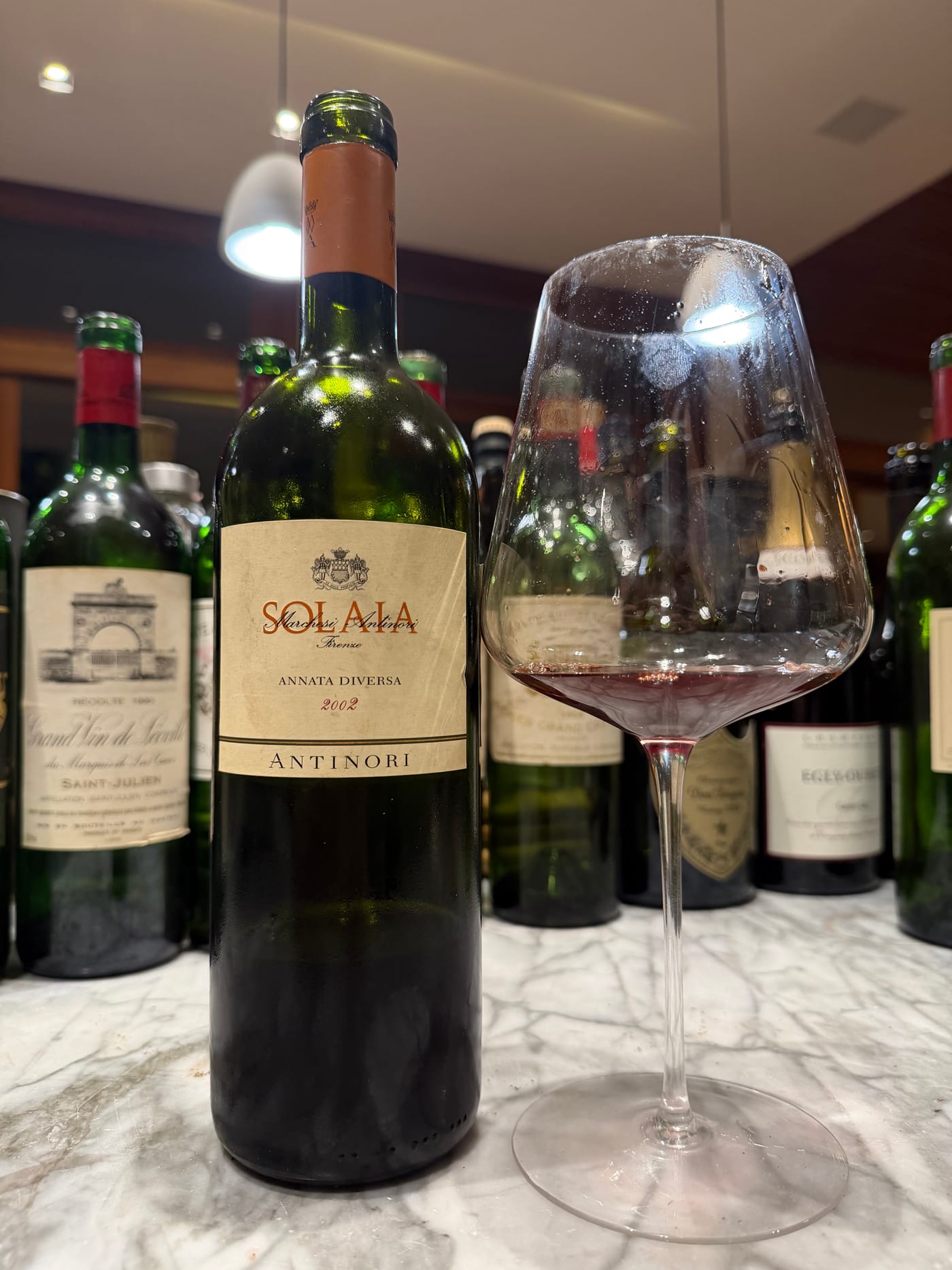
Solaia Annata Diversa 2002: A Different Vintage, a Singular Wine
Solaia 2002 is the only vintage to carry the words Annata Diversa, after a difficult Tuscan season removed Sangiovese from the blend. More than two decades later, the wine was alive, elegant and finely textured, with the composure of mature Bordeaux and an identity entirely its own.