The Other White Wines Defining Côtes du Jura
Côtes du Jura white wine extends far beyond vin jaune. Chardonnay, ouillé Savagnin and shorter sous-voile ageing reveal how grape, parcel and cellar choice are reshaping the way the Jura is understood.
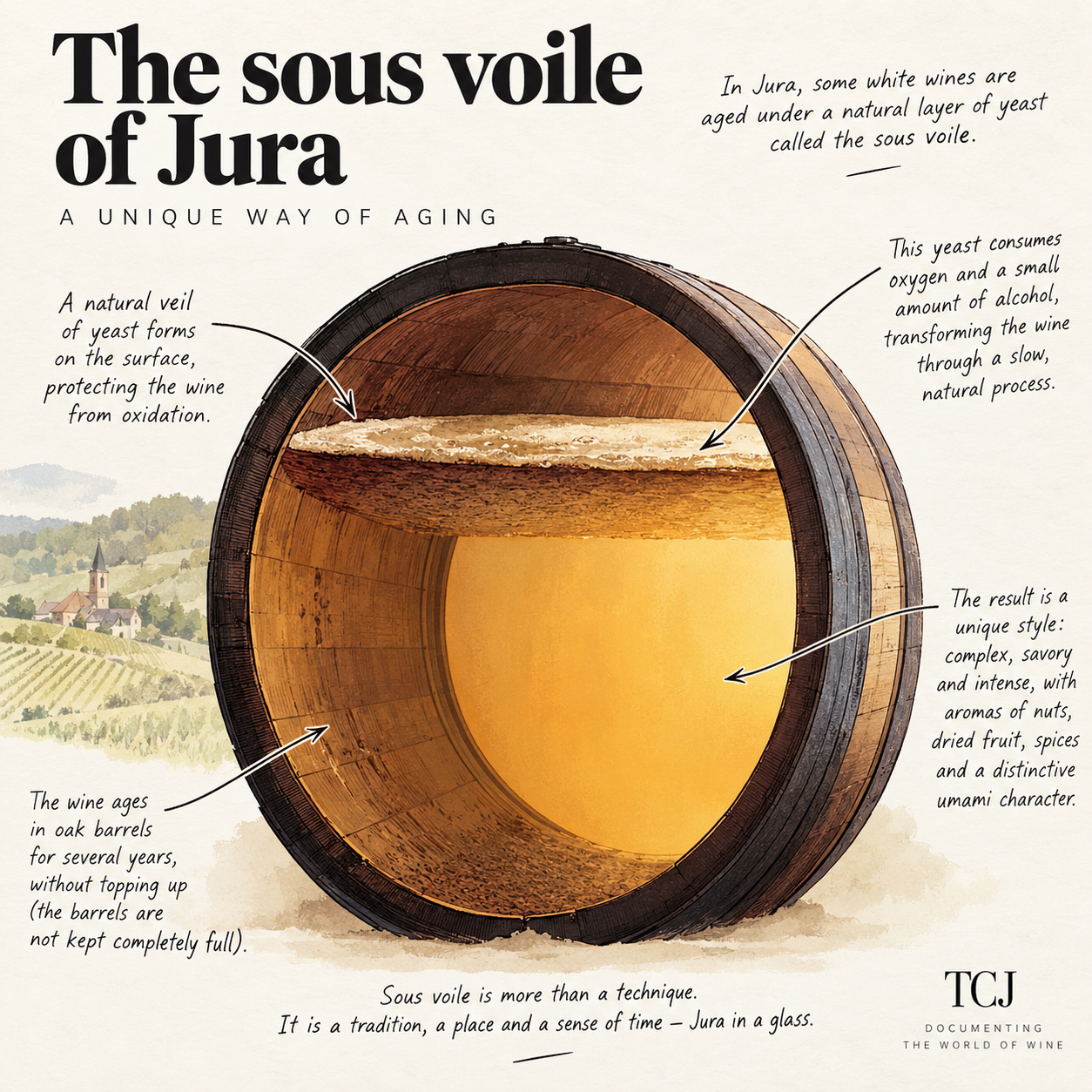
Vin jaune remains the Jura's most recognisable white wine, but it represents only one way of reading the region. Chardonnay, topped-up Savagnin and shorter sous-voile ageing are making grape, parcel and cellar choice more visible.
What happened
Le Point has placed Côtes du Jura dry whites among the French appellations to watch in 2026. The report is built around 59 wines tasted blind and argues that the region's so-called floral whites are emerging from the shadow of vin jaune. It estimates that dry whites account for 70% of Jura production and that approximately 450 hectares are devoted to white Côtes du Jura.
The article is a useful signal, but it is not evidence that a new category has suddenly appeared. These wines have existed for decades. What has changed is the way the Jura is being described. A region once introduced through a single method, long ageing under a veil of yeast, is increasingly being understood through two grapes, many parcels and several approaches to élevage.
That distinction matters. Vin jaune is not being replaced. The public image of the Jura is becoming closer to the reality of its vineyards and cellars, where Chardonnay, Savagnin and blends can be aged with regular topping, under voile, or through combinations of the two.
What Côtes du Jura actually covers
Côtes du Jura was recognised in 1937 and is the region's broadest geographical appellation. The INAO defines it as an appellation for still white, red and rosé wines, with vin jaune and vin de paille available as additional mentions when their specific rules are met. The vineyards lie along the Revermont, on the western edge of the Jura massif, where marl slopes are frequently covered by limestone debris.
At Damascene, One Cellar Holds Many South Africas
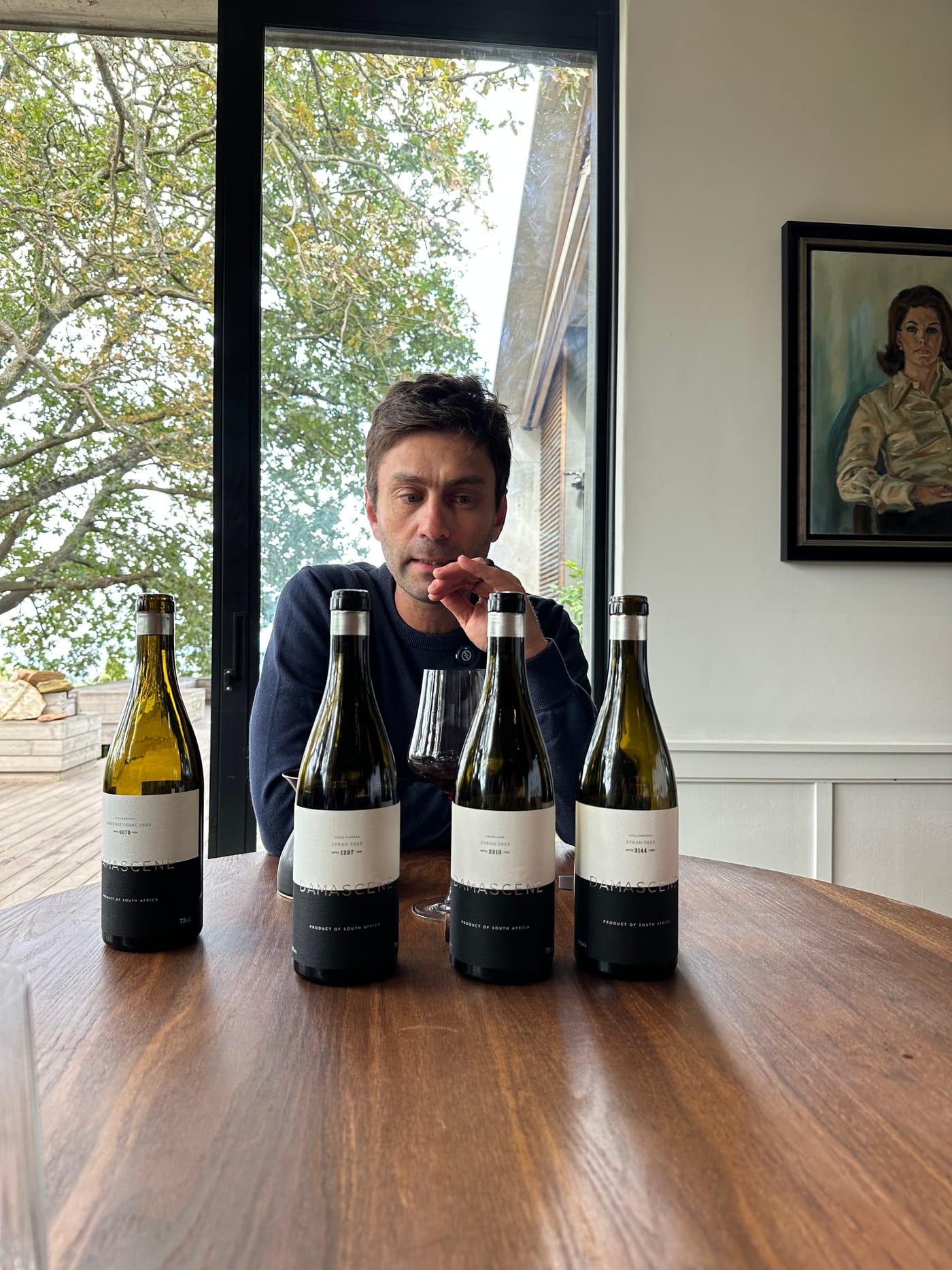
At Damascene in Elgin, Jean Smit uses gentle cellar methods to preserve the differences among Franschhoek Sémillon, Stellenbosch Cabernet Franc, regional Syrah and Moya Meaker Riesling across South Africa’s Western Cape.
SAKE The Essential Guide
A complete introduction to sake, connecting rice, kōji, yeast, fermentation, classifications and service to explain how Japanese brewers transform a neutral grain into one of the world’s most technically complex beverages.

Thorvald Is Scaling in California Vineyards Before Full Autonomy
More than 100 Thorvald UV-C robots are expected to treat 2,600 acres of California vineyards in 2026. Research supports powdery mildew control, but cost, field reliability and a 1977 safety rule still limit full autonomy.