Gramona: Where the Farm Meets the Cellar
At Gramona, biodynamics is not an idea displayed for visitors but a working farm of horses, chickens, medicinal plants and living soils. A visit with sixth-generation Martí Gramona reveals how family history, Corpinnat and long ageing converge in one of Penedès's most ambitious estates.
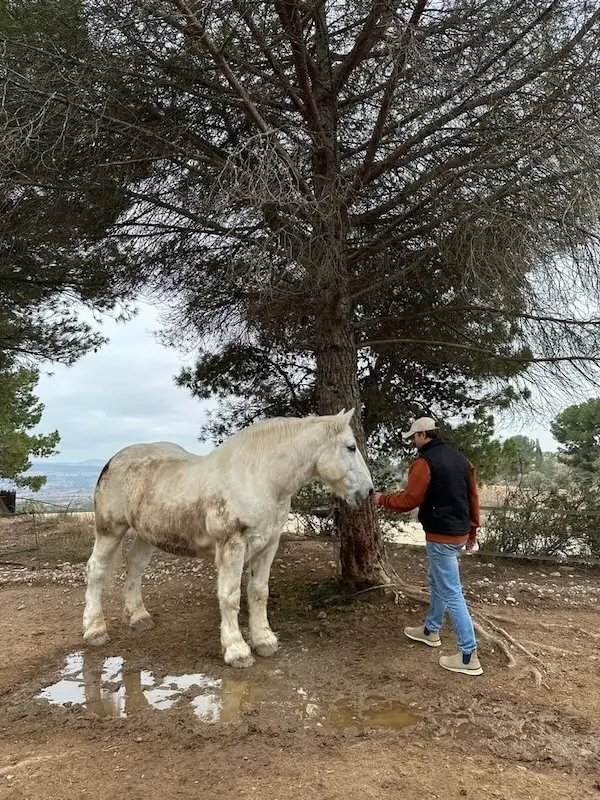
A visit with sixth-generation Martí Gramona revealed how animals, living soils, family history and long ageing belong to the same idea of excellence.
Some estates impress before they welcome. Gramona does the opposite.
The first memory of the visit is not a tank, a riddling rack or a famous bottle. It is a room that feels inhabited. A fire burns beneath a brick mantel, old wood sits beside wide windows and the hills of Penedès remain visible beyond the glass. The atmosphere has the ease of a family house, even though the name outside belongs to one of Spain's most consequential sparkling wine producers.
Martí Gramona Simó received us there. A member of the family's sixth generation, he carried the visit without ceremony. The route moved naturally from the house to the cellar, then to the farm, the animals, the vineyards and the soil itself. At one point we were standing among stainless steel tanks. Not long afterwards, we were beside horses, donkeys, chickens and shelves of herbs used in biodynamic preparations. Nothing felt arranged to make agriculture picturesque. The animals had work to do, and so did everyone around them.
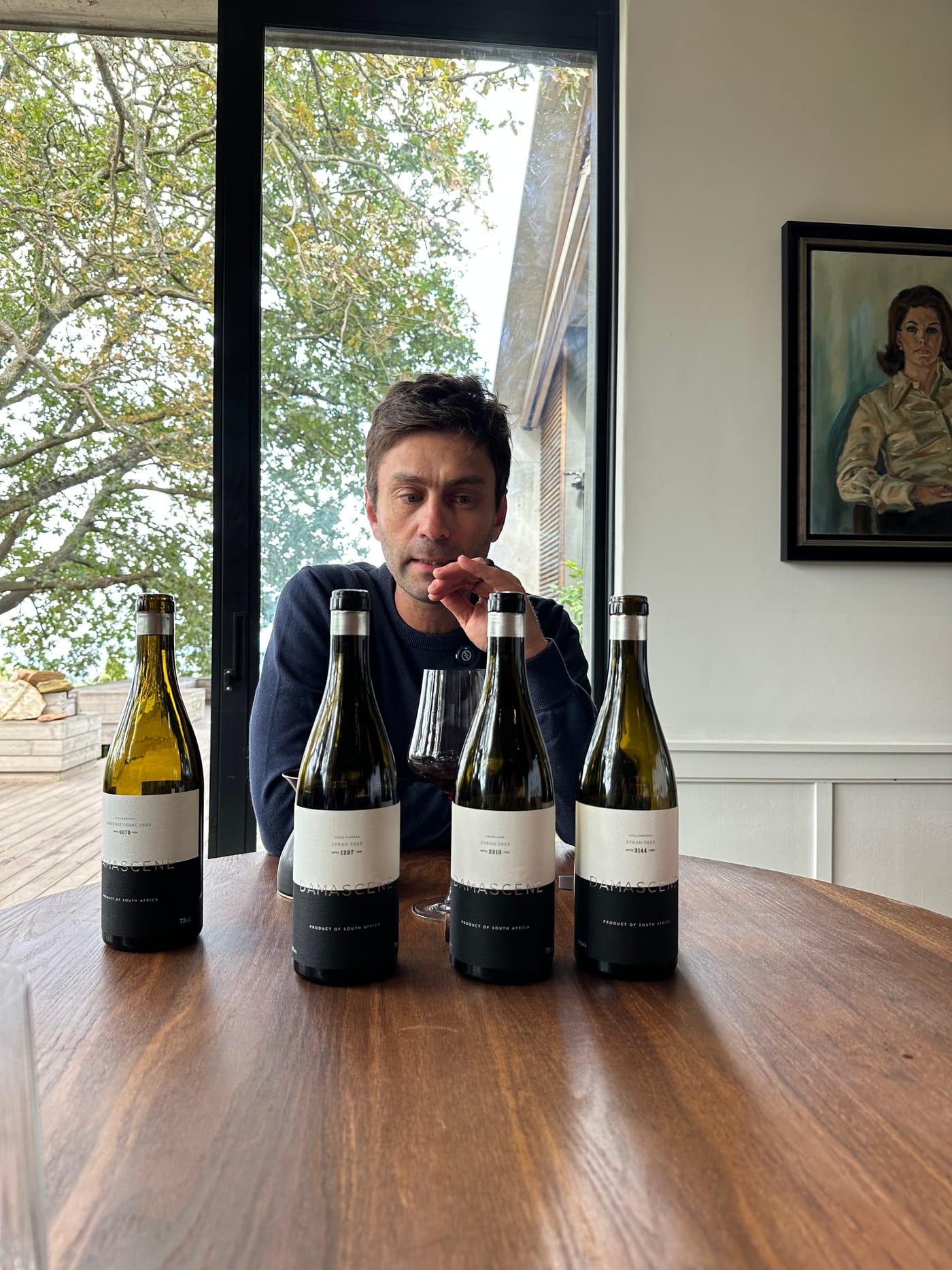
At Damascene, One Cellar Holds Many South Africas
At Damascene in Elgin, Jean Smit uses gentle cellar methods to preserve the differences among Franschhoek Sémillon, Stellenbosch Cabernet Franc, regional Syrah and Moya Meaker Riesling across South Africa’s Western Cape.

SAKE The Essential Guide
A complete introduction to sake, connecting rice, kōji, yeast, fermentation, classifications and service to explain how Japanese brewers transform a neutral grain into one of the world’s most technically complex beverages.

Thorvald Is Scaling in California Vineyards Before Full Autonomy
More than 100 Thorvald UV-C robots are expected to treat 2,600 acres of California vineyards in 2026. Research supports powdery mildew control, but cost, field reliability and a 1977 safety rule still limit full autonomy.