At Weinert the Wine Begins with the Search for Grapes
At Weinert, great wine begins long before the cellar. Three hours with Hubert revealed how the search for exceptional grapes, precise winemaking and patient ageing shape one of Argentina’s most distinctive wine houses.
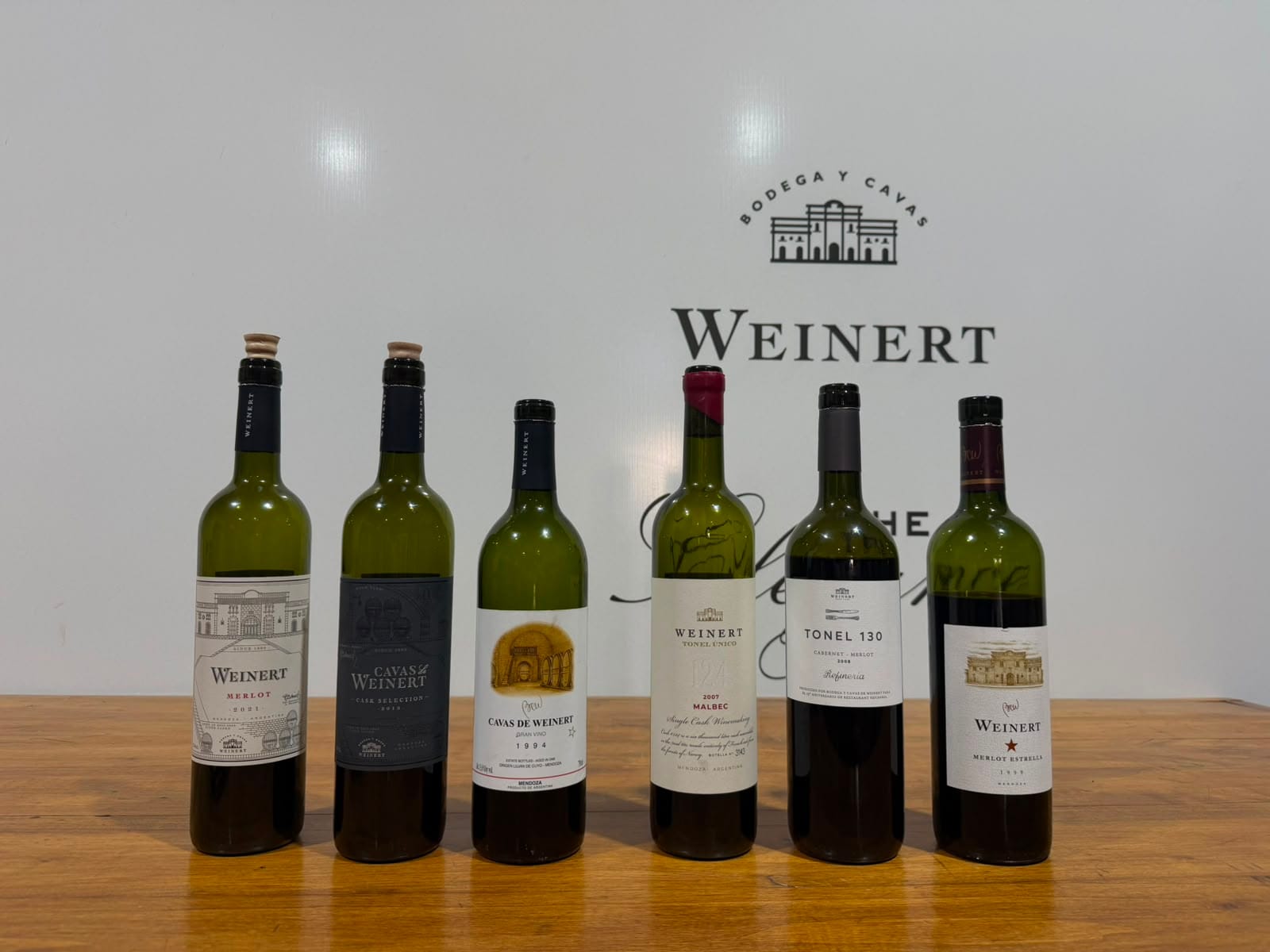
Three hours with chief winemaker Hubert Weber revealed a cellar built on an unusual form of precision: finding the right growers, choosing the right parcels and giving each wine the time it needs to become complete.
Arrival
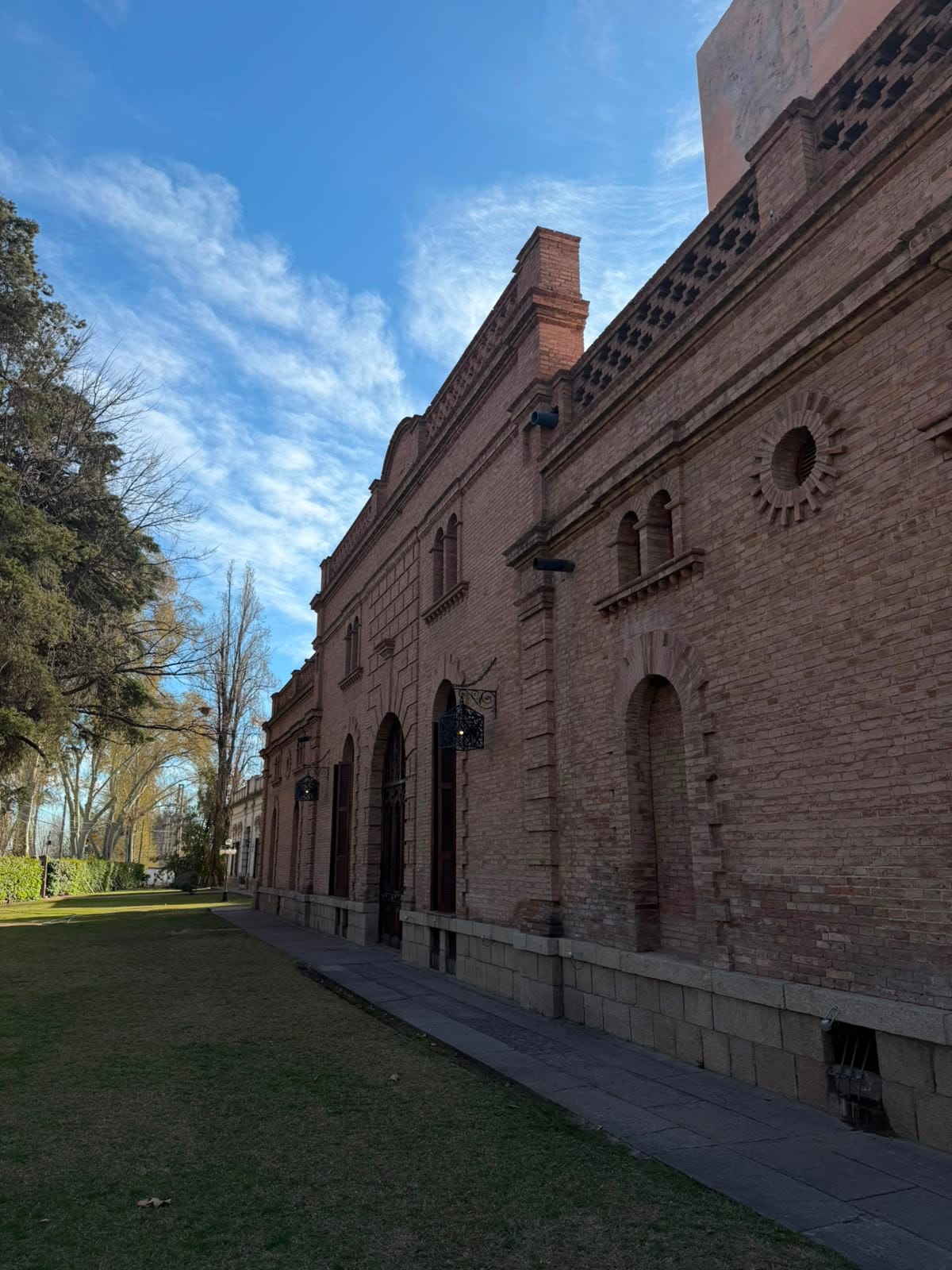
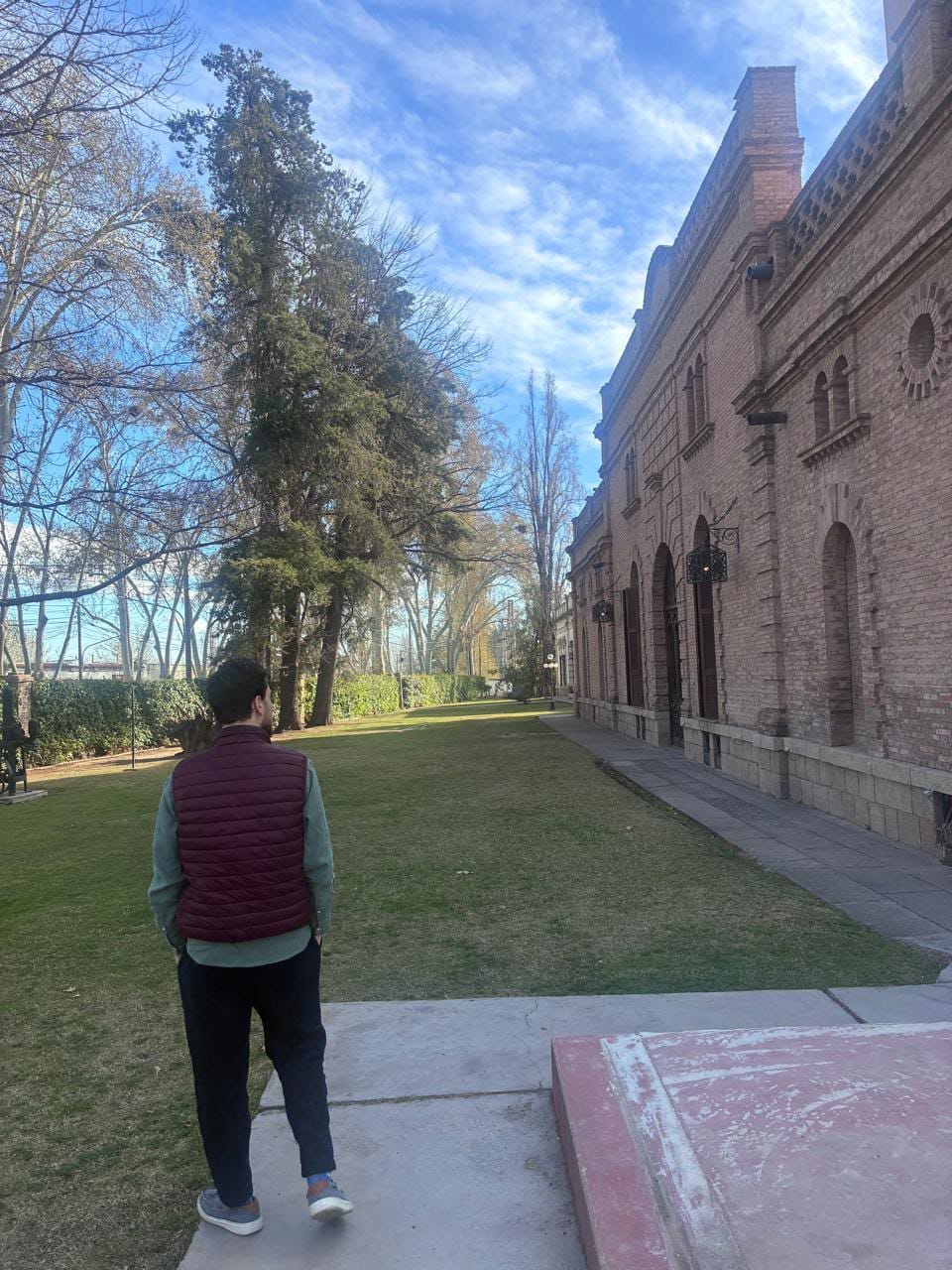
The first lesson at Weinert arrives before the first wine. The main building in Luján de Cuyo does not announce itself through polished modernity. Its brick walls, high rooms and old doors belong to another Mendoza, and the quiet park around them makes the winery feel removed from the traffic outside. Hubert meets us there and begins talking almost immediately. Three hours later, we are still following him through corridors, underground galleries, rows of old bottles and one of the most extraordinary collections of large wooden casks in Argentina.
The visit never settles into a conventional tour. Hubert moves easily between history, viticulture, microbiology, wood, markets and food. A question about a wine becomes a discussion about vine training. A cask opens into a lesson about oxygen. A bottle from 1999 leads back to the moment when a particular Merlot lot stopped behaving like the others and earned a place in the Estrella collection. The cellar is full of old objects, but Hubert does not speak about them as decoration. Everything is still part of the work.
A history built around a clear idea
The winery building dates from 1890. Bernardo C. Weinert, a Brazilian transport entrepreneur of European ancestry, acquired and restored it in the mid 1970s after repeatedly crossing Mendoza on routes between Brazil and Chile. His ambition was unusually direct for the period: to make serious, ageworthy wines in Argentina with the structure and complexity he admired in Europe.
Weinert worked with Raúl de la Mota, one of the central figures in modern Argentine winemaking. The first harvest under the new project came in 1977, and the wines established principles that remain visible today: classical varieties, relatively short extraction, long development in large casks and release only when the wine is considered ready. When much of Argentina moved toward small new barrels, greater concentration and faster commercial cycles during the 1990s, Weinert kept its large toneles and its own sense of time.
WINE TASTING The Essential Guide
The Study Library · The Cellar Journal Wine tasting can look far more complicated than it really is. A professional puts their nose into a glass and starts talking about blackcurrants, violets, graphite, leather or wet stones, while someone listening may reasonably wonder whether all of those things are actually there,
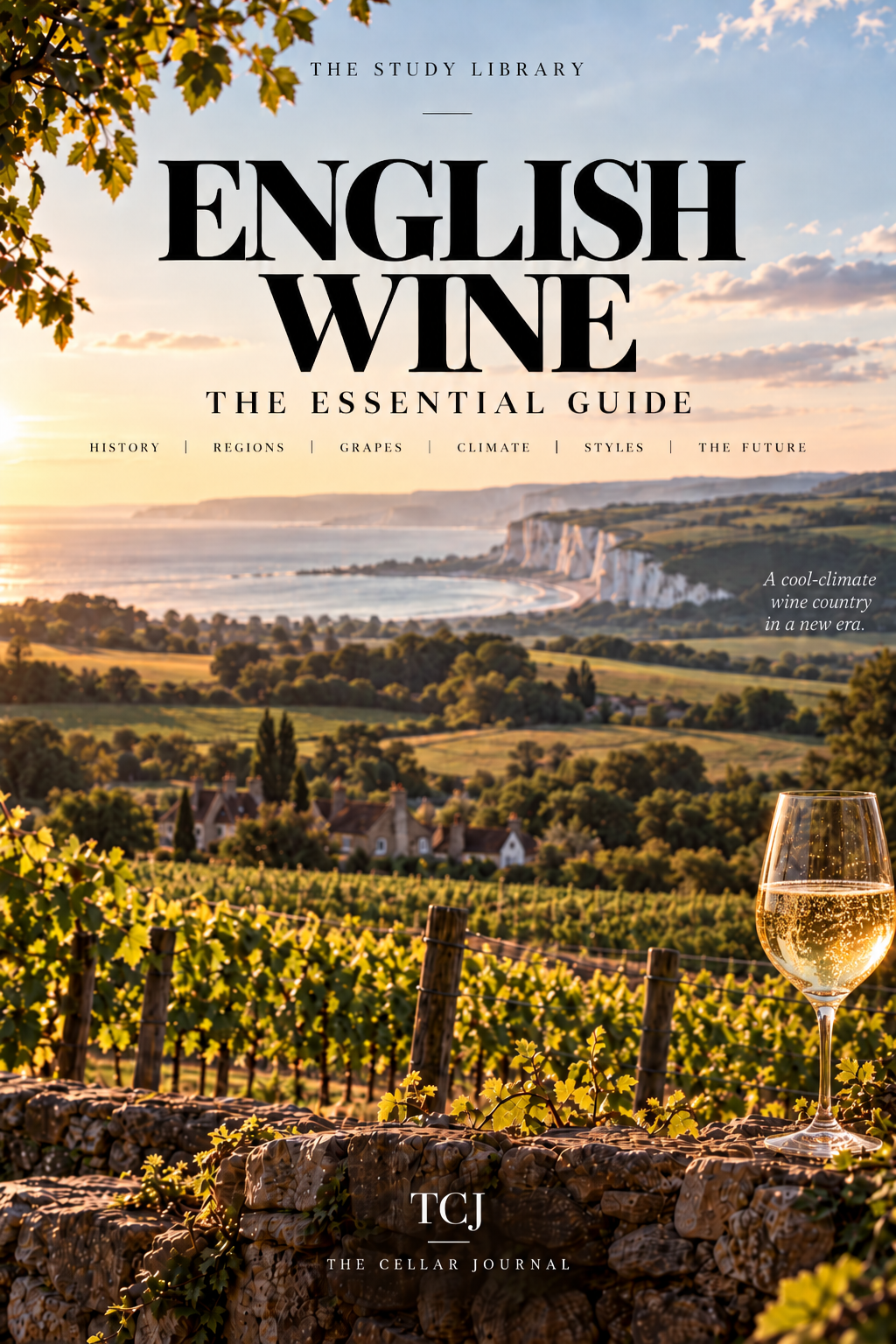
ENGLISH WINE The Essential Guide
A complete introduction to English wine, connecting climate, geology, grapes, sparkling wine and modern history to explain how a marginal wine country became one of the world’s most dynamic cool-climate regions.
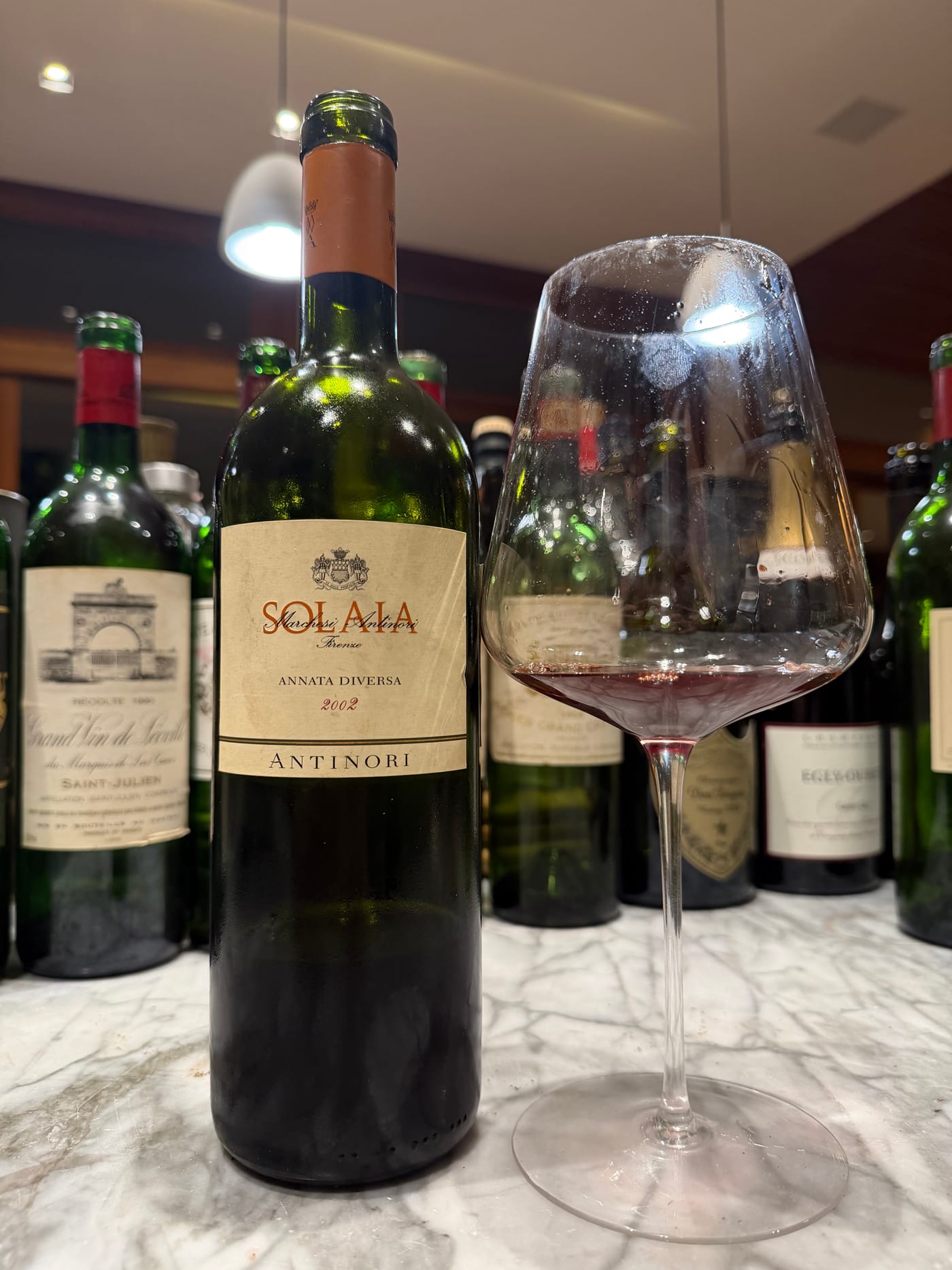
Solaia Annata Diversa 2002: A Different Vintage, a Singular Wine
Solaia 2002 is the only vintage to carry the words Annata Diversa, after a difficult Tuscan season removed Sangiovese from the blend. More than two decades later, the wine was alive, elegant and finely textured, with the composure of mature Bordeaux and an identity entirely its own.