From the Cellar · 01
La Fleur-Pétrus 1955
The Privilege of Drinking History
Some bottles survive time. Others preserve it.
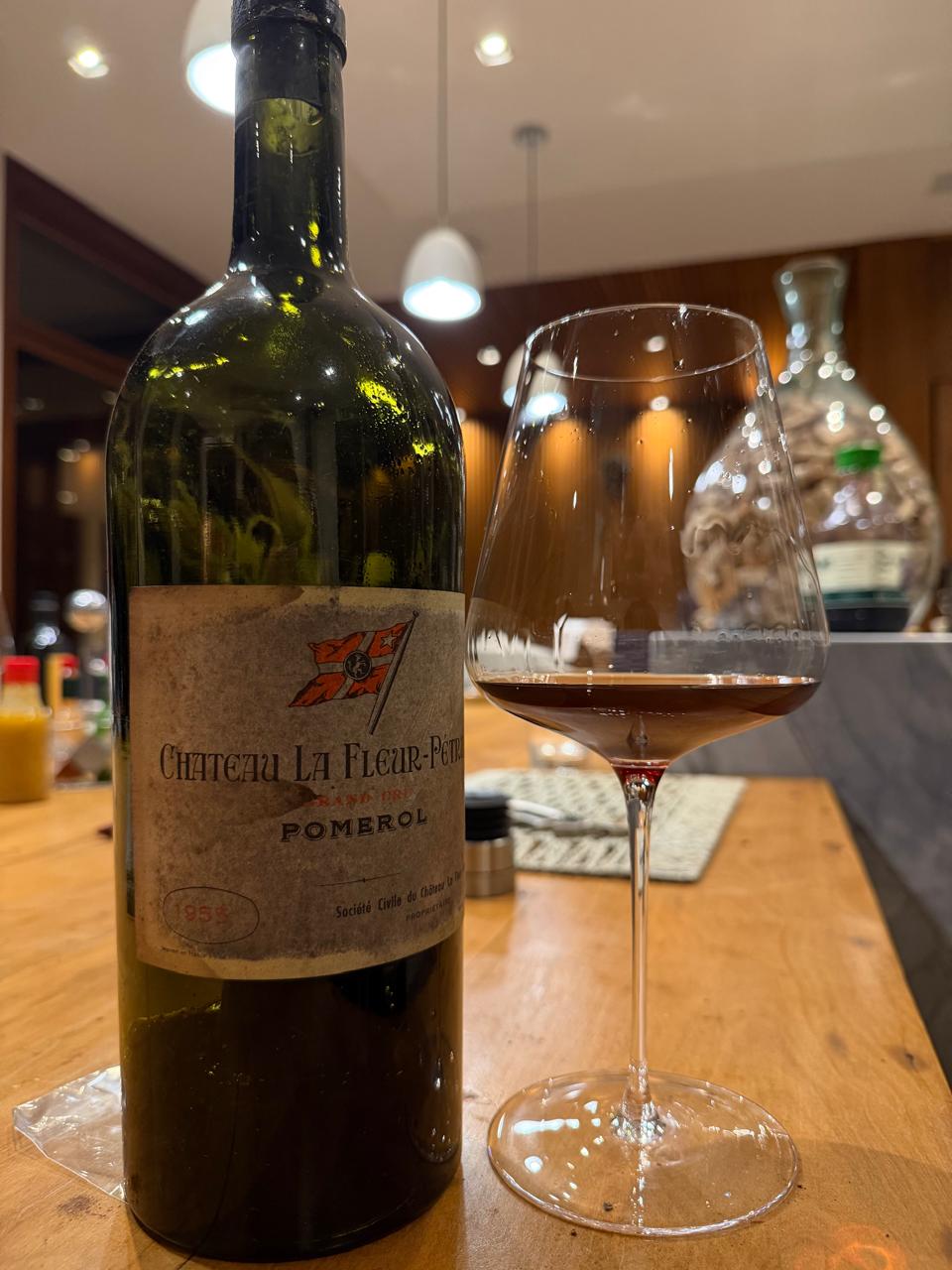
The bottle arrived quietly. No announcement. No ceremony. It was simply placed on the table, as though seventy-one years could pass unnoticed.
Only when the first glass was poured did everyone lean a little closer. Château La Fleur-Pétrus. Pomerol. Magnum. 1955.
Some bottles demand attention. Others earn silence. This one did both.
Seventy-one years separate that harvest from the glass it eventually reached. Yet every one of those years seemed somehow present in the wine.
A vineyard before the frost
The 1955 vintage is remembered as one of Bordeaux's finest post-war harvests. But what makes this bottle extraordinary is not only the quality of the vintage itself. It is what happened immediately afterwards.
In February 1956, one of the harshest winters Bordeaux had experienced since 1709 swept across the region. Temperatures fell to nearly -20°C, devastating vineyards throughout the Right Bank. In Pomerol, an estimated ninety percent of the vines were lost, forcing growers to replant much of their vineyards almost from scratch.
Drinking the 1955 today means tasting the last complete expression of a vineyard that disappeared the following winter.
The frost did not simply damage the vines. It erased them. What followed was a new beginning, but never the same vineyard.
No amount of money can recreate that landscape. No collector can buy those vines back. They exist only in bottles that somehow survived the decades.
The first chapter of Moueix
La Fleur-Pétrus was the first vineyard acquired by Jean-Pierre Moueix, in 1950, marking the beginning of what would become one of Bordeaux's most influential family estates. Over the decades, the Moueix family would help shape the identity of Pomerol through properties such as Trotanoy and Pétrus, building its reputation patiently, one generation at a time.
This bottle belongs to the earliest chapter of that story.
History, still alive
In the glass, however, history stepped aside for something even more surprising: vitality.
The colour remained remarkably youthful, showing none of the fatigue the label might have suggested. Quiet red fruit still lingered beneath layers of truffle, cedar, cigar box and the delicate medicinal notes that only decades in bottle seem capable of creating. The acidity remained alive, the tannins had dissolved into silk and the wine carried itself with the quiet confidence that defines the greatest mature Pomerols.
Opening a bottle this old is always a leap of faith. Every mature bottle follows its own journey through storage, transport, cork and time. Those unseen decades determine whether the cork will release history or disappointment.
On this evening, history won.
When the last glass was empty, what remained was not simply the memory of an extraordinary wine. It was the realization that understanding what we drink changes what we taste.
Without knowing the frost of 1956, the first Moueix acquisition or the generations that followed, this is simply an old bottle of Bordeaux. With that knowledge, it becomes something far rarer.
A conversation with a vineyard that no longer exists.